Why Namibia? Well, Because It’s a Wide-Open Playground for the Curious Traveller

Namibia’s countryside is famous for its beauty and its fascinating attractions, but there’s so much more to see beyond these well-trodden paths. 

You could be a traveller who is into adrenaline-pumping activities like sandboarding, or you could be the sort of holidaymaker who enjoys more serene adventures like canoeing or historic activities like visiting ghost towns. No matter the holiday you have in mind, Namibia never disappoints.

In this guide, we’ll be introducing you to 15 incredible Namibia day trips that will show you Namibia’s raw beauty, cultural richness, and eco-friendly travel ethos in a way you haven’t seen it before. 

Spitzkoppe, one of Namibia’s Most Sacred Sites
Spitzkoppe, Namibia’s own Matterhorn

15 Unique Day Trips in Namibia for 2025

1. Canoeing on the Orange River

Flowing along Namibia’s southern border, the Orange River’s calm, meandering waters and the dramatic canyon walls that frame it make it a stand-out attraction in an otherwise bleak landscape. 

This peaceful yet adventurous excursion is just perfect for nature lovers and photographers alike.

How to Spend a Day: Morning canoe excursion → Riverside picnic → Afternoon swim.
💡Travel Tips: Pack a dry bag for valuables and wear quick-dry clothes.
🗓 Best Time: April to October for cooler weather.

2. Explore the Quirky Spitzkoppe

Often called Namibia’s “Matterhorn,” Spitzkoppe is a massive granite peak that rises dramatically out from the desert floor. This natural wonder is a dream destination for hikers, climbers, and photographers, with its stunning rock formations, unseen caves, and ancient San rock art all being popular attractions, and all can be seen in a single day trip. 

How to Spend a Day: Sunrise hike → Picnic under rock arches → Ancient San rock art tour.
💡Travel Tips: Wear sturdy hiking shoes and stick to designated trails.
🗓 Best Time: May to September for cooler temperatures.

3. A Day at the Cape Cross Seal Reserve

Home to one of the world’s largest seal colonies, a trip to Cape Cross will give you one of the most unique experiences, although you must be prepared for the strong, unmistakable scent of thousands of seals! 

Watching these playful creatures lounge on the shores, bark at each other, and dive into the waves is a mesmerising sight and quite a great way to spend your day outdoors. 

How to Spend a Day: Drive to the reserve → Seal watching → Seaside lunch → Coastal birdwatching.
💡 Travel Tips: Bring binoculars for close-up views.
🗓 Best Time: November to December (seal pupping season).

4. Sandboarding and Swakopmund Adventures

For those who want to get a little bit hot and sweaty, Swakopmund just happens to be home to the ultimate adrenaline rush: sandboarding down the golden dunes of the Namib Desert!

And after an exciting morning spent out on the sand, this beautiful and rather famous coastal town is just waiting to be explored. Swakopmund has German-influenced architecture, cafés, and scenic beach promenades. Its influences come from the country’s colonial period, when it was a German settlement. 

How to Spend a Day: Morning sandboarding → Lunch at a café → Afternoon beach stroll.
💡 Travel Tips: Book eco-friendly sandboarding operators.
🗓 Best Time: Year-round (cooler June to September).

swakopmund from above
Swakopmund is a popular small town with big adventure activities

5. Hot-Air Ballooning Over the Namib Desert

There’s no better way to fully appreciate just how huge and unending the Namib Desert really is than by taking in the view from above with a hot-air balloon ride at sunrise.

Floating above the desert dunes as the morning light casts dramatic shadows is an experience unlike any other. The adventure ends with a champagne breakfast in the wilderness, making it a bucket-list-worthy activity.

How to Spend a Day: Early morning balloon ride → Guided nature walk → Visit Sesriem Canyon.
💡 Travel Tips: Dress in layers; it’s chilly before sunrise.
🗓 Best Time: April to November for calm conditions.

6. Discover the Petrified Forest

The Petrified Forest is a surreal landscape filled with ancient fossilized trees dating back over 260 million years. These stone-like remnants tell the story of a prehistoric world, giving those who venture here a fascinating glimpse into Namibia’s natural history.

How to Spend a Day: Morning guided tour → Picnic → Afternoon at Twyfelfontein’s rock engravings.
💡 Travel Tips: Carry cash for local guides.
🗓 Best Time: May to September for cooler conditions.

7. Moon Landscape and the Welwitschia Drive

Just outside Swakopmund, you’ll find the “Moon Landscape”, an utterly empty yet stunningly beautiful area that resembles an alien world. Along the drive, you’ll also get to see the ancient Welwitschia plant, Namibia’s national flower, some of which are over 1 000 years old.

How to Spend a Day: Drive through Moon Landscape → Stop at Welwitschia → Desert picnic.
💡 Travel Tips: Carry a map and stay on marked trails.
🗓 Best Time: March to May or August to October.

8. Birdwatching at Walvis Bay Lagoon

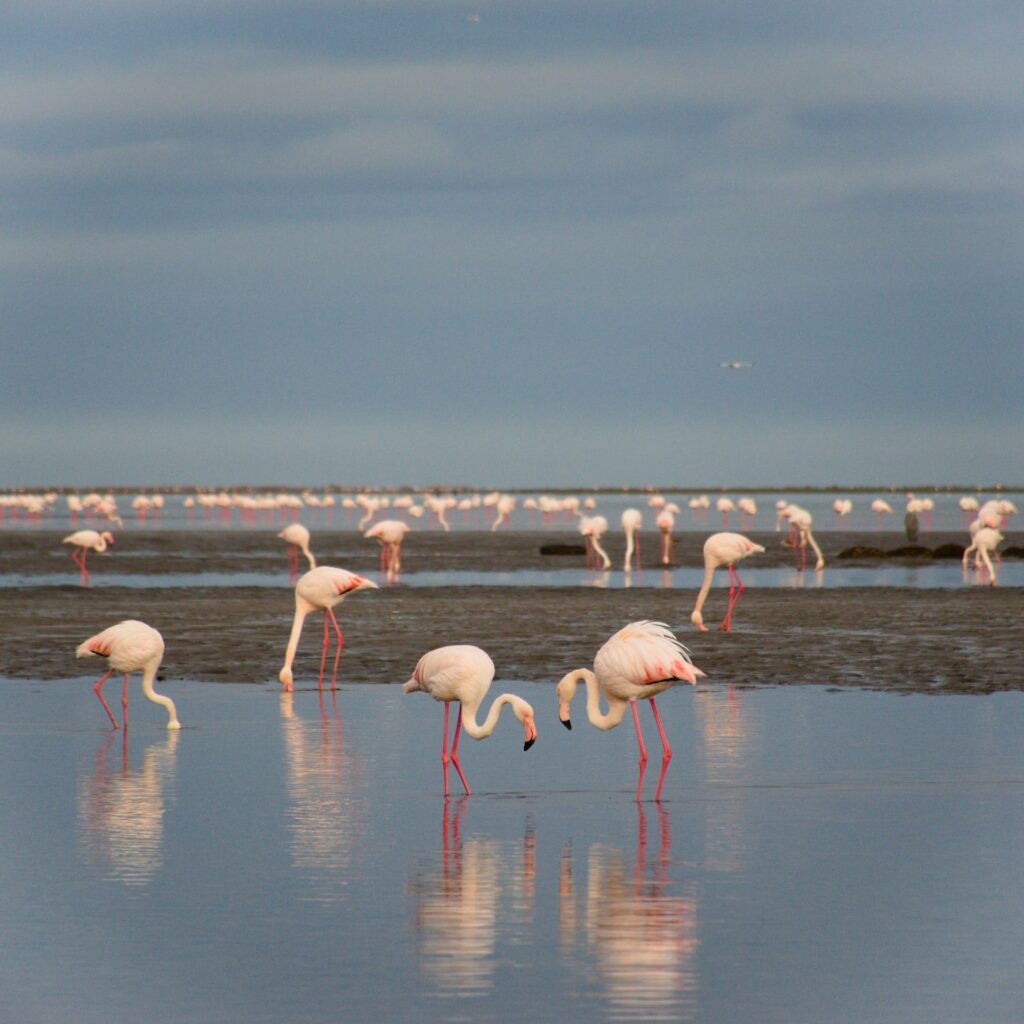
A paradise of sightings for bird enthusiasts, Walvis Bay Lagoon is fluttering with life as it is home to flocks of pink flamingos and majestic pelicans. The shallow waters make for the ideal feeding ground for migratory birds, making it one of the best spots for birdwatching in Namibia.

How to Spend a Day: Early morning birdwatching → Brunch at a seaside café → Coastal walk.
💡 Travel Tips: Bring a camera with a zoom lens.
🗓 Best Time: November to March (migratory birds).

Walvis Bay Flamingos on an Namibia Tour
The pink flamingos of Walvis Bay

9. Hiking the Waterberg Plateau

Rising above Namibia’s arid landscapes, the Waterberg Plateau is a red sandstone sanctuary home to all sorts of rare and interesting wildlife and stunning panoramic views that make the hike here well worth the effort. This unique ecological hotspot is home to species like sable antelope, buffalo, and even black rhinos, making it a hiker’s paradise. The well-maintained trails range from gentle walks to challenging climbs, with each giving the hiker a rewarding encounter with nature.

How to Spend a Day: Hike to scenic viewpoints → Picnic in the park → Guided game drive in the afternoon.
💡 Travel Tips: Wear moisture-wicking clothing and stick to marked trails to protect the ecosystem.
🗓 Best Time: April to October for cooler hiking conditions.

10. Exploring Kolmanskop Ghost Town

Once a thriving diamond mining town, Kolmanskop is now slowly being reclaimed by the desert. Sand-filled buildings, which were once fine examples of German colonial architecture, and an eerie silence make it a dream destination for photographers and history enthusiasts. As you wander through the abandoned homes and faded ballrooms, you’ll feel the weight of history, and if you choose to sign up for a guided tour, you’ll be told the fascinating tales of the diamond rush and the town’s abrupt decline.

How to Spend a Day: Morning guided tour → Lunch in Lüderitz → Visit Diaz Point in the afternoon.
💡 Travel Tips: Arrive early for the best light and wear sturdy shoes for walking on sandy floors.
🗓 Best Time: May to September for cooler weather and fewer crowds.

12. Otjikoto Lake – Namibia’s “Bottomless” Lake

Otjikoto Lake, a deep, circular sinkhole lake, holds more than just natural beauty.. During World War I, German troops dumped weapons into its waters, many of which have been recovered and are now displayed in the Tsumeb Museum. The lake’s striking turquoise hues and its mysterious depth make it a must-visit for those interested in geology and history alike.

How to Spend a Day: Morning lake exploration → Birdwatching nearby → Visit the Tsumeb Museum in the afternoon.
💡 Travel Tips: Swimming is not recommended. Bring a field guide if you’re a birdwatching enthusiast.
🗓 Best Time: May to September for pleasant weather.

Ancient Rock Engravings at Twyfelfontein
Rock art at Twyfelfontein

13. Twyfelfontein Sunset Excursion

A UNESCO World Heritage Site, Twyfelfontein is home to one of the largest collections of ancient rock engravings in Africa. Created by the San people thousands of years ago, these petroglyphs tell stories of the early hunter-gatherers and their spiritual beliefs. For a real visual treat, you should visit at sunset, when the fading golden sunrays illuminate the art.

How to Spend a Day: Afternoon exploration of rock engravings → Sunset viewing → Evening cultural experience with a local guide.
💡 Travel Tips: Wear comfortable shoes and bring a flashlight for navigating after dark.
🗓 Best Time: April to August for stunning sunset views.

14. Okahandja Craft Market

If you want to get a taste of local Namibian art, the Okahandja Craft Market is just the place to go. This bustling marketplace is filled with handmade treasures, including intricately carved wooden sculptures, woven baskets and jewellery. Supporting the local artisans here not only means you go home with unique souvenirs, but you will also help to preserve the traditional artists and their work. 

How to Spend a Day: Morning shopping at the craft market → Lunch at a local eatery → Visit a nearby farm for a cultural experience.
💡 Travel Tips: Bring cash, as card payments are rare. Arrive early for the best selection of items.
🗓 Best Time: Weekends for the liveliest atmosphere.

15. Shipwreck Hunting Along the Skeleton Coast

The Skeleton Coast is notorious for its eerie, shipwreck-strewn shores, where countless vessels have fallen victim to Namibia’s treacherous waters. Exploring these rusting relics, such as the Zeila or the Eduard Bohlen, can feel like stepping into a maritime ghost story, which is exactly why this destination is so popular. 

How to Spend a Day: Drive along the coast to view shipwrecks → Beachside picnic → Coastal birdwatching.
💡 Travel Tips: Hire a local guide for access to remote sites. Dress warmly because it can get windy.
🗓 Best Time: Year-round, though May to September offers the most comfortable conditions.

Namibia is a land of surprises! And regardless of which day trip you choose from our list, you can be sure that it will be full of adventure and intrigue. 

Ready to Explore Namibia?

Let’s help you plan your next Namibia tour! Book a guided Namibia day trip with us and enjoy the types of experiences you won’t find in a travel brochure.

About the Authors African Travel Concept Namibia Team

At African Travel Concept Namibia, our team of experienced travel and safari professionals is dedicated to turning first-hand African expertise into clear, reliable advice. We research, review, and refine every article so you have the most current and accurate information when planning your trip.

The Namibia safari experience isn’t just about what you see; it’s about what you feel, the moments that leave you speechless, and the stories you’ll carry home long after the dust has settled on your boots.

As a place where the ochre sands of the desert seem to stretch to infinity, where red dunes meet the crashing waves of the Atlantic, and where wildlife thrives in some of the most unexpected places, those who travel to Namibia are treated to the most surreal and extraordinary safari. 

Unlike other safari destinations in Africa, a safari in Namibia is characterised by its dusty, dry landscapes, and a desolate terrain that looks as though nothing could survive let alone flourish in it. 

And yet, in many parts of the country, travellers are treated to sightings of elephants, rhinos and big cats, all while enjoying the best kinds of accommodation, which range from rustic to luxurious, with some even giving guests the unique opportunity to fall asleep beneath the stars.

The Namibia safari experience is only as good as the plans you make, and the best place to start planning your epic holiday is to know what you can expect from your trip. 

Wildlife Safari Etosha National Park

Is Namibia a Good Safari Destination?

Namibia is not just a good safari destination, it’s a great one!

And yet it is one of those places that is often overlooked by travellers, in favour of more popular safari attractions like the Kruger National Park or the neighbouring Okavango Delta. 

If you’re looking for a safari that is the perfect combination of striking landscapes that change colour throughout the day, fascinating wildlife that has adapted to the harsh desert conditions, and places that have an almost cinematic sense of solitude, Namibia is where you need to go. 

Unlike the bustling safari parks of East and South Africa, Namibia’s game reserves and national parks are spacious (and often exceptionally quiet, without many guests) and exclusive, making each sighting feel personal.

There are a few places where you can have this sort of Namibia safari experience, and these include:

  • Etosha National Park – A premier safari destination with salt pans that shimmer under the sun and wildlife that congregates at waterholes all throughout the year. When you visit Etosha, you can expect to see elephants, lions, rhinos, and countless antelope species.
  • Namib-Naukluft National Park – Home to the famously photogenic dunes of Sossusvlei, the hauntingly beautiful Deadvlei, and wildlife adapted to desert survival, including oryx and jackals, this park makes for an exquisite Namibia safari experience. 
  • Damaraland – A land of rough and uneven mountains and ancient petroglyphs, Damaraland is just the place to see desert-adapted elephants and black rhinos.
  • Skeleton Coast – A wild, misty coastline scattered with shipwrecks and home to thousands of Cape fur seals, although it doesn’t have the conventional safari experience, the scenery alone is worth the journey.
  • Caprivi Strip (Zambezi Region) – A green contrast to Namibia’s deserts, this area is where you can enjoy river safaris and see hippos, crocodiles, and abundant birdlife.

How Much Does a Namibia Safari Cost?

The cost of a Namibia safari experience varies depending on certain factors like the time of year you intend to travel, the type of accommodation you wish to stay in, and whether you choose a self-drive or guided tour.

Safaris are usually split up into 3 categories:

  • Budget safaris 

If you book a budget safari, your trip will be more rustic but still authentic and immensely enjoyable. Accommodation generally includes camping or budget lodges and the tour itself can be self-drive rather than a full guided experience, although there are plenty of affordable guided tours too!

  • Mid-range safaris

With a mid-range safari, you can look forward to more comfortable lodges with more amenities than those available at budget lodges, and guided tours. Some mid-range safaris also include a few activities, although that will depend on the provider. 

  • Luxury safaris 

These are the sort of Namibia safari experiences that most travellers dream of. Such trips include high-end lodges with exclusive rooms, spas and other luxury amenities, private guided safaris, and even charter flights.

About Seasonal Pricing

Much like other safari destinations in Africa, Namibia has a high and a low safari season, and whichever season you choose will give you a different kind of experience. 

  • High season (June – October)

During the high season, prices increase quite a lot and the safari destinations tend to get rather crowded, as travellers come from all over to enjoy the wildlife sightings, which at this time of the year are at their best.

  • Low season (November – May)

The low season is popular for having more budget-friendly options, which often form a part of special packages which are designed to entice travellers to visit Namibia during the off-season. 

Though some areas may be harder to access due to seasonal rains, safaris at this time of the year are wonderful to experience, because not only do you not have the crowds to compete with, but you also get to enjoy a green landscape, well, greener than usual. 

Self Drive Safari Namibia

Is Namibia or Botswana Better for Safari?

Both Namibia and Botswana are home to out of this world wildlife experiences, but although they are neighbours, they cater to 2 very different types of travellers.

A Namibia safari experience is perfect for those who desire solitude, endless landscapes, and a variety of travel options. The terrain in Namibia is otherworldly, and seeing wildlife in arid desert conditions feels as though you are looking at a living miracle. A Namibia safari is the ideal choice for photographers, adventurers, and anyone who loves a good road trip.

Botswana, on the other hand, is all about water-based safaris and ultra-exclusivity. The Okavango Delta’s green floodplains are utterly unlike any other safari destination and from the comfort of a boat, the animals at the water’s edge seem almost within arm’s reach. Botswana’s safari lodges lean toward ultra-luxury, and many areas are only accessible via charter flights, making it a pricier destination overall. And because so few people get to travel here, the experience can be quite exclusive. 

If you’re after desert landscapes, independence and solitude, and a mix of desert and savannah wildlife, go for Namibia. If you want a premium, water-rich safari with a near guarantee of magnificent animal sightings, Botswana might be the better choice for you.

Wildlife in Namibia vs South Africa

What Animals Can You Expect on a Namibia Safari?

Despite its arid landscapes, Namibia is quite full of wildlife.

The animals that can be spotted throughout Namibia’s safari regions and your chances of seeing them are significantly raised when you’ve booked your safari during what is considered to be the right time of the year to travel to Namibia for a safari. 

Of all the wildlife you can spot while touring the safari regions of this fascinating destination, these are some of the most sought-after sightings:

  • The Big Cats such as lions, cheetahs, and leopards, all of which are often sighted close to Etosha’s waterholes.
  • Elephants and rhinos, both of which are desert-adapted and can be spotted around Damaraland and Etosha.
  • Antelope species such as oryx (Namibia’s national animal), springbok, kudu, and hartebeest, are all common sightings.
  • Giraffes and zebras are often seen in Etosha and the luscious Caprivi Strip.
  • From flamingos in Walvis Bay to lilac-breasted rollers in the Caprivi, Namibia has all sorts of birdlife.
  • Seals, dolphins, and even whales can be seen along the Skeleton Coast.
Welwitschia Mirabilis

What Flora Can You Expect on a Namibia Safari?

Plants and trees might not be every traveller’s cup of tea, especially when there are lions and other fascinating animals around, but you are certain to see all sorts of interesting flora as you travel around enjoying your Namibia safari experience. 

With landscapes that range from desert dunes to riverine forests, Namibia’s plant life is intriguing, especially since it includes some truly ancient oddities. When on your safari, be sure to keep an eye out for these plant species:

  • Welwitschia MirabilisThis is a bizarre, ancient plant that can live for well over 1 000 years. In fact, one of the oldest ever found is estimated to be around 2 000 years old! This plant is also Namibia’s national flower and something that is fiercely protected by various conservation initiatives. If you see this plant on your safari, make sure you take plenty of photos. 
  • Quiver trees – These iconic, otherworldly trees can often be found in rocky regions. The trees get their name from the San people, who would use them to make arrows. 
  • Savannah grasses and Acacia trees – These are common sights and they are an important part of the Namibian ecosystem because they are a vital source of shade and sustenance for wildlife.
  • Succulents and Desert shrubs – Plants that are perfectly adapted to arid conditions.

What Sort of Accommodation Can You Expect on a Namibia Safari?

From rustic camping to world-class lodges, a Namibia safari experience has something for everyone. These are the most popular accommodation options:

  • Camping – The ultimate self-drive option, camping is available in many national parks.
  • Tented Camps – Luxury safari-style tents that mix comfort with immersion in nature.
  • Lodges – Ranging from mid-range to ultra-luxurious, often with stunning views.
  • Guest Farms and Desert Retreats – Perfect for those wanting a local touch and a slower pace.

Book Your Namibia Safari Experience

If Namibia has been calling your name, it’s time to answer.

If you want to traverse the sun-scorched dunes of the Namib Desert, track elusive rhinos in Damaraland, or sip sundowners while overlooking Etosha’s waterholes, your journey is a click away.

Start planning your Namibia Safari Experience today, and let the landscapes, wildlife, and famous beauty of this incredible country leave an imprint on your soul.

About the Authors African Travel Concept Namibia Team

At African Travel Concept Namibia, our team of experienced travel and safari professionals is dedicated to turning first-hand African expertise into clear, reliable advice. We research, review, and refine every article so you have the most current and accurate information when planning your trip.

Rainfall in the Namib is scarce.

Each summer, while its neighbouring nations receive abundant water that often results in flooding, the Namib is lucky if it sees a drop. On average, some parts of the Namib will see only 50mm of rain, and yet here, in the most challenging and desolate of climates, life carries on. 

Insects, animals and plants all flourish in this environment, having become desert-adapted over thousands if not millions of years. 

Although Namibia’s main attraction is its undulating golden dunes and dramatic landscapes, which look as though they belong on some other planet, it’s also home to some of the most fascinating plant species. 

Plant species that can only be found here, amongst the sands, the dunes and the ancient rocks. 

From the quiver trees to the resilient succulents that pepper the arid terrain, the country’s flora is as remarkable as its wildlife. 

But one plant steals the show, and that’s the Welwitschia plant.

This ancient species has survived for thousands of years in the Namib Desert, and while it has stayed alive all these years, the plant is quite a rarity and to prevent it from becoming extinct various conservation efforts are in place to protect it. 

The Namib Naukluft Park and several private reserves work diligently to safeguard these plants from illegal harvesting and climate-related threats. 

Seeing a Welwitschia plant up close is an experience that feels like stepping into another era—one where nature still holds secrets that we humans have to be patient to learn. 

A Welwitschia Plant in Namibia

Why Is the Welwitschia Plant So Special?

At first glance, the Welwitschia plant might look like a tangle of withered leaves that have been run over a few times by busy tour buses and on the verge of death, but don’t be fooled; this botanical oddity is unlike any other plant you’ve seen before. 

Unlike most plants, it only grows two leaves in its lifetime. These leaves, continuously growing over the hundreds of years that the plant lives and splitting overtime to give the appearance of having more leaves than it does, give the plant its characteristic ribbon-like appearance.

Even more astonishing, the Welwitschia plant is uniquely adapted to pull moisture from fog, making it one of the very few species that can survive in a region with almost no rainfall.

 Its ability to extract nutrients from the harshest of environments has earned it the title of a living fossil, bridging the gap between prehistoric flora and modern-day plants, and making it a prominent attraction in Namibia, even among those who would usually not have the faintest interest in plants. 

How Old Is the Oldest Welwitschia?

Prepare to be amazed because the oldest recorded Welwitschia plant is estimated to be well over a staggering 1500 years old! Researchers have even found some specimens that might be pushing 2000 years.

That means some of these plants have been around since the fall of the Roman Empire! 

Their growth rate is incredibly slow, just a few centimetres per year, which is why spotting a large Welwitschia plant in the wild is a surreal experience.

Standing next to a plant that has silently witnessed centuries of change, surviving against all odds in one of the planet’s harshest environments, is quite the humbling experience and you’ll want to have your camera on you for the occasion. 

The Welwitschia Mirabilis Plant

Where Is the Welwitschia Plant Found in Namibia?

If you’re eager to lay eyes on a Welwitschia plant, you need to head straight to the Namib Desert, where they flourish in gravelly plains and dry riverbeds. 

Some of the best locations to find them include:

  • The Welwitschia Drive – A scenic route near Swakopmund that gives those on a Namibia safari access to some of the oldest and most well-preserved specimens.
  • Namib-Naukluft National Park – A protected area where these ancient plants thrive and are shielded from human interference.
  • Skeleton Coast Remote, off-the-beaten-track and often covered in rolling fog that flows in from the Atlantic Ocean, this stretch of coastline is home to Welwitschia plants, flourishing in the mist, and scattered throughout the area. 

The harsh conditions of these regions create the perfect environment for the Welwitschia plant, ensuring its longevity and survival, and there are plenty of tours available to guide you through these places and bring you up close to the plants without harming them or the environment they live in. 

Why Does Welwitschia Live for So Long?

The Welwitschia plant owes its longevity to a mix of evolutionary adaptations and, quite simply put, sheer resilience. 

Instead of growing new leaves every season, it continuously uses the same two leaves, reducing the energy needed for regeneration. Additionally, its deep taproot allows it to reach hidden moisture, while a slow metabolic rate helps it conserve resources.

Perhaps the most vital factor that allows it to survive, is its ability to absorb fog. 

With rainfall in the Namib Desert being almost nonexistent, the plant relies on condensation to sustain itself—an ingenious survival strategy that has kept it alive for millennia.

The Welwitschia Mirabilis

How Many Welwitschia Are There in Namibia?

Estimating the exact number of Welwitschia plants in Namibia is tricky, but scientists believe there are only around 6000 scattered across the desert. 

While this might sound like a large number, their distribution is incredibly sparse, and threats like climate change and human interference put their populations at risk.

Thankfully, conservation initiatives are in place to protect these ancient botanical wonders. 

Several reserves and national parks have designated areas to safeguard the plant’s natural habitat, ensuring that future generations will still be able to learn about them and enjoy seeing them up close. 

The Conservation of the Welwitschia Plant

While the Welwitschia plant has survived against the odds in one of the world’s most unforgiving environments, even this ancient species isn’t immune to modern threats. 

Climate change, human interference, and illegal plant collection all threaten its survival. To counter these threats, Namibia takes conservation seriously, implementing measures to protect this living relic.

Protected Areas and National Parks

Most of the Welwitschia plant populations are found within Namibia’s national parks and reserves, particularly in Namib-Naukluft National Park and along the Welwitschia Drive near Swakopmund. 

These protected zones limit the impact caused by travellers moving close to the plants and they stop poaching, ensuring that the plants can continue to grow undisturbed.

Scientific Research and Monitoring

Another conservation effort is researching and monitoring. 

Researchers closely monitor the health of Welwitschia populations, studying their growth patterns, their genetic diversity, and their responses to environmental changes. 

Combatting Illegal Collection

Because of its rarity, the Welwitschia plant has become a target for illegal collectors who attempt to remove seedlings or seeds from the wild. To counter this, the Namibian government enforces strict laws against plant poaching and educates the public on the importance of keeping these plants in their natural habitat.

Eco-Tourism and Awareness

Sustainable tourism plays a vital role in the conservation of the Welwitschia plant. Luxury safaris and guided tours allow travellers to appreciate this ancient species without disturbing its ecosystem. By supporting conservation-focused lodges and responsible tour operators, visitors contribute to ongoing efforts to protect Namibia’s unique flora.

With continued research, awareness, and conservation initiatives, the Welwitschia plant will remain a symbol of endurance and resilience, standing tall (or rather, sprawling low) for centuries to come.

Welwitschia Mirabilis in Namibia

What Is the National Flower of Namibia?

The Welwitschia plant is Namibia’s most famous botanical treasure so it makes sense that this plant has become the national flower of Namibia and appears on the national coat of arms. 

This choice is actually ideal as the plant reflects the Namibian spirit; able to survive against all odds. 

While this is certainly not a plant you are going to want to have in your garden, because it is, let’s face it, rather an ugly thing, looks shouldn’t matter. 

Experience Namibia’s Ancient Plant Life Firsthand

There’s something undeniably enchanting and even mesmerising about seeing a Welwitschia plant in its natural habitat. It’s a moment that reminds us of nature’s ability to endure, adapt, and flourish against all odds.

For those who appreciate rare botanical wonders, Namibia is the ultimate destination.

Why settle for an ordinary getaway when you could step into a world where plants have defied time itself? If you can picture yourself standing in the middle of the Namib Desert, next to a Welwitschia plant that has been alive for over a thousand years, a tour to Namibia is just what you need.

A trip through Namibia not only brings you face-to-face with extraordinary wildlife but it also introduces you to the desert’s most remarkable plants.

Book your exclusive Namibia safari today and see the ancient Welwitschia plant, for yourself, there are very few people on the planet who’ve had such an experience.

About the Authors African Travel Concept Namibia Team

At African Travel Concept Namibia, our team of experienced travel and safari professionals is dedicated to turning first-hand African expertise into clear, reliable advice. We research, review, and refine every article so you have the most current and accurate information when planning your trip.

Namibia is one of the few last places on Earth where you can truly see the universe in its unpolluted, unfiltered form.

As darkness falls in the desert, the sky starts to put on a show, with a mesmerising display of twinkling lights. Within mere minutes, the Milky Way can be viewed with startling clarity, stretching from one end of the sky to the other. 

Due to its sparsely populated landscapes, artificial light is almost non-existent in most areas of Namibia, allowing for uninterrupted celestial views.

In the NamibRand Nature Reserve, an official International Dark Sky Reserve, the night sky is so clear that you can, and we are not exaggerating here, see thousands of stars with the naked eye, including the Large and Small Magellanic Clouds, two galaxies that are only visible from the Southern Hemisphere.

In addition to its light pollution-free skies, Namibia’s dry climate also means travellers get to enjoy clear skies for most of the year

Unlike other destinations where cloud cover can ruin a night of stargazing, Namibia’s arid conditions ensure that nearly every evening is one to enjoy a spectacular cosmic display. 

With such a rare opportunity to see the heavens in the same way that our ancient ancestors got to enjoy, there’s no wonder why astronomers and astrophotographers flock to this part of the world.

If you’ve ever dreamt of lying beneath a sky so full of stars that it feels like you’re floating in space, Namibia is where that dream comes true, and you don’t even need to book a fancy Namibia stargazing trip to enjoy such an experience.  

Stargazing in Namibia
Stargazing in Deadvlei

Who Should Go Stargazing in Namibia?

Stargazing in Namibia is for anyone who’s ever looked up and felt a sense of wonder; a wonder about what else is out there, a wonder about how small we and our problems are in the grand scheme of things, a wonder about how glorious nature is and how we so often forget to look up and be in awe. 

Anyone can enjoy stargazing, but this type of activity might be far more appealing to some than it is to others. Whether you’re an amateur astronomer, a hopeless romantic, or a professional photographer, Namibia’s night skies promise an experience that’s nothing short of magical. 

Photographers and Astrophotography Enthusiasts

If you’ve ever wanted to capture the Milky Way in all its minute detail, Namibia is a dream destination to do just that. 

The unique desert landscapes create the most dramatic foregrounds for photos and some of the most famous night sky images out of Namibia include the dunes of Sossusvlei, the eerie silhouettes of Deadvlei’s ancient trees, or the fascinating and ancient cliff walls of the Fish River Canyon.

For photographers, stargazing in Namibia is the perfect opportunity to experiment with long-exposure shots, capturing star trails that stretch across the sky. And because there’s virtually no light pollution, even entry-level cameras can capture stunning celestial details. Just don’t forget your tripod and a decent lens!

Couples and Honeymooners

Nothing spells romance like spending the night in an open-air star bed, wrapped in cosy blankets, with nothing but the sounds of the desert around you. 

Falling asleep under a canopy of twinkling stars, with shooting stars making occasional appearances, is like a scene out of a movie that you can enjoy when stargazing in Namibia. If you and your partner love unique, once-in-a-lifetime experiences, many of Namibia’s luxury lodges have some of the most enchanting star-gazing accommodation in the world.

Wildlife and Safari Lovers

If you’re visiting Namibia to see its legendary wildlife, why not add a night safari to your itinerary? 

Many reserves and lodges have guided nocturnal safaris, where you can see elusive creatures like leopards, aardvarks, and bush babies, all while marvelling at the incredible night sky. 

Namibia’s wilderness is just as alive after dark as it is during the day, making this an experience that will give you the best of both worlds.

Stargazing in Spitzkoppe, Namibia

Where to Sleep Under the Stars in Namibia

Namibia takes stargazing to a whole new level with many lodges having luxurious indoor or outdoor star beds and private observatories for guests who want to be fully immersed in the experience.

The Best Star Beds in Namibia

  • Wolwedans Dunes Lodge (NamibRand Nature Reserve) – Here you will get to sleep in an open-air bed on a raised wooden deck, with zero artificial light to interrupt the views.
  • Little Kulala Lodge – With their comfortable rooftop star beds, you can fall asleep to the sounds of the desert and under the exquisite star filled skies.
  • Grootberg Lodge – Set on the edge of the Etendeka Plateau, this lodge is quite famous for giving guests the most breathtaking views of both the stars and the valley below.

Private Observatories for Stargazing

  • AndBeyond Sossusvlei Desert Lodge – This popular desert lodge has its very own private observatory complete with a high-powered telescope and an in-house astronomer.
  • Hakos Guest Farm – Popular among serious astronomers, this location is home to large telescopes and dedicated viewing platforms.

Where is the Best Place to Stargaze in Namibia?

A star full of skies; it’s sung about, written about, and even philosophised about, but until you are sitting beneath such a sky yourself, it is hard to put into words just how utterly amazing it is. 

We have become so used to light pollution, and only seeing one or two twinkling stars at night, that seeing the Milky Way in all her glory can be slightly bewildering. 

Most of Namibia is ideal for stargazing, unless, of course, you are in the middle of Windhoek, where you’ll have plenty of city lights to compete with. If you want to travel specifically to do some stargazing in Namibia, these are 3 destinations to add to your itinerary. 

  • NamibRand Nature Reserve – Officially recognised as an International Dark Sky Reserve, NamibRand Nature Reserve is one of the best places on Earth for stargazing.
  • Sossusvlei and Deadvlei – The contrast between the rust-red dunes and barren trees against the cosmic sky is every photographer’s dream.
  • Fish River Canyon – Namibia’s answer to the Grand Canyon, this destination will give you stunning landscapes and clear, star-filled night skies.
  • Gamsberg – This area has an astounding 220 nights a year that are clear for stargazing in Namibia. 
Stargazing in Spitzkoppen
Stargazing at Spitzkoppen Lodge

Best Months for Stargazing in Namibia

Namibia enjoys pretty wonderful, clear weather all year round, but it does have a rainy season, which, if you are stargazing in Namibia, can impact your trip. 

From May to November, Namibia’s dry season, is considered the best months for stargazing in Namibia. The winter months are from around June to September, so you can expect cold weather but absolutely crystal-clear skies with just about no chance of clouds or rain.  

The cold night air tends to give the skies more clarity, which makes the stars shine even brighter than they otherwise would. And there is just something about the cold air that makes the experience invigorating and all the more memorable. 

You will want to avoid the months between December and April. These are the summer and autumn months so there are occasional clouds, and rain showers and storms, but the warmer nights make for comfortable stargazing.

If you’re hoping to catch a meteor shower, you should try to plan your visit during the Perseids (August) or the Geminids (December)

Where is the Darkest Place on Earth?

Namibia’s NamibRand Nature Reserve is one of the darkest places on the planet, with artificial light nearly non-existent. 

Here, the Milky Way is so bright that it actually casts shadows on the ground, a phenomenon most people will never see in their lifetime. It sounds like an exaggeration, but it’s true. The shadow from the intense light has fuzzy edges and it just so happens that the Southern Hemisphere is the best place to see it, as this is where the Milky Way is at its brightest. 

The other darkest places on earth include Aoraki Mackenzie International Dark Sky Reserve in New Zealand, which has the official title, and the Atacama Desert in Chile.

Stargazing Accommmodation
Stargazing Accommodation

What Equipment Do You Need for Stargazing in Namibia?

Unless you are planning on doing some photography, you don’t need to bring much along with you for your stargazing trip, except maybe a blanket and some snacks. But if you want to be a little bit more professional with your experience or if you want to take photos, this is the equipment to bring:

  • Binoculars (7×50 or 10×50) – Great for spotting planets.
  • Telescope – Optional, but enhances the experience.
  • Camera & Tripod – Essential for capturing long-exposure shots.
  • A Star Map or Stargazing App – To help you identify constellations.
  • A Comfortable Chair – If you are on a self-drive Namibia tour then having a comfortable place to sit is a must. 
  • Warm Clothing – The nights can get quite cold so you’ll want to wrap up. 

Find Out What It Feels Like to Sleep Under a Million Stars!

Don’t just dream about stargazing in Namibia, experience it. 

Escape the city lights and enter a stargazer’s paradise, where the Milky Way shines in all its glory and puts on a display you’ve probably never experienced before.

Book your Namibia safari with us today!

About the Authors African Travel Concept Namibia Team

At African Travel Concept Namibia, our team of experienced travel and safari professionals is dedicated to turning first-hand African expertise into clear, reliable advice. We research, review, and refine every article so you have the most current and accurate information when planning your trip.

The main focus of most African getaways is the safari, as it should be since Africa is the only place in the world where you can see the Big 5, stay next to river banks frequently visited by elephants, and hear the bone-shivering roar of lions as the sun sets.   

But a week of game drives can leave you bored and fatigued, and when you are looking for something a little bit different to add to your itinerary, there is always the beach holiday. 

Home to 38 coastal countries, numerous big and small islands, and plenty of massive lakes, Africa is the holiday beach destination that you don’t often see featured in those dreamy Instagram beach snaps. 

Some of the best beaches in Africa are secluded and remote, away from everything and completely exclusive, while other beach destinations are a little more urban. All you have to do is decide which type of beach holiday you’d like to have.

In this guide, we have a selection of our favourite beach destinations, the very best beaches in Africa, starting with what is hands down our favourite place, Namibia. 

Best Beaches in Africa

Which countries in Africa have the best beaches

A beach holiday is a bit of a quintessential getaway and it’s not all about lying about on the beach, with your toes buried deep in the sand and your mind wandering away into the clouds. When holidaying at the coast, there’s also plenty of activities to do and loads of time to spend enjoying your luxury accommodation, and even going on a safari (if you choose your destination just right). 

But before you get ahead of yourself with excitement, you need to find the best destination for your trip and we have a list of the best beaches in Africa. 

Things to Do in Swakopmund
Namibia’s Swakopmund

Namibia

It’s no secret that Namibia is fast becoming one of Africa’s most exciting holiday destinations and a place where you go when you really want to experience solitude. 

Namibia is best known for its desert holidays and its safaris, but being a coastal country it is also home to some of the most unique and best beaches in Africa. 

Though its waters are colder, the beaches are uniquely stunning, attracting adventurous souls keen on exploring ghost towns, shipwrecks, and wildlife-rich shores. 

Namibia gives travellers an off-the-beaten-path experience where the raw power of nature is on full display. Whether you’re kayaking with seals in Walvis Bay, venturing along the remote Skeleton Coast, or sandboarding down giant dunes, Namibia’s beaches are for all kinds of travellers. 

Special Mention – Swakopmund Beaches

Swakopmund Beaches, ranked as among the best beaches in Africa, are just for adventure travellers who are into sandboarding and quad biking. The beach is not your conventional one, instead, it is rather desolate. But that is certainly a big part of the appeal. 

And which is the best month to visit Swakopmund

July to October, about the middle of winter, into summer, are the best months to visit this beach. At this time of the year, the weather is usually very dry and also rather pleasant. The downside is that this is a very busy time of year to travel here. 

Namibia’s Other Best Beaches

  • Skeleton Coast – A dream destination for photographers and history buffs interested in shipwrecks.
  • Pelican Point (Walvis Bay) – Perfect for those wanting to kayak alongside seals.
  • Spencer Bay – A remote beach ideal for explorers.
  • Torra Bay – Best for fishing enthusiasts.
South Africa's Best Beaches in Africa Muizenberg
South Africa’s Muizenberg

South Africa

South Africa has an extensive coastline and some of the very best beaches in Africa.  

The country’s beaches cater to every type of traveller, from surfers chasing the perfect wave to families wanting to explore calm, scenic coves.

Cape Town is famous for its beaches and is home to iconic places like Clifton and Camps Bay, which are framed by dramatic mountain backdrops, while the Eastern Cape’s Wild Coast has real wild beauty and is just about devoid of humans. And if you are looking for something that is a little more like paradise, Durban’s subtropical coastline will give you just that thanks to its year-round warm waters and spectacular greenery. 

Quite a few of South Africa’s best beaches are also close to various nature reserves, both private and public, where you can have a safari. 

South Africa’s beaches truly have something for everyone, and if you’re an adrenaline junkie looking to surf world-class waves, a wildlife lover hoping to spot penguins on Boulders Beach, or someone who simply wants to bask in the sun, this is one destination worth adding to your bucket list. 

South Africa’s Best Beaches

These can be split into two categories, starting with every tourist’s favourite South African destination, Cape Town. 

Cape Town Beaches 

  • Camps Bay (Cape Town) – Best for luxury travellers and sunset lovers.
  • Muizenberg Beach (Cape Town) – Ideal for beginner surfers and families.
  • Boulders Beach (Cape Town) – A must-visit for wildlife lovers due to its famous penguin colony.

The other gorgeous South African beaches worth visiting include:

  • Umhlanga Rocks (Durban) – Perfect for those who enjoy a lively beach atmosphere and great restaurants.
  • Coffee Bay (Wild Coast) – Best for backpackers and nature lovers looking for unspoiled beauty.
Best Beaches in Africa Trou Aux Biches
Trou Aux Biches in Mauritius

Mauritius

Mauritius has it all, including a few of the best beaches in Africa.

It is a dreamy island paradise off the coast of Madagascar, out in the warm Indian Ocean. The island is particularly famous for its swoon-worthy soft powdery white beaches, crystal-clear lagoons, and coral reefs where you can see all sorts of marine life.  

This island is immensely popular with honeymooners, adventure seekers, and families alike, mostly because it is home to world-class resorts as well as many places where you can enjoy the natural scenery, of which Mauritius has in abundance. 

From kite surfing in Le Morne, exploring underwater caves, and going on a catamaran cruise, to enjoying the the calm waters of Trou aux Biches, Mauritius is just the place for an idyllic escape. 

Best Beaches in Mauritius 

  • Belle Mare – Perfect for honeymooners seeking serenity and stunning sunrises.
  • Le Morne – A haven for kite surfers and adventure seekers.
  • Trou aux Biches – Ideal for families thanks to its calm, shallow waters.
  • Île aux Cerfs – Great for day-trippers looking for an island escape.
  • Flic en Flac – Best for nightlife and beachside dining.
Praslin Beach Seychelles
Praslin Beach, Seychelles

Seychelles

Seychelles, rather than being a standalone island is actually an archipelago made up of 115 islands, and is has become synonymous with the stereotypical tropical holiday.

Home to some of the most photographed beaches in the world, the islands have pristine, uncrowded shores where spectacular granite boulders lie on the powdery white sand. 

Seychelles is the epitome of paradise and its beaches are greatly considered to be among the very best in the world. 

Guests to the island get to snorkel with sea turtles, relax in their luxury resort, or explore one of the many lush island trails. 

The islands have a mixture of exclusive hideaways, eco-tourism experiences, and all sorts of opportunities to learn all about the local Creole culture. 

From luxurious private islands to adventurous jungle hikes leading to a few lesser-known best beaches in Africa, Seychelles is a place that invites exploration and relaxation in equal measure.

Seychelles Best Beaches

  • Anse Lazio (Praslin) – Best for postcard-worthy scenery and swimming.
  • Anse Source d’Argent (La Digue) – A dream for photographers and couples.
  • Beau Vallon (Mahé) – Perfect for families and water sports lovers.
  • Anse Intendance – Great for those seeking a wild, undeveloped beach.
  • Petite Anse – Ideal for luxury travellers staying at the Four Seasons.
Kendwa Island, Zanzibar

Zanzibar (Tanzania)

Zanzibar, known as the ‘Spice Island,’ sits off Tanzania’s coast, and it is just the place to lounge on white beaches and take a dip in the warm turquoise waters. 

Zanzibar is more than just a gorgeous beach destination. Unlike many other beaches in Africa, Zanzibar is just the place to indulge in exotic flavours and learn about the Swahili culture and local history.

While visiting Zanzibar, can find out why it is called the Spice Island, with a tour of its spice farms. Zanzibar produces cinnamon, black pepper, nutmeg, cardamom and more. You can also wander through winding alleys lined with Arabian-style architecture, or just relax under the swaying palms. 

Zanzibar’s Best Beaches

  • Nungwi Beach – Best for nightlife and water sports.
  • Kendwa Beach – Ideal for honeymooners and sunset lovers.
  • Paje Beach – A paradise for kite surfers and adventure seekers.
  • Matemwe Beach – Perfect for those looking for tranquillity.
  • Kiwengwa Beach – An excellent choice for relaxation.
Tofo Beach Mozambique

Mozambique

Mozambique’s coastal attractions are well off the typical tourist trail but its remote islands and warm waters make it a dream destination for divers and anyone who loves an off-the-beaten-path holiday.

One of Mozambique’s best beaches is actually not even on the mainland. Bazaruto Archipelago, a series of islands off the coast, is a protected marine park and has some of the most spectacular beaches and an incredible underwater life.

It is just the place to go snorkelling with whale sharks, enjoy delicious fresh seafood on a secluded sandbank, or take a walk around to learn more about the local culture. Mozambique’s beaches have been made to suit a range of travel needs and expectations, especially those who want to have a more luxurious experience. 

Mozambique’s Best Beaches

  • Tofo Beach – Best for divers, surfers and backpackers.
  • Bazaruto Archipelago – Ideal for luxury travellers and honeymooners.
  • Vilanculos – A great base for island-hopping adventures.
  • Ponta do Ouro – Perfect for dolphin encounters and surfers.
  • Macaneta Beach – A beautiful destination close to Maputo.
Lamu Island Kenya
Lamu Island in Kenya

Kenya

It is probably the last place that you would imagine finding one of the best beaches in Africa but Kenya’s coastline is utterly unique and you can expect Swahili culture, tropical beaches, and rich marine life when you make this African nation your beach destination. 

From the historic town of Lamu to the beautiful, golden shores of Diani, Kenya is an exquisite beach experience. 

The warm waters of the Indian Ocean make it perfect for snorkelling, diving, and dhow sailing. And when out of those warm waters you can visit the UNESCO-listed town of Lamu, tuck into fresh seafood, or simply laze in the sun on a palm-fringed shore.

Best Beaches in Kenya

  • Diani Beach – Best for luxury travellers and water sports lovers.
  • Watamu Beach – Perfect for snorkelling and turtle-watching.
  • Lamu Island – A must-visit for cultural explorers and honeymooners.
  • Nyali Beach – Ideal for families and those looking for a mix of relaxation and nightlife.
  • Tiwi Beach – A peaceful retreat for solitude seekers.
Nosy Be Madagascar
Nosy Be in Madagascar

Madagascar

Madagascar is a wild and wonderful wonderland where unique biodiversity meets stunning, unspoiled beaches. 

Its coastline is just perfect for eco-travellers, adventure lovers, and those craving a Robinson Crusoe-style escape. The waters surrounding Madagascar are also home to some of the most spectacular marine life in the world, making it an excellent destination for snorkelling and diving. 

Madagascar’s beaches are enchanting and while travelling here you simply have to take a stroll through the baobab trees, a feature the country is famous for!

Best Beaches of Madagascar

  • Nosy Be – Best for island-hopping and luxury stays.
  • Île Sainte-Marie (Nosy Boraha) Ideal for whale-watching and off-the-grid travellers.
  • Anakao – A paradise for divers and surfers.
  • Ifaty Beach – Perfect for nature lovers and those looking for quietude.
  • Baobab Beach – A great choice for photography enthusiasts and explorers.

Although Africa is a place that it would take a whole lifetime and an endless budget to fully experience, its beaches are a great place to start your acquaintance with the continent. And while the beaches are enough for a full holiday, you can always combine your trip with a safari. 

Whichever of these best beaches in Africa you choose for your next intrepid adventure, make sure that you make us your trusted travel partner. With our experience and insider knowledge, we’ll make sure that your beach holiday is everything you’ve ever wanted and more.

About the Authors African Travel Concept Namibia Team

At African Travel Concept Namibia, our team of experienced travel and safari professionals is dedicated to turning first-hand African expertise into clear, reliable advice. We research, review, and refine every article so you have the most current and accurate information when planning your trip.

Southern Africa is a feast for the senses.

It often surprises travellers with its utter beauty and its power to deliver some of the continent’s best and most otherworldly surprises, which although you might not expect it, aren’t limited to just the wildlife.

Of all the gorgeous places you can visit in Southern Africa, Namibia vs. South Africa is a common debate among travellers trying to choose the perfect destination.

While these countries may attract similar travellers, they each have their own distinct experiences that cater to various types of holidaymakers.

When deciding between Namibia vs. South Africa for your next holiday, your choice greatly depends on what kind of adventure you want to have. In this comprehensive guide, we’re going to help you choose the right destination.


Namibia vs South Africa

An Overview of Namibia vs. South Africa

Namibia is best known for its long stretching horizons and dramatic contrasts, as well as its serene beauty and gorgeous wilderness. Driving through Namibia, you’ll be treated to sights of some of the most picturesque landscapes, which include dunes, coastlines, ancient trees and, in some places, fascinating wildlife.

Namibia, for the most part, remains untouched and undeveloped, with a tiny population of about 3 million people living in a country that is ranked the 34th biggest in the world (824 292 km²).

While Namibia is an obvious paradise for nature lovers and just the place to experience utter solitude, it also caters to those with a more adventurous spirit with activities like sandboarding and hot air ballooning over the desert.  As a desert nation, Namibia has a dry climate and clear skies just about all year round, making it a wonderful destination for photographers and stargazers too.

The best time to visit is from May to October when the mild weather allows for easier wildlife spotting.

Namibia’s signature destinations include:

  • Sossusvlei – Famous for its red sand dunes and Dead Vlei’s ancient, sun-bleached trees.
  • Etosha National Park – A salt pan that’s home to lions, elephants, rhinos, and more.
  • Damaraland – Known for its desert-adapted elephants and ancient rock art.

South Africa, on the other hand, feels like an entire continent wrapped into one country.

The diversity here is unmatched, with bustling cities, stunning mountains, sandy beaches, and wildlife-filled savannahs all within reach of the average traveller.

South Africa is also home to a variety of different cultures which adds to the overall holiday experience as it allows visitors to learn about traditional heritages and histories and to indulge in the most scrumptious cuisines.

Compared to Namibia, South Africa has a much bigger population and a bigger landmass (1,22 million km²).

South Africa has something for everyone but travellers often flock here to see the wildlife, with the Kruger National Park being home to some of the best safari experiences in the world.

Seasonally, South Africa is a great place to visit all year round.

Highlights of South Africa include:

  • The Kruger National Park – One of the world’s premier safari destinations and home to the Big 5.
  • Cape Town – A cosmopolitan city framed by Table Mountain and the Atlantic Ocean.
  • The Garden Route – A scenic drive along the southern coast with forests, beaches, and lovely small towns.


Namibia Road Trip Tours


Travelling in Namibia vs. South Africa

When it comes to exploring these two nations, your travel style can make all the difference.

Travel in Namibia vs. South Africa is a mix of adventure and comfort, depending on how you want to experience the region you choose to travel to.

Both Namibia and South Africa cater to self-guided travellers, but guided tours have plenty of advantages too! Aside from self-guided and guided tours, your travel options are also divided into private tours and group travel.

How you choose to travel is all a matter of preference.

Guided vs. Self-Guided Travel

In Namibia, many travellers like to go on a self-guided road trip, as the country’s sparse population and well-maintained roads make it easy to explore at your own pace. However, guided tours are available for those who prefer expert insights and worry-free logistics.

In South Africa, self-driving is also popular, particularly along the Garden Route. Guided tours are more common for cultural experiences and Kruger Park safaris, especially for first-time visitors.

Private vs. Group Travel

In Namibia, private travel is extremely popular, especially for couples or small family or friend groups looking for personalised itineraries. Group tours are available for those who like to be more social or who are travelling on a budget.

South Africa caters to both private and group travellers. Private tours often focus more on luxury, while group tours are a more budget-friendly way to see the country’s top attractions.


Accommodation Options

The next part of the debate of which destination is better, Namibia vs. South Africa, is the accommodation you can expect to stay in.

Both Namibia and South Africa’s accommodation options are dreamy and they range from close-to-nature rustic rondavels, camps and basic huts to some of the most ultra-luxurious lodges on the planet.

It doesn’t matter if you prefer sleeping under the stars or if you are looking forward to indulging in five-star comforts, both countries and their famous destinations, have something to suit every budget and style.

From tented camps in Etosha to luxury desert lodges in Sossusvlei, Namibia has something for every traveller. You can also expect unique lodges that almost disappear into the surrounding environment. Many of them are owner-managed, giving your holiday a lovely personal touch in the most intimate settings.

South Africa is well-known for its high-end lodges and boutique hotels. Safari lodges in the Kruger and its surrounds have everything a traveller could hope for such as private plunge pools and gourmet dining, while city hotels in Cape Town have that famous cosmopolitan flair. Guesthouses and farm stays are also popular for their authentic, local experience.


Wildlife in Namibia vs South Africa


Is Namibia or South Africa Better for a Safari?

It is really difficult to say which destination is better for a safari, simply because these two incredible places have unique safari experiences. The Namibia vs. South Africa safari debate really comes down to what kind of wildlife experience you’re looking for.

The Namibian Safari

Namibia’s safari experience is defined by its unique wildlife encounters.

Etosha National Park is the best place for the most memorable Namibian safaris, and you can expect to see wildlife gathering around watering holes in the otherwise arid landscape.

Damaraland, another spectacular safari destination, is home to desert-adapted elephants and endangered black rhinos while the Skeleton Coast adds an eerie, dramatic backdrop to wildlife spotting.

Namibia’s safaris are typically more remote and intimate.

Namibia’s safari highlights include:

  • Etosha National Park The park’s vast salt pan attracts large herds of animals, making for incredible wildlife viewing.
  • Damaraland – Spot desert-adapted elephants and elusive black rhinos.
  • Skeleton Coast Known for its dramatic scenery, it’s also home to lions and seals.

The South African Safari

South Africa’s safaris are more varied and luxurious.

The Kruger National Park is a must-visit for wildlife lovers, as it is hands down the best place to see the Big Five. For those who are looking for a more exclusive experience, private reserves like Sabi Sands give guests those exclusive and much sought-after off-road game drives and close encounters with elusive species.

South Africa’s safari infrastructure is well-developed, with a range of options from budget-friendly camps to ultra-luxurious lodges.

South Africa’s safari highlights include:

  • The Kruger National Park – Home to the Big Five (lion, leopard, elephant, rhino, buffalo), Kruger is one of Africa’s most iconic safari destinations.
  • Private Game Reserves – Adjacent to the Kruger, reserves like Sabi Sands offer luxury lodges and guided safaris with a higher chance of spotting elusive animals.
  • Addo Elephant Park – known for its large elephant population and malaria-free safaris.


Sightings on a Namibia Safari


Wildlife Experiences in Namibia vs. South Africa

Safaris are not the only places to spot wildlife in these southern Africa holiday destinations. If you want even more from your trip, you can see plenty of interesting animals outside of safari destinations:

  • Namibia – You can visit Cape Cross to see one of the largest seal colonies in the world or you can see cheetahs at conservation centres. The desert-adapted wildlife here is truly unique and when out exploring the Namib, you will quite likely see wildlife too, including insects and reptiles.
  • South Africa – If you have a brave heart, you can go diving with great white sharks in Gansbaai. If you are looking for a little less adrenaline in your holiday, you can visit the penguins at Boulders Beach, or go whale-watching in Hermanus. South Africa’s outdoor experiences are simply unmatched.

*

So, Where Will Your Next Adventure Take You?

Your Namibia vs. South Africa decision ultimately depends on what kind of adventure you want to have. If you’re drawn to Namibia’s haunting deserts and remote landscapes, it’s the perfect destination for solitude and unique wildlife encounters. On the other hand, if you want greener landscapes, busy cities, and world-class safaris, South Africa is the way to go.

Let us help you plan a journey that matches your travel style and interests. Our curated tours are designed to give you the best of these incredible destinations.

Contact us today to start your Namibia vs. South Africa adventure!

Start Planning Your Tour Here

About the Authors African Travel Concept Namibia Team

At African Travel Concept Namibia, our team of experienced travel and safari professionals is dedicated to turning first-hand African expertise into clear, reliable advice. We research, review, and refine every article so you have the most current and accurate information when planning your trip.