
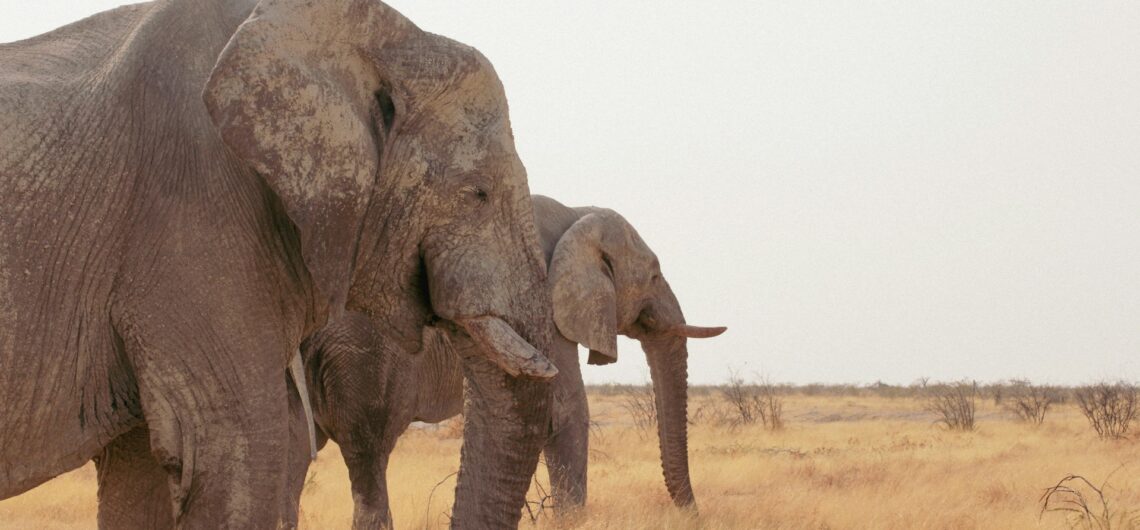
Although the unforgiving Namib Desert covers about 80% of Namibia’s landscape, wildlife has found a way to thrive in a climate that should have made survival impossible.
Namibia is home to a variety of wildlife, such as giraffe, lions, aardvark, wild horses, and oryx, but one of the most fascinating animals to spot roaming peacefully across the great desert expanses is the elephant.
Elephants are found throughout most of Southern Africa, but in Namibia, they are special because over the millennia, they have become uniquely adapted to life in the desert.
These desert-adapted elephants are absolutely captivating to come across while on safari.
But with their numbers dwindling, the window to see a desert elephant in Namibia up close is growing narrower each year, so perhaps it’s time to plan that journey before your last chance slips away.

How Have Elephants Adapted to the Namib Desert?
It’s no small feat to survive in the Namib, one of the oldest and driest deserts in the world. Yet, herds of desert elephants in Namibia have evolved in several ways and with remarkable precision to survive here.
Drinking
In most of Africa, elephants guzzle up to 200 litres of water a day. But in the Namib, females and young ones can go three days without drinking, and males up to five.
Their longer trunks and legs have become essential tools, helping them to dig deep into dry riverbeds to reach hidden water beneath the sand and recent research from the Elephant-Human Relations Aid (EHRA) has shown that these herds have developed exceptional memories that they use to not only remember water sources but to track rainfall patterns over years and navigate distances of up to 70 kilometres a day.
Their nomadic routes are based on generations of learned wisdom.
Eating
While most elephants are notorious for flattening everything in their path, Namibia elephants have learned restraint.
They nibble rather than demolish, ensuring that acacias and mopane shrubs have time to regenerate.
Their diet is sparse and fibrous, and it’s thought this has led to them developing slightly smaller, more brittle tusks.
Foot size
All elephants have big feet, but elephants in Namibia have huge feet.
Whether they are naturally larger or simply appear so on their leaner frames, their expanded footpads spread their weight across the sand, allowing them to walk the dunes and soft sands without sinking.
Time spent travelling
When the heat reaches its zenith, desert elephants rest.
Most of their travelling happens at night or in the early morning, and they move about in small herds. This reduces pressure on scarce resources.

Where are the desert elephants in Namibia?
If you want to see desert elephants in Namibia, there’s one main region to head for: the arid north-west.
It’s a land of layered sandstone, skeletal trees, and heavenly blue skies that remain clear just about all year round.
The best sightings occur along the ephemeral river systems, like the Huab, Hoanib, Hoarusib, and Ugab Rivers, where the trickle of seasonal water breathes just enough life into the land to sustain Namibia wildlife that has learned to adapt.
These arteries are the lifeblood of desert elephants.
After the rains, they burst briefly into green corridors where mopane, ana trees, and acacias bloom, attracting elephants, giraffes, and springbok.
When the water dries, the elephants stay, guided by memory and instinct, and they’ll use their trunks to dig for water.
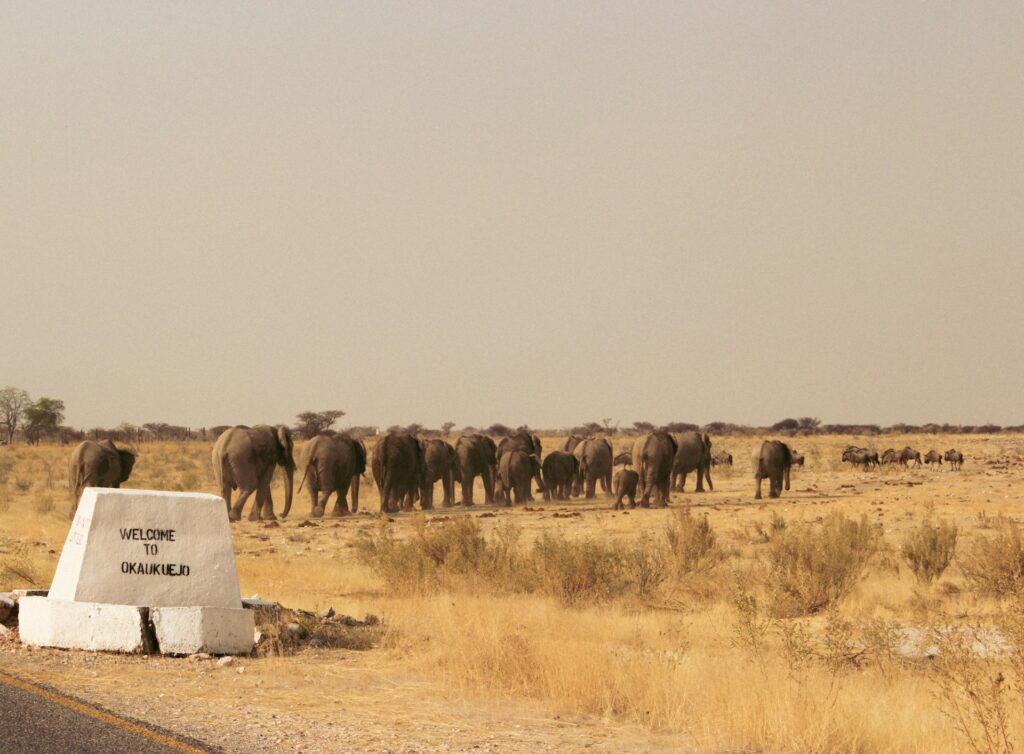
Top Safari Spots to See Desert Elephants
Spending a day tracking these majestic animals is the highlight of any safari in Namibia, and like most safari destinations, some areas are better than others for sightings.
Damaraland
Damaraland is the spiritual home of Namibia’s desert elephants.
The region stretches between Brandberg Mountain and the Skeleton Coast, making for a cinematic landscape of rust-red cliffs and desert plains where time feels suspended.
For a luxurious base that doesn’t break the landscape’s spell, you can stay at Mowani Mountain Camp, the kind of place where the coffee tastes better because you’re watching elephants meander past in the distance.
Nearby Camp Kipwe is a dreamy eco-lodge that has some of the desert views. Morning drives here often reveal entire families of Namibia elephants tracing the Huab River’s dry bed, their outlines ghostly against the amber sand.
Hoanib River Valley
This is where the wilderness feels truly raw.
The Hoanib River Valley lies between Damaraland and the Skeleton Coast, a stretch of remote desert where the dunes meet mountains and the light plays tricks with your eyes. It’s one of the last strongholds of herds of desert elephant in Namibia, as well as lions and oryx that have adapted to this punishing environment.
The Hoanib Skeleton Coast Camp is one of the best places to stay in the area. With only a handful of tented suites, it’s intimate and opulent, and your days can be spent tracking elephants with expert guides who know every herd’s story.

Kaokoland
Further north, you’ll find Kaokoland, a remote and utterly enchanting destination that is the realm of the Himba people, red-ochre mountains, and elephant herds that walk ancient migratory routes.
Okahirongo Elephant Lodge in Purros is the place to stay if you are looking for luxury. The lodge’s terracotta villas open onto the desert, and the infinity pool looks straight over a dry riverbed where elephants often appear.
You can explore the area by guided 4×4 game drives, follow fresh tracks in the sand, or take a cultural visit to the nearby Himba villages, where you’ll be given a humbling glimpse into desert life lived in perfect harmony with nature.
Ugab and Huab Rivers
While far less frequented, the Ugab and Huab Rivers are secret havens for travellers who like their safaris a little wilder and a lot more unpredictable.
The Doro Nawas Camp will give you access to both, with its guided excursions that focus on tracking animals in Namibia’s desert ecosystems, where you’ll not just see elephants, but also black rhino, ostrich, and desert-adapted lions.
Looking out at the rivers, you’ll be reminded that the desert, for all its silence, is very much alive.
Different Ways to See Desert-Adapted Elephants
There’s more than one way to meet Namibia’s most remarkable residents. Some of the best ways to see the elephants in Namibia include:
- Guided Game Drives: You can join local experts who know the herds personally, often by name and family history. The insight they share is fascinating.
- Walking Safaris: In select conservancies, you can track elephants on foot. It’s a humbling experience that’ll leave you feeling rather small, especially if you place your foot into an elephant’s footprint.
- Fly-In Safaris: From the air, the scale of the Namib Desert is breathtaking. Scenic flights link Damaraland, Hoanib, and the Skeleton Coast, and reveal dune patterns and hidden valleys few travellers ever see. And if you’re lucky, you could fly over a nomadic herd of elephants.
- Community-Based Tourism: Supporting local conservancies like the Torra Conservancy helps ensure that tourism benefits both wildlife and the communities that protect it. These projects have been vital in protecting Namibia wildlife from poaching and habitat loss.
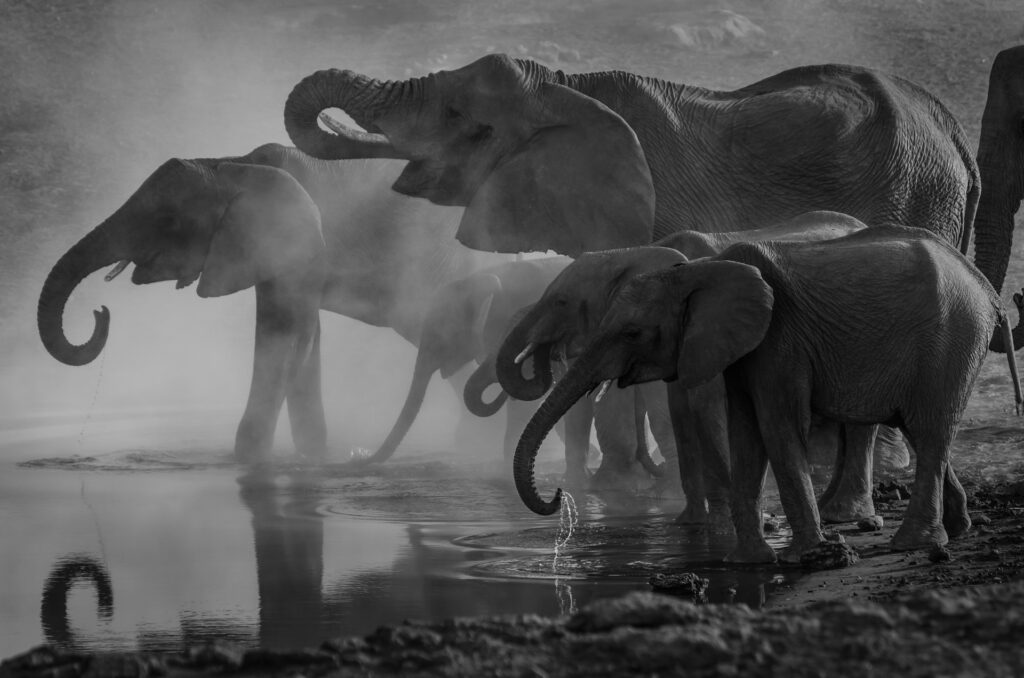
How Many Desert Elephants are Left in Namibia?
Poaching, drought, and human expansion have whittled numbers down from thousands decades ago to between just 150 and 600 today, depending on the surveyed area. Conservation reports from 2025 point to around 350 in places like Damaraland and Kaokoland.
The Desert Elephant Conservation Project and other organises try to patrol, but without sustained tourism revenue, their future hangs in the balance. Your trip to see the elephants in Namibia will not just give you the once-in-a-lifetime chance to see these unique animals, but it will also allow you the opportunity to contribute to their survival.
The Ghost Elephants of Etosha
All throughout Africa, elephants and folklore have gone hand in hand.
Among the Khwe people of Namibia’s Caprivi region, elephants weave into their folklore as both guardians and omens. One enduring tale warns of the “elephant in the bush”, a spirit beast that lurks unseen, punishing those who harm the land without thought, and has become a reminder to tread lightly in these shared spaces.
Other legends swirl around desert elephant Namibia like the Himba stories about elephants that carry the desert’s memories in their footsteps, and the Ovambo tales that cast them as rain-bringers, with their trumpets summoning storms.
Then there are the ghost elephants, and unlike the folktales, these are actually real, but they are not the phantoms that their moniker suggests.
If you travel through Etosha National Park, you might spot ghostly white elephants walking across the plains. These animals are covered in white clay and calcite dust, the result of mud baths, which they take to cool down and to protect their skin from parasites and the sun.

The desert elephant in Namibia is a spectacle to behold, and one of the best ways to see them is by booking a Namibia safari.
Yes, Namibia hosts both savannah and desert-adapted elephants. The latter, unique animals in Namibia desert, thrive in arid northwest regions, while larger herds roam Etosha National Park.
Namibia’s ‘Big Five’ include elephants, lions, leopards, rhinos (black and white), and buffalo, often seen in Etosha or private concessions amid stunning Namibia wildlife.
Botswana leads with over 130 000 elephants, followed by Zimbabwe and Tanzania. Namibia’s population, around 24 000 total, is famous for being uniquely adapted desert dwellers.
For desert-adapted Namibia elephants, head to Damaraland’s riverbeds or Palmwag. Lodges like Hoanib Valley Camp provide prime access to seeing these creatures.
Elephants boast exceptional memory, recognising individuals and locations for decades, which aids survival in harsh environments like those of the desert elephant in Namibia.
