Just before the faint first light of dawn touches the sky, and the dunes glow in the first blush of light, with their curves casting shadows like brushstrokes on an endless canvas, there is a gentle apprehension in the desert air, the excitement of a new day in one of the world’s most ancient places.

A land with oceans of sand, plateaus with the most fascinating rock formations, and skies so clear and unpolluted by light that you can see the Milky Way as you have most likely have only seen it in a long exposure photo, Namibia is far from your average holiday destination and it is certainly the most unconventional place to have a romantic holiday, like a honeymoon. 

It is the country’s lack of convention that makes it one of the best places in the world to start your marriage, because while it might not have those tropical island vibes, with the packed beaches and booked-out seaside lodges, it has something far more sought after by those more discerning couples.

Namibia has privacy, and it can offer a rare kind of solitude that we promise you won’t find at any other travel destination.

You won’t find another place where your first days as a married couple include sitting under a sky so clear it feels infinite, and where the only noise is the soft hum of the wind shifting the desert sand and the soothing calls of distant wildlife. 

Namibia honeymoon safaris are the start of a love story written in ochre dunes, salt pans, and starlit silence. And as a nation that is sparsely populated and has only a select number of holiday makers at any given time, it can easily feel as though you’ve been whisked away to a world for just the two of you. 

Who could say no to such an intimate honeymoon?

Desert Tours and Dune Holidays in Namibia

Is Namibia a good honeymoon destination?

Namibia is a sublime honeymoon destination that very few couples even know about.

It is just the destination for those who wish to explore the natural beauty of the African wild but who also want the experience to be full of intimacy, so that it feels as though it has been made for just you and the love of your life.

The landscapes of Namibia can host some of the most private moments, with numerous luxury lodges built in such a way that the views can be fully enjoyed without seeing another soul.

Candlelit dinners on a terrace overlooking one of Etosha’s waterholes, or a morning coffee while the Skeleton Coast mists drift in from the Atlantic, are just a few of the experiences that make Namibia a good honeymoon destination.

Unlike more crowded safari spots, Namibia will give you complete seclusion without you having to worry about sacrificing your comfort. The lodges are boutique, the guides are attentive, and the pace is yours to set.

You can just as easily spend your whole honeymoon, sticking to your lodge and simply enjoying those quiet moments together, as you can be outdoorsy, going on hikes and trying your hand a rock climbing. Namibia is for every kind of honeymooning couple. 

Your honeymoon isn’t just a trip, it’s a shared secret between you, your partner, and the land itself. Namibia honeymoon safaris are not about rushing from sight to sight, but savouring each moment, together.

Namibia Honeymoon Safaris

Where in Namibia is best for a honeymoon?

Namibia’s undulating and ever-changing landscapes and its abundant wildlife make it a dream destination for couples looking for a romantic safari experience. 

From those beautiful red dunes to wildlife-rich plains and haunting coastlines, these are the best spots in Namibia for a honeymoon filled with adventure, seclusion, and natural beauty.

Sossusvlei

You’ll find Sossusvlei deep in the Namib Desert

It is a photographer’s paradise and you’ll easily recognise its iconic red sand dunes, some soaring over 400 meters, and the hauntingly beautiful Deadvlei, where ancient camel thorn trees stand against a stark white clay pan, from famous photos in magazines like National Geographic.

The dramatic desert scenery can set the stage for some of the most intimate moments, especially at sunrise or if you are staying at a lodge in the NamibRand Nature Reserve, Africa’s only International Dark Sky Reserve, where you’ll be treated to perfectly clear star-filled skies.

Couples can climb Big Daddy dune for a sunrise view, soar above the desert in a hot-air balloon, complete with a champagne breakfast, or enjoy a private stargazing evening, sleeping outside, on a star bed. 

Some of the best places to stay include Sossusvlei Desert Lodge, with its luxurious tented suites with private patios, or Wolwedans Dune Camp in NamibRand where you’ll be treated to secluded chalets with hypnotising panoramic desert views. 

The best time to visit is May to October, when you’ll have cooler temperatures and you’ll get to see some beautiful desert hues.

Etosha National Park Tours

Etosha National Park

Etosha National Park is the ultimate destination for a safari, and it is home to four of the Big Five (lion, elephant, buffalo, rhino) plus cheetahs, giraffes, and zebras.

Its waterholes are the best place to head to for safari experiences worth talking about. This is where you can spend a morning or evening watching animals gather, in what feels like a private show for you and your partner. 

You can book a guided safari or go on a more intimate self-drive through the park. Being out in the bush will also give you the ideal setting for a romantic candlelit dinner at one of the Park’s lodges, or you can relax by a waterhole, watching the wildlife. 

Andersson’s Camp will give you waterhole views from your tent, while Onguma – The Fort has elegant suites with private verandas that overlook the pan. 

The best time to visit is from June to October for prime game viewing.

Things to Do in Swakopmund

Swakopmund

Swakopmund is a little less intimate than other places in Namibia, but it is perfect for couples who want a mix of romance and adventure. The soft ocean breezes, desert adventures, and small-town feel make for a unique honeymoon. 

You can take a dolphin and seal-spotting catamaran cruise, try sandboarding or quad biking in the nearby dunes, or enjoy a romantic dinner in town. If you want to really have a memorable experience, you can skydive together or take a day trip to the dramatic Spitzkoppe.

As for places to stay, you can book a spot at Swakopmund Hotel & Entertainment Centre, or you can choose a cosy guesthouse or a luxury lodge. 

Swakopmund is a year-round destination, but June to October will give you the most pleasant weather.

The Skeleton Coastline

Skeleton Coast

For couples who really place solitude above all else, the Skeleton Coast is a Namibia honeymoon safari destination that is desolate, with not much other than shipwrecks, vast seal colonies, and desert-adapted wildlife for company. 

Its remoteness will leave you feeling like you are the only two people in the world, a feeling quite perfect for an intimate getaway. 

You can spend your honeymoon exploring the coast on a scenic drive, join a guided safari to spot desert-adapted wildlife, or enjoy a private picnic amidst the wild scenery. 

The clear skies are ideal for stargazing, and Hoanib Skeleton Coast Camp is a wonderful place to stay, with its luxurious tents giving you plenty of privacy. 

Plan your visit from June to November for plenty of wildlife sightings and comfortable temperatures.

A Guided Damaraland Tour

Damaraland

Damaraland’s dramatic landscapes, desert-adapted wildlife, and rich cultural heritage make it a unique Namibia honeymoon safari destination for adventurous couples. 

The region’s isolation and raw beauty, paired with cultural experiences, help to create a deep, shared connection. 

You can visit Himba villages to learn about local traditions, explore the 6 000-year-old rock art at Twyfelfontein (a UNESCO site), or track desert elephants and rhinos on a safari. 

Hoanib Valley Camp is a good choice for honeymooning couples, with its luxurious chalets and stunning wilderness views, making it a lovely romantic retreat. 

The best time to visit is May to October when the weather is cooler. 

Luxury Safari Lodges Namibia

Is Namibia cheaper than South Africa for a honeymoon?

When comparing costs, Namibia and South Africa both have all kinds of accommodation and holiday packages available for honeymooning couples. 

Namibia often comes out slightly higher in daily lodge rates due to its remoteness and smaller property sizes. However, what you gain is exclusivity, with fewer guests, more personalised service, and private experiences that are harder to find elsewhere.

Flights into Namibia may cost more than those to Johannesburg or Cape Town, but the distances between destinations here are shorter, and self-drive safaris can be a romantic, cost-efficient option. 

South Africa has bustling cities and wine country, but Namibia has solitude and unspoiled landscapes, making it an investment in privacy many honeymooners value above all.

What makes Namibia special?

In Namibia, there’s luxury in finding yourself miles from the nearest settlement, your only company being your partner and the great wilderness. 

Nights can be spent on open-air decks, wrapped in blankets, sipping something warm, and your days can be spent enjoying adventures like tracking wildlife on foot with an expert guide, drifting over dunes in a hot air balloon, or simply soaking in a plunge pool. 

On Namibia honeymoon safaris, each activity is designed not just for seeing, but for feeling the closeness to nature, to each other, and to the moment.

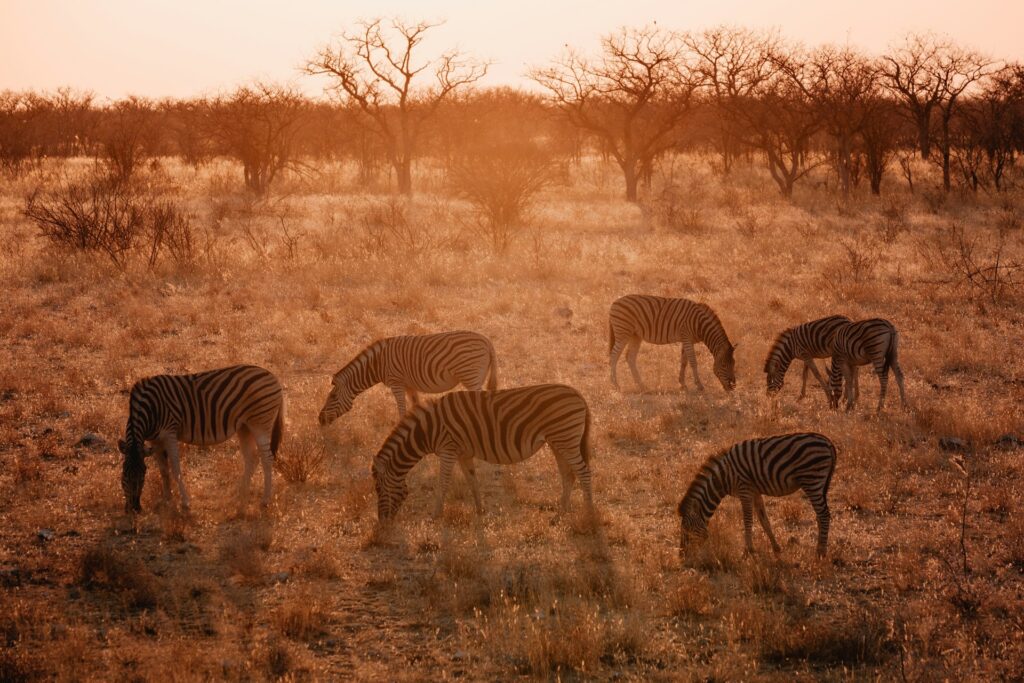
A Zebra on a Namibia Safari

Add a New Chapter to Your Love Story

Namibia is for couples who want their honeymoon to feel like it’s been custom-written for them. 

Every sunrise, every footprint in the sand, every shared glance over a campfire meal will become a part of your story.

If you can picture yourselves here, two silhouettes against the world’s oldest desert, then it’s time to make it happen. We can help you plan your Namibia honeymoon safari, one that includes romance, seclusion, and the best kind of memorable experiences in one of the most remarkable places on earth.

About the Authors African Travel Concept Namibia Team

At African Travel Concept Namibia, our team of experienced travel and safari professionals is dedicated to turning first-hand African expertise into clear, reliable advice. We research, review, and refine every article so you have the most current and accurate information when planning your trip.

The adventurer Robert Edison Fulton Jr once said, “The desert tells a different story every time one ventures on it.” 

The Namibian desert is no different, and while she doesn’t tell stories loudly, for those who are willing to listen, the stories of the Namib Desert move through the wind, brushing against red dunes, or a solitary oryx as it slowly crosses the golden grassland beneath a bruised purple clouded sky. 

A Namibia desert tour is far from your typical holiday. 

Around every turn in the road and behind every rock, there’s something older than memory, and worth seeing. It’s here, on a stretch of earth that’s been arid for over 55 million years, that time stops asking you for anything, and the only thing it calls you to do is to sit still and take it all in. 

The Namib is more than its iconic dunes and cinematic sunsets. 

It is home to peaceful, character-filled lodges, haunting landforms and a few haunted ghost towns, and wildlife that have become adapted to the desert’s climatic extremes over the centuries. 

Whether you’re standing atop Big Daddy in the beautiful Sossusvlei Namibia, tracing rock patterns with your fingertips in Sesriem Canyon, or sipping relaxing sundowners at Namibia Sossusvlei Lodge, the Namib experience feels exclusive, luxurious and rustic all at the same time. 

In this blog, you’ll trace our exact route through the Namibian desert. If you’ve been craving space, silence, and something truly authentic, let this be your first step. 

Before you read the blog, have a look at our YouTube video that will take you to some of the best destinations featured in our blog. From the red dunes of Sossusvlei, through to the utterly beautiful Naukluft Mountains and the Naukluft National Park, our video will give you a small taste of what to expect from your Namibia desert tour.  

Destinations 

Don’t for one moment be fooled into thinking that a Namibia desert tour doesn’t hold its fair share of absolutely astounding attractions. 

When you drive the length and breadth of the Namib, you will be treated to sights, sounds and experiences that are hard to put into words. 

The desert is no desolate sand bucket that will leave you bored on your road trip, but to make the most of a dune holiday, you must plan the route to include these destinations:

Sossusvlei

The Very Soul of the Namib

Situated within the Namib-Naukluft National Park, Sossusvlei Namibia, an attraction for those on a Namibia desert tour, is a place where stillness seems to take on a form.  

If you’ve ever wondered where those photos of iconic red dunes are taken, it’s here in Sossusvlei, where the dunes reach heights that, unless you are standing before them, look almost fictional, especially when the dunes are brightly painted in morning light, showing off their immense size. 

Within Sossusvlei, one of the biggest attractions is the Dead Vlei and its magnificent, age-old fossilised trees, which stand out like charcoal sketches against white clay pans and the dunes which frame them.

Sossusvlei is also home to Big Daddy and Dune 45, two of the desert’s biggest dunes, and if you’re up for the climb, you will be treated to the most incredible views. 

What to do in Sossusvlei:

  • Hike up Dune 45 or Big Daddy at sunrise
  • Explore Dead Vlei and Sesriem Canyon
  • Enjoy a desert breakfast picnic
  • Stay at the scenic Namibia Sossusvlei Lodge

Sesriem

Find Stillness in the Shadow of the Naukluft

Just a short drive from Sossusvlei, Sesriem is a small but immeasurably characterful destination and a popular addition for a Namibia desert tour. 

Framed by the southern part of the Naukluft Mountains and bathed in warm light each evening, in Sesriem, you can go hiking, book a hot air balloon safari or just laze at your hotel after a day spent exploring the sands, ancient rock formations and the nearby Namib-Naukluft National Park.

Sesriem is also home to Desert Hills Lodge, a high-end property that embodies low-key luxury and will treat you to authentic Namibian hospitality.

What to do in Sesriem:

  • Walk through the natural rock formations of Sesriem Canyon
  • Stargaze with zero light pollution
  • Book a hot air balloon for early morning views
  • Unwind at Desert Hills Lodge, with its local wines and home-cooked meals
Solitaire

Solitaire

A One-Road Town with More Than a Petrol Station 

Solitaire certainly lives up to the origins of its Latin name. 

This solitary town feels like something from a desert novella. It has one lone fuel station, a famous apple pie, which you can indulge in at the Solitaire Desert Bakery, and the peaceful silence of the surrounding desert. 

Spending any amount of time in Solitaire will give you a place to pause, refuel (your body, soul, and your vehicle), and admire the many classic car relics that you will find rusting quietly in the sand, when you enter or leave the town.

What to do in Solitaire:

  • Try Moose McGregor’s legendary apple pie
  • Photograph the desert-styled scrapyard
  • Fill up and browse the mini trading post
  • Watch the sun melt behind the petrol pump

Naukluft

Just the Place for the Desert Walker

While much of the Namibian desert stretches in solitude, with kilometre upon kilometre of the desert just being nothing but empty sandy stretches that roll into the distance, the Naukluft Mountains make for a most welcome and almost unexpected break in the scenery. 

Naukluft is an oasis of stone, shadow, and greenery. It’s where you’ll see desert antelope walking through the ravines, and where hikers can dip their feet in newly created water pools after the seasonal rains.

What to do in the Naukluft region:

  • Hike the Olive Trail or Waterkloof Trail
  • Spot Hartmann’s mountain zebra
  • Visit the natural rock pools
  • Pack a picnic and walk one of the easy scenic loops
Dune Holidays in Namibia

When Less Really Is More

A Namibia desert tour won’t fill your itinerary with endless ticking off of sites, but then again, it’s not meant to. 

Instead, the Namib is a place that clears space, to give you stillness, big blue skies, and pure moments of quiet joy. 

From the red sands of Sossusvlei to the subtle comforts of the desert’s lodges, this part of the world easily delivers something rare: the opportunity to have the ultimate reset.

If you are ready to start your trip, watch our YouTube video to get an idea of what’s to come, then book your escape with us to save time, get the best expert insight, and enjoy the finest desert accommodation.

*

FAQs About the Namib

What is the best time to visit the Namib Desert?

The best time for a Namibia desert tour is between April and October. These months bring cooler temperatures, clear skies, and excellent conditions for hiking and photography. Wildlife sightings are also more common during the dry season.

What is the most famous desert in Namibia?

The Namibian desert, specifically Sossusvlei Namibia, is the most iconic destination and it is known for its red dunes, white pans, and fossilised trees. It’s also considered the oldest desert in the world.

What do you wear in the Namib Desert?

Light, breathable fabrics are a must. Layering your clothing will keep you the most comfortable as mornings and evenings can be cold, while midday temperatures soar. Sturdy walking shoes, sun protection, and a hat are also all essentials.

Where can I stay near Sossusvlei?

There are several exceptional accommodations to choose from. Namibia Sossusvlei Lodge is a popular, well-reviewed option that will give you direct access to the park, comfortable rooms, and excellent food. Desert Hills Lodge near Sesriem is another standout for its serenity and local character.

About the Authors African Travel Concept Namibia Team

At African Travel Concept Namibia, our team of experienced travel and safari professionals is dedicated to turning first-hand African expertise into clear, reliable advice. We research, review, and refine every article so you have the most current and accurate information when planning your trip.

From eerie shipwreck coasts to stargazing in pristine deserts, Namibia travel in 2025 is calling those craving something real, raw, and unforgettable.

Why visit Namibia in 2025? Well, if you’ve always wanted to travel to Africa and have an experience beyond the conventional safari, the answer should be, well, why not visit Namibia? 

It is one of the last places on earth that remains truly wild and free, and for any daydreamer wanting a holiday that feels as though it is out of a movie, Namibia should be high up on the list of travel destinations. 

But for those who have not yet been introduced to the magnificence that is Namibia, the question “why visit Namibia?” is understandable and deserves the in-depth answer we’re going to give you in this blog. 

If there’s one place on earth where the silence speaks volumes and where the landscapes call to you in an ancient and unexplainable way, it’s Namibia. 

Situated between the Kalahari Desert in the south, the Atlantic Ocean on the west, and lush overgrown lands to its north and east, Namibia is the beautifully desolate African desert destination that continues to intrigue every traveller who takes on its dusty tracks. 

Namibia travel in 2025 is quickly climbing the list of bucket-worthy holidays, and that is no surprise, given that Namibia has the ability to cater to every kind of traveller, no matter what kind of holiday they have in mind. 

Whether you’re hypnotised by the shifting sands of Sossusvlei, captivated by the eerie shipwrecks scattered along the Skeleton Coast, or curious about the cultures that define the people of this nation, Namibia promises something rare and remarkable.

It’s also home to some of the most dramatic contrasts in Africa, which include rust-red dunes, lunar-like valleys, colonial German towns, and wildlife-packed plains that almost but not quite rival the Serengeti. 

If you’re still wondering where to head next, here’s why a Namibia travel in 2025 should top your list.

The Skeleton Coastline

5 Reasons Why You Should Visit Namibia

As such a phenomenal place to have the kind of getaway that allows you to really be well out of wi-fi and cellphone reception, Namibia is an almost idealistic destination. If you are looking for reasons why you should book that trip, these are just 5:

1. Namibia has Otherworldly Landscapes

Namibia is like nowhere else on earth, and that is not a clichéd exaggeration. 

The Namib Desert is thought to be the oldest in the world (it’s estimated to be between 50 and 88 million years old), and its iconic sand dunes near Sossusvlei make for one of the most photographed landscapes on the continent. 

Driving through the Moon Landscape near Swakopmund, or visiting the Quiver Tree Forest near Keetmanshoop, won’t just have you seeing the pretty sights; they’re geological time capsules where you can truly step back in time and see what this part of the world was like millions of years ago. And once you experience that, the wildlife and plant life that thrive here become all the more impressive for their ability to survive in such an unforgiving climate.

2. Namibia will give you the most Authentic Wildlife Encounters

Although the country is best known for its desert, towards the east, close to the Botswana border, you’ll find Etosha National Park, a haven for all kinds of wildlife.

Well away from the usual crowds you’d find at other safari destinations like the Kruger National Park, you can watch a black rhino drink from a waterhole or a pride of lions making their way through the tall grasses, without the usual tourist company and in near silence. 

Namibia was the first African country to include conservation in its constitution, and community-run conservancies now cover over 40% of the land. 

This means your Namibia tour doesn’t just show you wildlife; it contributes to supporting the people who live alongside it.

3. Namibia gives you a Trusted, Easy Travel Experience

For first-time travellers coming to Africa, Namibia is a dream. 

The roads are well-maintained, English is widely spoken, and the infrastructure is solid. It’s easy to self-drive, or book with a trusted tour provider who can build a custom-made itinerary that includes all the must-sees and secret attractions known only to locals. 

And let’s not ignore the value. Prices in Namibia often beat those of more crowded destinations.

4. Namibia has a Rich Culture and History

From the rock carvings at Twyfelfontein to the colonial architecture of Lüderitz and the interesting craft markets of Okahandja, Namibia is guaranteed to give you a cultural experience. 

The Himba people in the north have preserved their traditional lifestyle, and a respectful visit here can be one of the most memorable moments of your trip.

5. Namibia has Astounding Stargazing

Namibia has some of the darkest skies in the world.

If you’re camping in the desert or staying at an exclusive eco-lodge, the night sky is jaw-dropping because most of the country is completely free from light-polluted skies. 

The NamibRand Nature Reserve is even a designated International Dark Sky Reserve, and many lodges out in the desert have star beds, where you can fall asleep outside, beneath the stars, and telescopes, to give you the best view of the heavens. 

Things to Do in Swakopmund

Is it Safe to travel to Namibia?

Yes, resoundingly so. 

Namibia is often ranked high up among the safest countries in Africa. 

With a population of just over 2.5 million spread across an area twice the size of Germany, there’s space to breathe and travel at your own pace. 

Petty crime exists, as it does anywhere, but violent crime targeting tourists is rare. Most visitors feel relaxed, welcomed and secure when visiting the country.

What also helps is the predictability. 

Namibia’s roads are well-marked, the police presence is consistent but non-intrusive, and travel operators are professional and experienced. 

Regardless of whether you’re self-driving or joining a Namibia tour, safety is seldom a concern.

What Makes Namibia So Special?

It’s the silence. It’s the grand scale of the country and its landscapes. And it’s the sense that you’ve stepped into an untouched world.

Namibia is one of the few destinations where you can be completely alone, and completely present in every moment, undistracted by the crowds and free from the sort of itineraries that leave you feeling as though you can’t even catch your breath between activities. 

Wildlife tends to appear when you least expect it. Landscapes change, often dramatically, with each kilometre you drive. And there’s no rush, no chaos, and no “over-tourism”.

And while the country is full of photo-worthy moments, it’s also full of emotional ones, like the first time you see a lion walk across salt plains, or when you share a laugh with a local guide over a cold Windhoek Lager. 

That’s the real Namibia. And that’s what makes it so special. 

Welwitschia Mirabilis

5 Interesting Facts About Namibia

Namibia is a country simply full of interesting facts, and when you are debating why you should visit Namibia, it sometimes helps to be impressed by some of the facts that help to make Namibia what it is:

  • It is one of only two places (the other being Angola) where you can see Welwitschia Plants. These are the oldest living plants on the planet, some of which are thousands of years old (and still growing).
  • It is home to the largest free-roaming cheetah population in the world, which is a real treat for wildlife enthusiasts.
  • It was once a German colony, and remnants of that era remain in architecture, street names, and cuisine.
  • The Skeleton Coast is named for its shipwrecks, many of which are still visible today.
  • It is one of the few places in the world where you can see the meeting of desert and ocean, where the sand dunes of the Namib roll right into the Atlantic.
Desert Tours and Dune Holidays in Namibia

Ready to Book Your Namibia Tour?

If you’ve been searching for a holiday that is different, wildly unapologetic in its authenticity, exclusive, and something that feels almost like a secret, a Namibia tour might be exactly what you’ve been looking for. 

Whether you’re drawn by the landscapes, the wildlife, the prices or the stories waiting to be written, Namibia ticks the boxes without shouting about it. 

That’s why you should visit Namibia.

Save your spot on the ultimate journey into one of Africa’s best-kept secrets. Namibia is ready when you are.

About the Authors African Travel Concept Namibia Team

At African Travel Concept Namibia, our team of experienced travel and safari professionals is dedicated to turning first-hand African expertise into clear, reliable advice. We research, review, and refine every article so you have the most current and accurate information when planning your trip.

Namibia plays host to a wide variety of festivals, celebrations, gatherings, and other cultural events that bring communities (and tourists) together. 

While its festivals might not have the drawing power of events like Glastonbury or Coachella, each event has something meaningful, interesting and fun about it. 

That’s because Namibia doesn’t do boring, especially not when it comes to tradition. 

All throughout the year, there are plenty of Namibia festivals for travellers to take part in or just enjoy as an intrigued spectator; all you have to do is make sure that you plan your travels for the right time. 

If you are looking to add something extra special to your Namibia holiday, think of this as your pocketbook guide to what’s happening in Namibia in 2025 and 2026, which you can use to give yourself a front-row seat to a year (and then some) of parades, rituals, and epic community gatherings.

Namibian Cultural Dances

January – New Year Celebrations and Day of the Kings

Namibia knows how to kick off a new year in style. New Year festivities take place on the 1st of January every year, followed by the Day of the Kings on the 6th of January. 

All across the country, in towns and villages, families gather for outdoor feasts, music, and dance, with children happily receiving small gifts. 

These are Catholic-rooted celebrations, and they are joyous, communal affairs, filled with traditional foods and songs that echo through the warm summer air. 

It’s a great way to set the tone for a bright new year.

February – Bank Windhoek Arts Festival

The air is dry and the heat is intense; this is the hottest time of the year in Namibia, but Windhoek comes alive in February with the Bank Windhoek Arts Festival, an event designed to show off Namibia’s more creative spirit. 

2025’s event saw the second edition of the Bank Windhoek Choral Celebration as well as workshops, choir clinics and Healing Vocals with the Windhoek Gymnasium School Choir and Namib Camerata Choir.

In 2026, you can expect highly entertaining theatre performances, dance troupes, and all sorts of interesting visual art exhibitions that allow local talent their time in the limelight. 

This event was specifically designed to both encourage and sustain artists, and for travellers, it is the perfect opportunity to see what arts Namibia is contributing to the world. 

March – Independence Day and Enjando Street Festival

On the 21st of March each year, Namibia’s Independence Day erupts with parades, cultural performances, and feasts across the country, as the nation commemorates the day it received its freedom from South African rule in 1990. 

The energy is electric, especially in Windhoek, where locals don their best attire and share stories of the nation’s resilience. 

Later in the month, there’s the Enjando Street Festival (Mbapira), which quite literally fills the capital with music, dance, and street food. The vibe is relaxed, and it’s family-friendly too. 

Windhoek Namibia Festivals

April – Windhoek Karneval, Oshituthi Shomagongo, and the Swakopmund Arts Festival

April brings 3 unmissable Namibia festivals. 

The Windhoek Karneval (WIKA), held late in the month, mixes the country’s German carnival traditions with its Namibian roots. There are colourful parades, live bands, and an array of delicious food stalls serving bratwurst alongside other local delicacies. 

Meanwhile, in northern Namibia, between March and April, the Oshituthi Shomagongo celebrates the annual marula fruit harvest, with what UNESCO calls an Intangible Cultural Heritage event. 

Communities gather to make omagongo (a fermented marula drink), carve wooden cups, and weave baskets, treating those who visit the event to a relaxed, authentic atmosphere. The event generally lasts 2 to 3 days, and during that time, there’s lots of feasting, drinking, dancing, and the men tell stories from history. 

Swakopmund Arts Festival, where you can indulge in warm weather, music, theatre, and visual arts that reflect the town’s German heritage, also takes place in April. The festival also hosts a number of smaller events throughout the year, so be sure to check out their Facebook page.

May – Africa Day, Himba Cultural Festival and the Nama Cultural Festival

On the 25th of May each year, Namibia joins the continent in celebrating Africa Day, a lively tribute to unity and multiculturalism.  During this time, some local communities host events with dance, music, and storytelling, sharing their heritage with all who will listen. 

For as long as tourists have travelled to Namibia, the Himba tribe has been an intriguing fascination. The appearance of the Himba people, adorned with clay that protects them from the sun and also carries heavy cultural significance, is quite the sight, and the Himba Cultural Festival, which takes place in the Kunene Region in May, puts the spotlight on the traditions of the Himba people through mesmerising dance, music, and storytelling.

If you want to meet and interact with the Himba tribe, then this is your chance to connect with one of Namibia’s most iconic cultures. 

You can also experience the Nama Cultural Festival, one of the more interesting Namibia festivals, which celebrates the Nama people’s heritage through music, dance, and storytelling. It takes place in Keetmanshoop and this year’s theme was Namakhoe da ge – /Gui!nâxasib !nâ /omkhâi tsî ai!gûs,” which roughly means “Namakhoen united towards progress and growth”.

This festival will give you a feel for the pride that the Nama people have for their ancient culture and traditions. 

June and July – Tribal Festivals

The winter months bring a series of Namibia festivals that focus on celebrating the country’s indigenous tribes, as well as a handful of other fun things to do. 

Winter is punted as the best time to travel, and for good reason, because getting outdoorsy and active is far easier when you’re not battling the heat!

The Ovambo and Damara communities all host events featuring ancestral dances, songs, and rituals, particularly in the Kalahari and northern regions. These gatherings give travellers a rare look into Namibia’s cultural roots, with performances that honour centuries-old traditions. 

The Olufuko Cultural Festival takes place between the end of June and the start of July, and it is a rite of passage event for the Awamabo girls. 

Between the end of May and into the start of June, there’s also the Climb Namibia Festival at Spitzkoppe. This festival is new to Namibia in 2025. 

Windhoek’s Kapana Cook-Off also happens in July, and it sees street food vendors compete to create the tastiest kapana, a beloved Namibian grilled meat dish. The lively atmosphere and mouthwatering aromas make this a must-visit, especially if you are a foodie, and who can resist the warmth of all of those fires?

Namibian Culture

August – Herero Day and Kapana Cook-Off

August starts the slow return of the warmer weather, and it’s also a highlight for Namibia festivals, with Herero Day on the 23rd of August in Okahandja, or the Sunday closest to that date. 

This poignant event commemorates the 1904 Battle of Waterberg, with parades of warriors dressed in striking traditional attire honouring fallen heroes. 

September – Harvest Festival

The Harvest Festival, which usually takes place at the end of September and into October, sees communities across Namibia give thanks for their bountiful crops with feasts and communal gatherings. This festival takes place at an unusual time, at the start of spring, and it has plenty of cultural importance. In 2025, the Harvest Festival will take place on the 5th of October.   

October – Windhoek Oktoberfest

October brings the fun and fabulous Windhoek’s Oktoberfest, a top event on most tourist and local calendars, which is normally held on the 25th to the 26th of October, and with its frothy beers, traditional German foods, and festive music, it’s not to be missed if you are looking for a great time!

Things to Do in Swakopmund

November Oranjemund Diamond Festival and Annual Windhoek City Kapana Fest

November is Namibia’s quiet month, possibly because things are getting hot and toasty outside!

During this month, you can attend the Oranjemund Diamond Festival and the Annual Windhoek City Kapana Festival, yip, another ode to Namibia’s favourite street food!

At the Oranjemund Diamond Festival, which takes place late in the month, you can see what makes the town such a great place, and you’ll learn a thing or two about diamonds. The festival also serves as a way to attract investors. 

And as you can imagine, the Annual Windhoek City Kapana Fest is all about good street food! The festival also takes place towards the end of the month, over two days. 

December – Keetmanshoop House Festival and Christmas Markets

You can round off the year with the Keetmanshoop House Festival in southern Namibia, a high-energy event full of music, dance, and community spirit. 

You can also visit Windhoek’s Atlantis Sport Club Christmas Market for some festive cheer, and spend some time browsing the stalls with their crafts, and good food, and you can even visit Santa. There are also plenty of other Christmas focused Namibia festivals and markets at this time of the year.

Namibia Christmas Holiday

Why Wait? Book Your Cultural Journey Now

Namibia’s festivals are an interactive opportunity waiting for you to join. 

Although safaris and road trips define most Namibia tours, adding one or two festivities to your agenda might be just what you are missing from creating an out-of-this-world holiday. 

From the rhythmic beats of tribal dances to the lively buzz of urban celebrations, these moments will leave you spellbound. Don’t let another year pass without experiencing Namibia’s cultural riches. With our trusted travel company, booking is easy, and our exclusive packages will give you the best value. 

So save the date on your calendar, pick your favourite Namibia festivals, and let us handle the rest. Contact us today to book your authentic Namibian journey!

About the Authors African Travel Concept Namibia Team

At African Travel Concept Namibia, our team of experienced travel and safari professionals is dedicated to turning first-hand African expertise into clear, reliable advice. We research, review, and refine every article so you have the most current and accurate information when planning your trip.

When the sun dips behind Namibia’s distinctive rust-red dunes after a hot and dry day and the stars begin to shine like scattered diamonds across an inky black sky, something extraordinary begins. 

The landscape, harsh by day, cools off quickly, and the wildlife that you would see during your day safari turns into their burrows or finds a spot to safely rest for the night, and Namibia’s secretive and somewhat shy night creatures come out. 

One of the best, in fact one of the only ways to see the nocturnal wildlife, is to go on one of the expertly guided night drives in Namibia. It is on just such a trip that you’ll encounter the astonishing wildlife that slips under most travellers’ radar, if only because not every traveller knows just how interesting a night game drive can be.

Unlike daytime game drives, where the animals tend to retreat to the shade of a tree, becoming hidden by the shadows and protected from the sun, night drives give you a whole new way to see wildlife, one that is unhindered by heat.

With the moon as your backdrop and a trusted local tracker at the wheel, you’ll experience a rare glimpse into what can be described as one of nature’s most elusive routines. 

Night drives in Namibia are the ultimate nocturnal safari experience, and when you book your trip with a trusted company, you can be sure that yours will be a safe and exclusive experience. To help you plan such a trip, this is what you need to know about Namibia when the sun goes down. 

Lion at sunset

What time does Namibia go dark?

Sunset in Namibia is always something to behold. When the sun sets over the dunes, it does have a rather dramatic look about it, and just after the sun begins its descent, the nocturnal animals begin to appear.  

The country gets between 5 and 7 hours of sunlight at the coast and between 8 and 10 hours of sunlight in the interior. 

Depending on the season, Namibia goes dark between 6:00 pm and 7:30 pm. 

During the winter months (June–August), the twilight window is brief, so most winter night drives in Namibia kick off at around 7:00 pm, just as the last blush of colour disappears from the sky. 

By 8:00 pm, it’s pitch black, and this is the time when you are more likely to see all of those nocturnal critters and creatures that bring the night to life. 

Winter night drives in Namibia will give you more time to see the nocturnal animals, while in the summer months, you’ll be treated to some of the most drawn-out spectacular sunsets. 

Why is a night drive special?

Day safaris will give you the classic African safari sightings of elephants by watering holes, lions lounging in the heat, and antelope meandering this way and that across the dusty, dry plains.

A night drive, on the other hand, will give you something completely different. 

These drives are about catching sight of a leopard stalking silently through acacia scrub or watching an aardvark snuffling for termites. It’s also about the sounds, like an owl’s haunting call, or the crack of twigs as a hyena prowls nearby. 

There are always ways to increase your chances of seeing nocturnal wildlife, techniques which can’t be used during a day drive. Guides will often use red filters on spotlights to avoid distressing the animals while ensuring you don’t miss a moment. These low-impact methods protect the ecosystem while heightening your viewing. 

A night drive through Namibia is anything but ordinary, and it is certainly going to be one of the highlights of your trip to the country. 

A Leopard at Dusk in the Kgalagadi Transfrontier Park

What animals typically come out at night in Namibia?

Namibia is quite famous for having a wide range of daytime wildlife, and its nocturnal wildlife is no different when it comes to diversity. 

A lot of the critters you should keep an eye out for at night are small, and as such, can stay well-hidden, making it so important and helpful to have that extra set of well-trained eyes (your guide). 

Of all the interesting animals you can potentially spot while on night drives in Namibia, these are the most common:

Nocturnal Wildlife in Namibia

Aardvark

Solitary, a little odd-looking, and rarely seen by day, aardvarks are every termite and ant’s worst nightmare. When night falls, these pig-looking creatures emerge from their daytime burrows on a mission to dig through anthills, which they do with comical efficiency. 

Aardvarks are a tasty treat to predators of all kinds, so it is incredibly rare to see them out and about during the day. Some local legends say that the aardvark has the power of invisibility as they are so quick to hide should a threat arise. 

Bat-eared Fox 

With the cutest oversized ears and a nervous energy that you can feel from the 4×4, these little canids are insect-hunting machines. Although they are, for the most part, nocturnal, it is not unusual to see a bat-eared fox during the day. 

Like the aardvark, these adorable animals stay in burrows, of which they have several that consist of various entrances, rooms and tunnels, making them big enough for the whole family, for most of the day and will emerge in the early morning and the late evening. Also like the aardvark, the bat-eared fox eats termites as well as other insects. 

Nocturnal Animals in Namibia

Leopard 

Silent, regal and incredibly powerful, a sighting of a leopard is at the top of most safari lists, and your best chance of spotting one is under the cover of night. Leopards are notoriously elusive, and during the day, seeing one is a rare thing indeed, because they are most active and do most of their hunting at night. 

In fact, just about everything about the leopard makes it nighttime adapted, from its camouflaged fur coat to its exceptional night vision. If you are lucky enough to see a leopard at night, you will probably spot it high up in a tree, dining on its evening prey. 

Genet 

If you’ve never seen a picture of a Genet before, think feline meets ferret. These agile hunters are often caught slinking through trees, and as well as being nocturnal, they are also crepuscular, which means you are also likely to see them at dusk and at dawn. 

During the day, much like the leopard, they like to rest in trees and thickets, away from camera lenses and predators. As for food, genets will eat just about anything, including insects, birds, small animals, frogs and lizards. 

Namibia Night Drives Wildlife

Brown Hyena 

Shaggy, shy and completely captivating, brown hyenas are Namibia’s misunderstood outlaws, and they look nothing like their cousins, the spotted hyena. 

Brown hyenas are listed as a threatened species, with only 5000 to 8000 left in the wild. They are most active at night, although they can be seen during the day, especially if the weather is cooler. 

These predators are both hunters and scavengers, and during the night, they have less competition with other predators, making them one animal to keep a lookout for during night drives in Namibia. 

Porcupine 

Those clattering quills can be heard long before they’re seen, and spotting the feisty porcupine is a real treat, not just because they are a rare sighting, but also because their small size can make them hard to spot in the bush, especially at night. 

A porcupine can scare most people as well as animals. And if you’ve ever seen a lion or leopard walking by with quills stuck in their snouts, you’ll understand why. Despite their fearless nature, porcupines don’t look for a fight, and it is usually by unlucky chance that they encounter a predator.

The porcupine mostly eats fruits, vegetables, leaves, roots and even bark. And they tend to sleep away most of the day, coming out only when it’s dark. 

Night Drives Namibia

Is a night drive a unique safari experience?

Absolutely. While some camps may mention night game drives as an add-on, in Namibia, it’s often a standalone experience with specific vehicles, trained nocturnal trackers, and controlled routes. 

The desert ecosystem, especially in places like Etosha or Damaraland, makes for the ideal nocturnal viewing environment.

And because not every lodge offers this sort of experience, night drives in Namibia tend to feel like a well-kept secret. The fact that such trips are characterised by small group sizes and expertly curated paths only adds to the exclusivity.

Which countries do night safaris?

Night safaris exist in Kenya, South Africa, Botswana and Zambia, but few compare to Namibia in terms of setting and stillness. 

While the Kruger might give you lion prides and civets, night drives in Namibia delivers that same spectacle against a stunning backdrop of wide-open starlit silence and eerie, surreal beauty.

Etosha National Park, in particular, is regarded as one of the top locations globally for night sightings. And because Namibia’s dry climate reduces vegetation clutter, your chances of seeing these animals clearly are astoundingly good.

Landscape Photography in Namibia

Are night safaris worth it?

If your goal is to truly understand Africa and not just see it from a Land Rover, then yes, night safaris, like night drives in Namibia, are worth every penny. This is just the kind of experience that will add depth to your Namibia holiday and balance your experience, by showing you a whole different side of the country and its wildlife. 

And when you book such a safari with the right company, you’ll save time, money, and guesswork, especially if you are booking directly with a trusted, Namibian-based operator. 

At ATC, we’ve curated the best routes, we work with the best guides, and we’ve ensured that our prices stay competitive, without cutting corners.

So if you want an easy, authentic, and unforgettable glimpse into Namibia’s night world, let us help.

About the Authors African Travel Concept Namibia Team

At African Travel Concept Namibia, our team of experienced travel and safari professionals is dedicated to turning first-hand African expertise into clear, reliable advice. We research, review, and refine every article so you have the most current and accurate information when planning your trip.

Tired of long drives and crowded safari sights? Flying safaris in Namibia are the best way to explore the country’s most dramatic and famous destinations, in comfort and from a vantage point few get to enjoy.

When most travellers think of safaris in Namibia, their minds go straight to wildlife game drives, desert and dune tours, or a lone elephant silhouetted against a copper sunset. 

And while ground-based safaris through Etosha, desert treks in Damaraland, or even river cruises in the Caprivi Strip will give you those exact experiences, they only give you one or two parts of the experience that you could have while travelling through these fascinating places.

Because there’s another type of safari, one that doesn’t have you bouncing over gravel roads or spending hours driving from one destination to the next, but that does let you glide over shipwrecks, dunes, and salt pans the size of small countries.

It’s called flying safaris in Namibia, and it’s quietly become the ultimate way to experience the country’s most remote and staggering sights, all in just a few hours.

Why Are Flying Safaris Special?

Namibia is big! And not just “pack an extra bottle of water”, big. We’re talking desert-kingdom, a total of 824 292 km² of lost world, and towns separated by airstrips, kind of big.

A flying safari makes the impossible easy by removing the need for tiresome multi-day drives on long, dusty roads.

Instead, you get to step into a light aircraft and lift off to enjoy scenes you’d never get on foot, like the sweeping views of the dune sea of Sossusvlei, the twisted ship carcasses of the Skeleton Coast, and secret oases that 4x4s simply can’t reach.

Flying safaris in Namibia aren’t about skipping the journey; they are the journey! 

They are designed to bring a whole new dimension to how you see the country. Such trips are utterly exclusive, require far less planning than a road trip would, and they are astonishingly efficient. You can cover in one hour what might take ten on land.

And for those with limited time? Flying safaris are the best-kept travel hack in southern Africa.

7 Underrated Safari Destinations Namibia

Can You See Animals from the Air?

Yes. And sometimes, in ways you wouldn’t expect.

From above, herds of elephants cut winding tracks into the white salt pans of Etosha, giraffes move like shadows along dry riverbeds, and if you’re lucky, you might spot black rhino or desert-adapted lions lurking near the dunes, things most travellers spend days hoping to glimpse from a vehicle.

Not only will you be treated to some of the most incredible sights from above, but flying also gives you a whole new perspective, not just on animals, but on the habitats they live in and the physical impact they can have on the land.

And unlike the crowded lookout points and jostling 4x4s in some safari parks, when you’re up in the sky, it’s just you, your pilot, and a view you’ll never forget.

Flying Safaris in Namibia

What Landmasses Do You Pass Over?

Namibia is possibly most famous for its landmasses, which are as impressive from the land as they are from the air. 

You’ll soar over Sossusvlei, where dunes rise and fall like waves, casting shadows that stretch for kilometres. From the air, the shapes are abstract, surreal, like a Dali painting. You’ll also fly over Deadvlei, a white clay pan dotted with fossilised trees, standing like ancient statues beneath the desert sun.

To the west, you’ll pass over the eerie but beautiful Skeleton Coast with its bleached whale bones, wind-blasted shipwrecks and near-endless fog banks where the Namib Desert meets the Atlantic. You’ll fly over roaring dunes tumbling straight into the sea, a scene so rare and unspoilt, that your eyes won’t believe what they are seeing. 

Then there’s Damaraland and its majestic mountains, ancient riverbeds, and volcanic rock formations. And, depending on your route, you might clip the Caprivi Strip, with its green wetlands and winding rivers that are a world away from the desert and its dryness.

Flying over Namibia is about the best way to really get a good perspective on the country’s landscapes. You’ll get to see why travellers always say that Namibia looks like the sort of place that belongs on another planet altogether.

Who is this safari really for?

Flying safaris aren’t just for luxury travellers. They’re for smart travellers, the sort of people who value their time, want to get off the beaten path, and who prefer quality over quantity. 

They’re also great for older guests who can’t spend hours bouncing around in a vehicle, or families with limited travel time. And there is no denying that a flying safari is an utterly romantic expedition, something made for the honeymooning couple. 

If you want an authentic, time-efficient, and downright spectacular way to see Namibia, this is it.

The Fish River Canyon, Namibia

How Do We Organise a Flying Safari?

Flying safaris in Namibia are easy to plan because, in many ways, there are far fewer logistics involved. 

You should aim to work with a tour operator who works with trusted pilots, private lodges, and seasoned safari planners who’ve flown these routes hundreds of times. Your flying safari in Namibia can be fully customised from picking lodges with the best reviews to putting together a route that matches your time, budget, and priorities; it just depends on who you work with. 

Some guests choose a 3-day loop. Others want the ultimate 7-night itinerary, connecting Sossusvlei, Skeleton Coast, Damaraland, and Etosha. Either way, it’s simple to arrange, and we handle all the logistics.

You’ll often land directly at airstrips next to your lodges, where staff greet you with drinks, cool towels, and a schedule that runs at your pace. You fly over the country, enjoying the sights, land at your destination, and wake up somewhere new and breathtaking every day.

And for those wondering about the price, flying safaris in Namibia can be surprisingly cost-effective when you factor in the amount of time you get to save, the remote lodges you get to stay in, and the pure wow factor you simply don’t get while travelling on the road.

The Skeleton Coast in the Namib Desert

If you’ve been looking at safari options in Namibia, chances are you’re trying to piece together the most efficient route, without missing the big sights.

But here’s a better idea: don’t settle for “efficient.” Go for astounding.

Flying safaris in Namibia are not just about transport, they’re about experiencing the country in its rawest, purest form.

The only question left is, do you want the trip of a lifetime… or just another holiday?

Book with us and we’ll help you save time, take you to those hard-to-reach places, and help you experience something very few travellers ever do.

About the Authors African Travel Concept Namibia Team

At African Travel Concept Namibia, our team of experienced travel and safari professionals is dedicated to turning first-hand African expertise into clear, reliable advice. We research, review, and refine every article so you have the most current and accurate information when planning your trip.

Namibia photography safari trips are every wildlife photographer’s ultimate holiday, and in this guide, we’ll help you plan the best photo tour in Africa. 

When you think of what makes the best safari for photographers, what do you have in mind? Golden hour shots of a lion yawning on a river bed? That classic silhouette of a giraffe walking amidst acacia trees? Or perhaps a bit of starry night photography, taking advantage of Africa’s clear night skies?

If you’re searching for the best safari for photographers in Southern Africa and find yourself on the fence about which one you should book, a trip to Namibia should be at the top of your list. 

Few destinations in Africa can live up to the photographer’s dream wildlife photo safari like Namibia can. It has the full package, absolutely everything you could hope for in terms of sights and scenery. 

With a combination of striking landscapes, charismatic creatures and quiet roads, the Namibia photography safari experience is something that no other country on earth could live up to, and if you’ve been looking at some of the incredible photography that is coming out from this destination, you’ll see why we say this.

Namibia Photography Safari Sightings

What makes Namibia a great wildlife photography destination?

Namibia is well-known for its endlessly open landscapes. Outside of the few towns, there is no trace of civilisation, and barely another soul in sight.  

Being the only person photographing a herd of springbok sprinting across the plains at sunset is quite the experience, and since the light here is almost always clean and crisp, you can capture the reflection of prey in the eyes of a lion or the creased and detailed skin of a rhino with little effort. 

With low tourist numbers in many areas, you’ll also have plenty of exclusive moments that few visitors experience elsewhere. 

It’s easy to focus your lens without interference, and that leads to more memorable, personal captures, making this a great wildlife photography destination. 

What are the best locations for a Namibia wildlife photo safari?

With those golden dunes that change colour throughout the day, intimate, close-up wildlife encounters and near-perfect shooting conditions, no matter where you are travelling in Namibia, you will be filling your memory card (or film, if you prefer to go old school) with an array of spectacular images. 

Some places and times to visit are, of course, better than others, and if it’s wildlife you are after, these are a few of the best destinations:

Etosha National Park

Etosha is Namibia’s best-known park, a place where wildlife tends to appear like clockwork and where there are more than a few interesting things to photograph, like the salt pans. The name itself means “Great White Place,” and once you see those vast salt flats under a blazing sky, it makes perfect sense.

Etosha is one of the easiest places in Africa to photograph wildlife without having to do much tracking. Animals gather at waterholes in such frequency and variety, it’s almost as though they have been delivered there, just for you. 

  • What to photograph: Elephants drinking water alongside their calves, kudu silhouetted at dusk, and great dusty herds of zebra at golden hour.
  • When to visit: During the dry season (May–October), when wildlife congregates at water sources.
  • Best time of day: Early morning or late afternoon, for that rich light and active behaviour.

Ongava Private Game Reserve

Tucked along Etosha’s southern boundary, Ongava is the kind of place where photographers find space and solitude, away from crowds, and they have access to rare wildlife.

It’s one of the few spots where you can photograph both black and white rhinos, sometimes from up close, in a safe hide. Here, luxury and exclusivity can be enjoyed alongside superb guiding and ethical wildlife experiences that feel personal, not staged.

  • What to photograph: Black rhino, big five on foot safaris, and impalas at secluded waterholes.
  • When to visit: May to September for the best wildlife sightings.
  • Best time of day: Sunrise and sunset, seated in one of the comfortable hides.
Landscape Photography in Namibia

Naankuse Wildlife Sanctuary

Just a short drive from Windhoek, Naankuse is a wildlife rescue where you can take meaningful, heart-stirring photos. 

You get rare access to animals that are being rehabilitated and that are typically elusive, like cheetahs, leopard pairs resting under thorn trees, and even baboons sharing tender family moments. For those starting or ending their photo tour, this is a soft but impactful place to spend some time.

  • What to photograph: Young cheetah siblings relaxing after a run, or a shy caracal emerging at twilight.
  • When to visit: Year-round, but it’s best not to visit in midsummer when it’s hot and wildlife tend to hide away
  • Best time of day: Late afternoon to dusk, when the animals are most active.

Skeleton Coast

A coastline named for its harshness and mystery, where the Atlantic crashes against bone-white sand and fog curls through old shipwrecks, photography done at the Skeleton Coast can be eerie, emotional, and oddly beautiful.

There’s nowhere quite like it, and you won’t get classic wildlife shots. Instead, you’ll get to photograph seals in their chaotic colonies, jackals skulking in the mist, and shipwrecks framed against the dunes. Photography here is moody, cinematic, and like stepping into a graphic novel.

  • What to photograph: Cape fur seals in playful chaos, ghostly wrecks, and desert-adapted elephants.
  • When to visit: June to September, during cooler coastal months.
  • Best time of day: Early morning for mist, or late afternoon for warm tones.
Wildlife in Damaraland

Damaraland

Damaraland is textured, a place where ancient boulders balance impossibly upon one another, and desert elephants roam riverbeds older than living memory. 

It’s a land of angles, dust and grace, so you might need to lean on all of your photography skills here. 

In Damaraland, you can capture rare desert-adapted elephants and rhinos under ochre light or compose a landscape shot of the layers of rock and sand. There’s silence here, but your photos will speak volumes.

  • What to photograph: Desert-adapted elephants, black rhinos, and gemsbok framed by the Organ Pipes.
  • When to visit: March–May or September–November, to avoid that extreme summer heat and those deep winter chills.
  • Best time of day: Sunrise and sunset, when shadows sculpt the scenery.

Caprivi (Zambezi Region)

In the far northeast, the land turns into a lush, watery world. Here, the scent of moisture hangs in the air, and hippos can be heard grunting from the reeds. It’s a side of the country few expect to exist, but every photographer cherishes the time they spend here.

With four rivers carving through it, Caprivi allows for boat-based photography of elephants crossing channels, birds in flight, and crocs slinking through the shallower waters at the river’s edge. It’s a watery theatre for your lens, one of stunning light and movement.

  • What to photograph: Elephant herds bathing, crocodiles basking, and a spectacle of waterbirds.
  • When to visit: April–June, after the seasonal floods recede.
  • Best time of day: Mid-morning boat outings and late afternoon light washes.

Kalahari

The Kalahari might not qualify as a true desert, but it still feels like a place that deserves the title, and it is a great place to try your hand at desert photography. The palette in the Kalahari is red and gold, the air is dry, and the conditions are just about always right for photography. 

Life here is slow, deliberate, and surprising, something every photographer can appreciate.

Famed for its black-maned lions and rust-hued dunes, the Kalahari provides a softer wildlife experience where the moments are subtle but no less powerful. Think meerkats warming themselves at dawn, or gemsbok standing still in a golden haze, here you can enjoy minimalist photography at its finest.

  • What to photograph: Black-maned Kalahari lions, meerkat mobs at sunrise, and dramatic cloudscapes.
  • When to visit: Off-peak, from May to August, to avoid the heat and maximise your sightings.
  • Best time of day: Dawn and dusk for wildlife drama and dramatic shadows.
Photography tips for the Namib Desert

What camera gear is best for wildlife photography?

For the best safari for photographers, it is worth investing in a reliable telephoto lens, one that is at least 300mm. 

Stabilisation is also helpful, so look at getting a tripod; it can be a traveller’s best friend. 

A fast prime lens (like 70–200mm f/2.8) is fantastic for low-light conditions, and you should also pack a mid-range zoom (24–70mm) for those landscapes and environmental portraits. 

And don’t forget spare batteries and memory cards, there’s no shop for that in the desert!

Which African country has the best photography safari?

Each African country has a different story for you to tell through your lens. 

For many, Namibia is the best for a photography safari, thanks to its light, space, and intimate encounters. It might just be the ultimate destination because it is so perfectly capable of being ideal for both wildlife and landscape photography. 

When is the best time of the year for a Namibia photography safari?

The period from May to September has brilliant dry conditions, and as such, you can expect high wildlife visibility at waterholes, just what wildlife photographers want. 

For those photographers aiming to photograph birds or enjoy lush river scenes in Caprivi, it is best to plan a safari for April to June. 

And if you want the ghostly mists of Skeleton Coast, the winter months, June to August, will give you spectacular photography weather. 

Best Time to See Animals in Namibia

Can you see lions in Namibia?

Absolutely. You’ll find lions in Etosha, Ongava, Kalahari and even Damaraland. In the Kalahari, you can photograph black-maned lions lounging in the grass sea at dawn. In Etosha, they often patrol near waterholes, so you’ll have plenty of golden-hour portraits. Namibia photography safari plans often centre on capturing lions at their most regal.

Want to capture and frame your photo masterpiece? 

We have an easy, exclusive Namibia photography safari experience that’s authentic, affordable and unforgettable.

About the Authors African Travel Concept Namibia Team

At African Travel Concept Namibia, our team of experienced travel and safari professionals is dedicated to turning first-hand African expertise into clear, reliable advice. We research, review, and refine every article so you have the most current and accurate information when planning your trip.

The self drive safari in Namibia is quickly becoming one of the most attractive ways to see the country. The ultimate trip for a “DIY tourist”, if you are weighing up your options and considering the self-drive experience, this is one guide you are going to love. 

Travelling through Namibia has a special way of shifting one’s perspective. 

One moment you’re coasting down a dusty desert track beneath a clear cobalt sky, the next you’re slowing down to enjoy the sighting of an oryx silhouetted against golden dunes, lit up by a striking orange setting sun. 

For luxury travellers toying with the idea of a self drive safari in Namibia, the real question isn’t, or rather shouldn’t be, “can I do it?” but “should I?” 

With mostly well-maintained gravel roads, low traffic, and mind-bendingly beautiful scenery, driving yourself through this mysterious desert nation isn’t just a possibility; it might just be the ultimate way to experience southern Africa’s most mesmerising destination.

The Best Time to See Animals in Namibia

What is the Best Way to Tour Namibia?

While this is a commonly asked question, it doesn’t really have a straightforward answer.

The best way to tour Namibia will ultimately depend on who you are and what you’re craving from your safari. 

Namibia isn’t your average African destination. With a population density among the lowest in the world, it’s a place that feels wild and empty, but in the best sense. 

A guided tour, which is normally the most popular travel option regardless of which country you are visiting, will always bring with it the comfort and in some ways the security of having a set itinerary and a local expert at your side. 

But a self drive safari in Namibia is designed to give you something else entirely: independence.

Leaving Windhoek behind, driving your own sturdy 4×4, windows down, music up, and not seeing another car for hours is a feeling that is hard to describe. 

You’ll pass dunes that shift colour with the sun, stop to photograph abandoned towns swallowed by sand, and pull into exclusive lodges where dinner is served under starlight. 

With a self drive safari in Namibia, you set the pace, pick your playlists, and stop whenever the mood takes you. And for the seasoned traveller who enjoys having their space and solitude, and who is chasing that authentic road trip feel, a self-drive holiday is unbeatable.

Namibia Ecotours

What is the Difference Between a Guided Tour and Self Drive Tour?

Guided safaris are curated, pre-planned and fully organised experiences. 

You’re collected from the airport, chauffeured across regions, and introduced to cultures and guided through wildlife parks and other destinations by professionals who’ve lived the stories they tell. It’s easy, it’s polished, and it’s ideal for those who prefer not to stress about routes, fuel stops, or which turn to take at a fork in the road.

A self drive safari in Namibia, on the other hand, swaps all the convenience of a guided safari, for control.

With such a trip, you’re behind the wheel, making your way from Etosha to Swakopmund, Sossusvlei to the Skeleton Coast, and deciding where you’d like to stop and what you’d like to do. On such a tour, there’s no set schedule to leave you feeling hurried, only the open road and the knowledge that every detour is your decision. That freedom, paired with Namibia’s surprisingly well-maintained roads, makes it a genuine contender for one of the best luxury self-guided trips in Africa.

Do You Need a Guide in Namibia?

Having a guide can add plenty of value to your tour, but you don’t need a guide when travelling in Namibia. 

If you’re confident with maps (or GPS) and you don’t mind the occasional roadside mystery (like a goat blocking your path or a curious jackal circling your car), a guide isn’t essential. 

English is widely spoken throughout the country, the road signage is good (especially when compared to other nations in Africa), and most lodges are well-marked and familiar with hosting self-drivers.

However, if you’re interested in deep cultural insights, rare animal tracking walking safaris, or if you want someone to handle all the logistics and smaller details, while you sip your sundowner, having a guide can be a really great idea. 

Some travellers opt for a hybrid model of self-drive safari in Namibia, which involves having a guide in remote areas but going solo elsewhere. It’s really the best of both worlds.

Self-Drive Namibia Holidays

Is it Safe to Self-Drive in Namibia?

Absolutely, but with caveats, like anywhere else you would travel in the world. 

Namibia is one of the safest countries in Africa for road travel. 

Crime targeting tourists is rare outside of major towns, and rural Namibia is wonderfully peaceful. That said, the long distances between fuel stops, the limited mobile signal, and wildlife on the roads mean that when you drive, you must do so fully alert and with care (stick to the rules of the road and don’t speed!). 

You will find that most resources designed to help you with your self drive safari in Namibia will insist on you hiring a 4×4 rental with satellite tracking and having a solid support network, because both really make all the difference.

Some tour companies arrange self-drive tours, which are ideal because while you will have all the freedom of a self-drive trip, you’ll have that all important backup of having a network of travel consultants to assist you and to check in with you when you are travelling somewhere rather remote. 

Booking a self-drive like this means you’ll still enjoy all of the benefits of being a wild and free traveller, and you’ll benefit from lower tour costs, but you’ll have the additional safety perks enjoyed by those who book a guided tour. 

It’s the ultimate win/win.

Self Drive Safari Namibia

Is Driving Easy in Namibia?

In terms of traffic? Yes, it’s delightfully light all throughout the country. 

But this isn’t a quick run through the Cotswolds. Namibia’s gravel roads are all you get outside of the urban areas, and while they’re generally in good condition, sudden dips, corrugations, or wandering animals can make driving challenging if you are not used to such conditions.

That said, with a little caution and a decent 4×4 vehicle, most confident drivers adapt quickly. In fact, many say it’s one of the most enjoyable driving experiences they’ve had!

Can You Drive in Namibia with a South African License?

Yes, and it’s completely legal. 

South African driving licences are accepted in Namibia as long as they’re in English and valid. This makes cross-border safaris a very easy experience for regional travellers, and there’s a long history of South African tourists exploring Namibia by car.

South Africa’s driver’s licenses form a part of the SADC agreement. If you don’t trust our word, take out your license and look for the SADC letters, which should be in an oval stamp on the front of your card. 

The Best Time for Safari in Namibia

What is the Most Scenic Road in Namibia?

It’s hard to pick just one, because Namibia is abundantly blessed with roads that are out of this world beautiful, but many say that the C27 between Sesriem and Aus is home to the kind of scenery that earns repeat bookings. 

This road is a sunburnt gravel track that loops through martian-like terrain, has the occasional sightings of giraffes browsing acacia trees, and views that will make you stop the car mid-turn, which is precisely why it is the most scenic road for a self-drive tour. 

The D707 also deserves a mention for its striking vistas of the Tiras Mountains. It’s a stretch that feels utterly cinematic, and because it is quite remote, it’s a great road to drive if you are looking for some solitude. 

Is Namibia Safe for a Road Trip?

For the prepared traveller? Yes. With the very low crime rates outside of the cities and its many well-managed lodges (which include options for all kinds of travellers), Namibia is remarkably safe. 

But doing the right preparations is a must. 

The distances between towns are long, petrol stations out in remote areas are rare, and roadside assistance can be hard to come by in some areas. 

This is why you should make extra sure that you are booking through a trusted company, one with strong local support that ensures you’re never truly alone, even when the landscape suggests otherwise.

All You Need to Know About the Big 5 in Africa

So, Guided or Self-Drive? 

If you’re after a fully planned, itemised experience with insider access and ease, go for a guided tour. 

And if you’re tempted by solitude, surprise, and a sense of real ownership over your journey, a self drive safari in Namibia might just be your perfect match.

Either way, Namibia delivers an astounding sense of space and authenticity. For those who plan smart, partner with the right company, and travel with curiosity, it could well be the ultimate African escape.

Want the best of both worlds, and a trip that takes place at the best time to see animals in Namibia? We can design an itinerary suited to your comfort and curiosity. Whether guided, solo, or somewhere in between, our expert team creates Namibia tours that will fit your pace and style.

Have a look at our tour packages today and save time, stress, and second-guessing by booking your self-drive Namibia safari with us.

About the Authors African Travel Concept Namibia Team

At African Travel Concept Namibia, our team of experienced travel and safari professionals is dedicated to turning first-hand African expertise into clear, reliable advice. We research, review, and refine every article so you have the most current and accurate information when planning your trip.

Underrated destinations in Namibia include some of the most authentic and awe-inspiring safari experiences, far beyond the well-trodden paths of Etosha.

Namibia has a way of making you feel small, but in the best possible way. 

A desert nation with some of the most unimaginably beautiful sights, Namibia is not just about seeing elephants against desert backdrops or watching lions walking lazily across the shimmering salt pans; it’s about how the experience of travelling here makes you feel

For travellers who’ve already spent time in Etosha looking for wildlife and who’ve walked the side streets of Swakopmund, there can be a feeling of “is this all there is?” or even a slight disappointment that the country hasn’t exactly lived up to the hype one sees and reads about in travel publications or on a travel influencers socials. 

But there’s another side of the country that very few take the time to explore, a side so special and so unique that it is almost kept a secret from the mainstream travellers out there. 

While the underrated destinations in Namibia aren’t exactly unknown to locals or those more experienced guides, they are simply not crowded with safari trucks and snap-happy tourists, so they stay almost sacred. As such a big and interesting destination, there are plenty of places in Namibia that are not on the tourist map but are worth every moment of time you spend in them and they are more than capable of blowing your mind. 

This guide is for the select few who want authentic safari experiences, exclusive lodge stays, and the kind of encounters that leave a mark. If you’re looking for something a little more refined and a lot less travelled, you’re in the right place.

Underrated Safari Destinations Namibia

What is the most beautiful part of Namibia?

Ask ten different guides, and you’ll get ten different answers. 

Everyone who has spent a decent enough amount of time travelling through Namibia will have their own version of which part of Namibia is the most beautiful. After all, beauty is certainly in the eye of the beholder. 

But if we’re speaking in general terms, you will want to have a look at these places, especially if it is a safari that you have on your mind:

1. Nkasa Rupara National Park
Nkasa is sometimes referred to as Namibia’s Okavango (just don’t say that to a Botswanan as they are unlikely to agree with you). This wetland borders the Caprivi Strip and gives travellers game-viewing opportunities by both boat and land.

There are not many tourists who visit this destination, so that means you get to enjoy unobscured sights as there’s no queuing behind 4x4s for a glimpse of a leopard here. 

The lodges in Nkasa are also rather selective, with many boasting riverfront views and intimate guest numbers. 

2. Damaraland
If you think a safari is only about the Big Five, Damaraland gently disagrees with you. 

This is the desert elephant and black rhino territory. The land is raw, red, and absolutely astounding, so much so that you will have a hard time putting down your camera. 

In Damaraland, tracking rhino and other wildlife on foot feels nothing like a typical game drive; it’s primal and oddly peaceful, and you’ll often have the entire valley just about to yourself since it is so big. 

This makes it one of the best underrated destinations in Namibia. 

Wildlife in Damaraland

3. Khaudum National Park
Known by bush pilots and brave guides as “Namibia’s wild park,” Khaudum is not for first-timers, which might be why you’ve never heard of it before. 

But for anyone who wants an exceptional safari experience, this is the ultimate destination to see wildlife the way they were meant to be seen. 

There are no fences, and no crowds, just remote bush, elephant herds, and the feeling like you’ve dropped off the grid, but in style. It’s an underrated destination in Namibia that feels like a secret you shouldn’t know about. 

4. Bwabwata National Park
This isn’t one single park; instead, it’s a corridor of protected land where conservation and culture collide. 

Buffalo sightings are strong here, and it is also a place where you can visit traditional villages, sit under baobab trees older than most nations, and stay in luxurious lodges where the local guides know the terrain like their own skin.

Shipwreck on the Skeleton Coast

5. Skeleton Coast (the southern stretch)
Most visitors fly in for a quick snap of a shipwreck, but few stay and take the time to really see all that the Skeleton Coast has to offer. And that’s their mistake. 

The southern stretch, near Terrace Bay, feels otherworldly, with its dense fog, dunes, desert lions, and jackals all regular sightings that make the place an exceptional area to visit. When travelling here, you can stay at a lodge that flies you in, and after some time spent exploring, you’ll understand why this is one of Namibia’s best-kept secrets.

6. Waterberg Plateau
Rhino, giraffe, and some of the best walking safaris in the country, Waterberg Plateau is ideal for those who want comfort and views with altitude. The lodges are trusted favourites among safari connoisseurs, famous for their personalised service and top-shelf wine that you can enjoy with your sunset.

7. Erindi Private Game Reserve
This one is for travellers who want the easy safari experience without sacrificing luxury. It’s not exactly “undiscovered,” but it is wildly underrated. Game drives here consistently get glowing reviews, and the accommodation is a perfect mix of five-star comfort and front-row seats to sightings of elephant herds at the watering hole.

Luxury Safari Lodges in Namibia

What are the dos and don’ts in Namibia?

As a far-flung destination that is not over-marketed, many first-time as well as seasoned guests get caught up in the dos and the don’ts of travelling through the country to see the underrated destinations in Namibia. 

The good thing to know is that Namibia is not a complicated place to visit. 

You can’t “get things wrong” here, and with so many travel resources and helpful tour operators, if you ever do have a concern, you can always ask for help. 

To get your planning off the ground, we have a few dos and don’ts that you can keep in mind:

Do book your accommodations in advance, especially the exclusive ones and especially if you plan to visit Namibia during the peak tourist season. The best places have limited rooms for a reason, and when the peak season is in full swing, getting a place to stay can become difficult.

Don’t assume self-driving means you’re saving money. Between vehicle rental, tyre issues, and time lost navigating sand tracks, it’s often cheaper (and easier) to book with a trusted outfitter who knows the terrain.

Do bring layers. Mornings in the desert can bite, even in summer.

Don’t expect Wi-Fi in the bush, and honestly, why would you want it?

How many days is enough in Namibia?

The magic number is 10 to 14 days. Less than that and you’re rushing. More than that, and you’re slipping into the danger zone of just never wanting to leave. 

Since Namibia is such a big place, and since some of the underrated destinations in Namibia require quite a drive to get to, the more time you can spend here, the better. Each of the underrated destinations in Namibia deserves at least a few nights. This isn’t a country to rush through.

The Best Time for Safari in Namibia

What is the best month to visit Namibia?

May through October is considered the prime time to visit Namibia

During this time of the year, you’ll have clear skies, crisp nights and mornings, and plenty of game viewing as it is easier to see the wildlife when the vegetation dies back and the water sources dry up. 

Late May and early June in particular will give you that perfect balance of cool air, thinner crowds, and lodges that still have space, before the crowds start arriving for the height of the safari season. 

Is Namibia expensive to visit?

The short, honest answer is yes, if you’re doing it right. 

Namibia’s best safari experiences, including some of the underrated destinations in Namibia, aren’t cheap, but they’re worth it. They can include fly-in lodges, private guides, and zero crowds. That’s the kind of exclusivity you’re paying for. But if you book through a trusted local operator, you can often save money by making the most of their insider deals, bundled flights, or early-booking perks.

What is the hottest month in Namibia?

December is without a doubt the hottest month in Namibia.

The heat is intense, but it comes with some rainfall relief, which means it’s also the green season in the north, which makes for lush photos and great birding, making it a good time to see some of the underrated destinations in Namibia on our list.

If the heat doesn’t faze you and you want the landscapes to look like a National Geographic spread, book your trip for December, but make sure that you choose accommodation with proper cooling. 

Family Walking on a Namibia Dune

Namibia is about the unexpected. If you’re chasing something more than another dusty game drive, these underrated destinations in Namibia will reward you with the kind of luxury safari that feels entirely your own.

Whether it’s tracking rhinos across rocky ridges or sipping sundowners beside a silent river, Namibia gives you space; space to think, feel, and see things differently.

If you want help planning your route or finding exclusive lodges in these lesser-known areas, speak to a local safari expert. We work with the camps and guides, so you get the best rates, real-time availability, and honest advice.

Your next safari isn’t found in brochures. It’s right here, waiting.

About the Authors African Travel Concept Namibia Team

At African Travel Concept Namibia, our team of experienced travel and safari professionals is dedicated to turning first-hand African expertise into clear, reliable advice. We research, review, and refine every article so you have the most current and accurate information when planning your trip.

Yes, there really is a best time to see animals in Namibia.

If you’re planning a safari in Namibia and want to ensure that you get front-row seats to Africa’s wildest performances, the timing of your safari holiday is everything. 

The best time to see animals in Namibia isn’t just a matter of dry versus wet; it’s about the delicate dance between heat, dust, and instinct. And when you get it right, it’s nothing short of absolutely astounding.

This is because Namibia is unlike any other safari destination in Southern Africa. 

When on safari here, you’ll have far fewer crowds, the most cinematic landscapes that look as though they have been hand-carved by the gods, and animal sightings that feel right out of a National Geographic documentary. 

Best Time to See Animals in Namibia

Which Season is Best for an Animal Safari in Namibia?

When the dry season is in full swing, the plants and trees shed their leaves, and the landscape turns into crisp golds and ashen browns. The days are magnificently warm and cosy, the nights are cool, and the lack of rain means there’s almost always something rather dramatic happening around one of the shrinking water sources.

To see Namibia at its wildest and most alive, travel between the end of May/start of June and October. These months are the best time to see animals in Namibia due to there being little to no rainfall and the quickly thinning foliage. 

While this is considered the best time to see animals, it’s best to weigh up all of your options by looking at what can be seen during the other months of the year:

January to March 

This is the peak of the rainy season, and all that rainfall turns some parts of Namibia green, and it also brings back migratory birds, but with the rain, the wildlife disperses, making it harder to track animals. This is not the optimal season for the best animal safari in Namibia, but if you love a bit of greenery or if you are travelling on a budget, it’s a great time to travel.

April 

April is a shoulder month, just before the start of the safari madness. The rains ease, and the grasses start to brown. You might get lucky with clearer sightings, and those shoulder-season prices are not to be laughed at.

May to July 

This is the start of the safari season, and as such, the best time to see animals in Namibia. The days are cool and dry and simply superb in terms of visibility. Etosha’s waterholes start drawing large herds, and this time of the safari season is a trusted sweet spot for those who want some comfort mixed with their game viewing.

August to October 

August to October is peak safari season! The wildlife is more concentrated, the terrain stark and dry, and the sightings nothing short of incredible. This is the best time to see animals in Namibia if you’re looking for volume, drama, and clarity; just expect full lodges and be sure to make early bookings as space fills out fast.

November to December 

The first rains return, and the safari window starts to close. This is the start of the calving season, and the bushveld comes back to life again. But while this season certainly has its safari opportunities, it is not as popular because of the less predictable sightings.

All About the Kalahari Desert

What is the Best Month to Visit Namibia?

If we had to pick just one month, it would be September, right towards the end of the best time to see animals in Namibia.  

The middle of September is the start of Spring, and since the rains have not yet returned (and neither has that sometimes overwhelming heat), it is just dry enough for big game viewing, warm without being unbearable, and just before the first rains stir the dust. 

You’ll see wildest Namibia at its best, with animals on the move, golden horizons, and glowing sunsets. It’s also the best time to see animals in Namibia if you’re hoping to catch sight of some predator action or if you want a few more memorable sightings, such as the first of the newborns, and migratory animals and birds.

As for the prices of a safari, even if you intend to book a luxury trip, they are excellent for the sightings and experiences you will get to have. 

See Flamingos in Namibia

When to See Flamingos in Namibia?

Did you know that Namibia is home to stunning flamingos?

The flamingos of Walvis Bay and Etosha Pan are simply surreal, and the splash of pink that they add to Namibia’s earthy tones is hard to miss. 

These migratory birds typically arrive in large numbers between November and April, coinciding with the rainy season (a perfect excuse to book out of the peak safari months, as they are an experience to see all of their own). 

If you can’t resist the sight of elegant flocks of flamingos in their hundreds wading in mirrored waters, time your trip around these months. 

That said, they’re not a guaranteed sighting, so always check trusted local wildlife reports for the latest news about their return. 

Is October a Good Time to Go to Namibia?

While there is no bad time to go to Namibia, October, which is right at the end of safari season, can be fiercely hot, especially inland. The good thing about that heat is that its intensity drives animals to waterholes in their droves. 

This certainly makes October one of the best times to see animals in Namibia, especially if you are planning a trip to Etosha

Places like Etosha National Park are among the most popular places to travel during the best time to see animals in Namibia, but Etosha isn’t the only place to see wildlife. In the remote spots like Skeleton Coast, Nkasa Rupara, and the wild reaches of Damaraland, you will be treated to more than a few sightings and often with no other vehicle in sight.

But be warned, though, the temperatures push 35°C and higher in some regions. For seasoned safari-goers or travellers who really want those sightings, October is a strong contender for the best time of the year for a safari so long as you choose luxury camps with pools, shade, and exceptional service, the kind that makes heat feel like part of the experience, rather than an awfully uncomfortable hindrance.

Flamingos Seen in Namibia

Where is the Pink Lake in Namibia?

Have you seen that hypnotic, rosy water seen on Instagram? It’s not a filter, it’s real, and you can see it for yourself. 

While Lake Retba in Senegal is possibly the more famous pink lake, Walvis Bay’s Pink Lake in Namibia turns a funky bubblegum-pink when the conditions are just right. 

The colour comes from algae and the high salinity, and the pans are best viewed from the air or via drone for full effect, but most travellers see it on foot, and you can even walk into the waters if you like.

The Pink Lake is about 300km from Windhoek, and it is not a frequently visited attraction, as it is not exactly a marketed destination. Part of the fun is having the lake and its surroundings almost all to yourself. 

The best time to see this unique phenomenon is during the warmer, wetter months (November to April). 

Lion at sunset

What Animals Are in Namibia?

As a conservation-focused Southern African destination, Namibia is home to an astounding mix of wildlife, that includes a few of the easily recognised iconic favourites, to the unexpected. When travelling during the best time for animal safaris in Namibia, you can see:

  • Elephants – The usual African elephant, as well as the elusive desert-adapted elephants of Damaraland can be spotted all throughout the year, but are more frequently seen during the dry safari season. 
  • Black rhinos – These critically endangered animals are always such a welcome sighting and they are best seen in Etosha National Park or one of the private conservancies like Ongava.
  • Lions, leopards, cheetahs – These gorgeous big cats are often spotted at one of Etosha’s waterholes or in the Zambezi Region.
  • Giraffes, zebras, oryx, and springbok –These are all of your standard sightings during dry months and they are often seen during the rainy season too, as they move about in huge herds.
  • Hippos and crocs – Naturally, these water loving creatures are mostly found in the far north, where there is a regular supply of water, particularly around the Zambezi and Kavango rivers.
  • Rare species – For those who are patient or perhaps just really lucky, seeing wildlife like hyenas, aardwolves, and pangolins is a real treat!

It is always important to remember that no matter where you are on your safari, the wildlife sightings you might desire are not necessarily a guarantee. It is always best to go into your safari with an open mind, rather than a strict checklist. 

Wildlife Seen During The Best Time for Safari in Namibia

Namibia is a Once-in-a-Lifetime Destination 

Namibia doesn’t throw open the gates like other safari destinations. Its remoteness, limited lodge space, and seasonal limitations mean availability vanishes fast, especially during the best time to see animals in Namibia.

If you’re looking for a trusted, curated safari that balances comfort with authenticity, one that delivers sightings without compromise and style without stuffiness, now is the time to secure it.

🦁 Book your exclusive Namibia safari today.

About the Authors African Travel Concept Namibia Team

At African Travel Concept Namibia, our team of experienced travel and safari professionals is dedicated to turning first-hand African expertise into clear, reliable advice. We research, review, and refine every article so you have the most current and accurate information when planning your trip.