Along Botswana’s northern-most edge, where the Chobe River reaches out to Namibia’s green Caprivi Strip, the Chobe River Front is a wide stretch of floodplains and woodlands within Chobe National Park that is an exceptional place for an escape from the mundane.

Home to around 120 000 elephants and a symphony of other incredible wildlife, this riverside safari spot draws those keen to visit a place that is remote and almost tailor-made for those with a fierce love for nature.

Chobe is one of the biggest safari destinations in Botswana, and it is a great place to go all year round, with the park’s large wildlife populations making for some exceptional game sightings.

Gird your interest, yield to that pull of the wild, and gear up for many moments of pure astonishment as we go through the standout fun facts about this Botswanan treasure we’re betting you’ve never heard before!

Giraffes in Chobe

What is Chobe River Front famous for?

Did you know the Chobe River Front hosts the world’s largest elephant gatherings, with herds swelling to thousands along the banks? Or that zebras trek Africa’s longest big mammal migration, clocking 300 miles between Namibia and Chobe’s floodplains? Perhaps you’ve heard how the river’s waters sometimes flow backwards, nudged by the mighty Zambezi?

These snippets, plus a host of others, make the Chobe River Front a standout on Botswana’s travel map. It’s a place where the ordinary flips to extraordinary, pulling in nature enthusiasts year after year to enjoy some of the continent’s most unique and exciting wildlife sightings.

Strap in for a wild ride, unleash your inner explorer, and get ready to be blown away by jaw-dropping fun facts about Botswana’s Chobe River Front that you’ve probably never heard before.

A Giraffe in Chobe
  • Its founding has a layered history

Early adventurers found the calm shallows of the river front teeming with fish stocks, but it was only much later on, in the 20th century, that this special area started to get outside attention.

In 1931, conservationists floated the idea of creating a protected zone to shield the area’s beasts and lure the visitors.

By 1932, a big swath around the Chobe district, around 24 000 square kilometres in total, was dubbed a no-hunt area.

The size of the protected area ballooned to 31 600 the following year.

Fast-forward to 1968, and it had bloomed into Botswana’s inaugural national park, Chobe, with the river front as its most beautiful attraction.

The 1990s came with a bit of drama. A border spat with Namibia over Sedudu Island, a sandy nub in the river’s midst, landed before the International Court of Justice. Ultimately, Botswana claimed the win in 1999.

Today, this stunning waterway is a protected habitat and an important part of the greater heritage of Botswana, which is well-known for having the most impressive wildlife conservation efforts in Africa!

  • It has More than one Name

The Chobe River doesn’t stick to one moniker on its journey, and this kind of creates some confusion amongst travellers (including this writer).

In Angola, where the river starts, it is called the Kwando. Then, after a few twists and turns, it becomes the Linyanti when it flows into the Linyanti Swamp. And when it reaches Botswana, it gets the name Itenge near Parakurungu before settling as the Chobe by Ngoma Gate. It keeps the name Chobe before it eventually meets the Zambezi, where it converges.

It’s a mouthful, and a lot to keep in mind if you are following the river, but why the shuffle?

The name changes mostly have to do with regional areas, geological fault lines and geographical features that yank it this way and that, creating marshes and spillways along the way.

Locals say it’s the river’s way of dodging predictability, but in reality, it is just one of those wonderful flukes of nature.

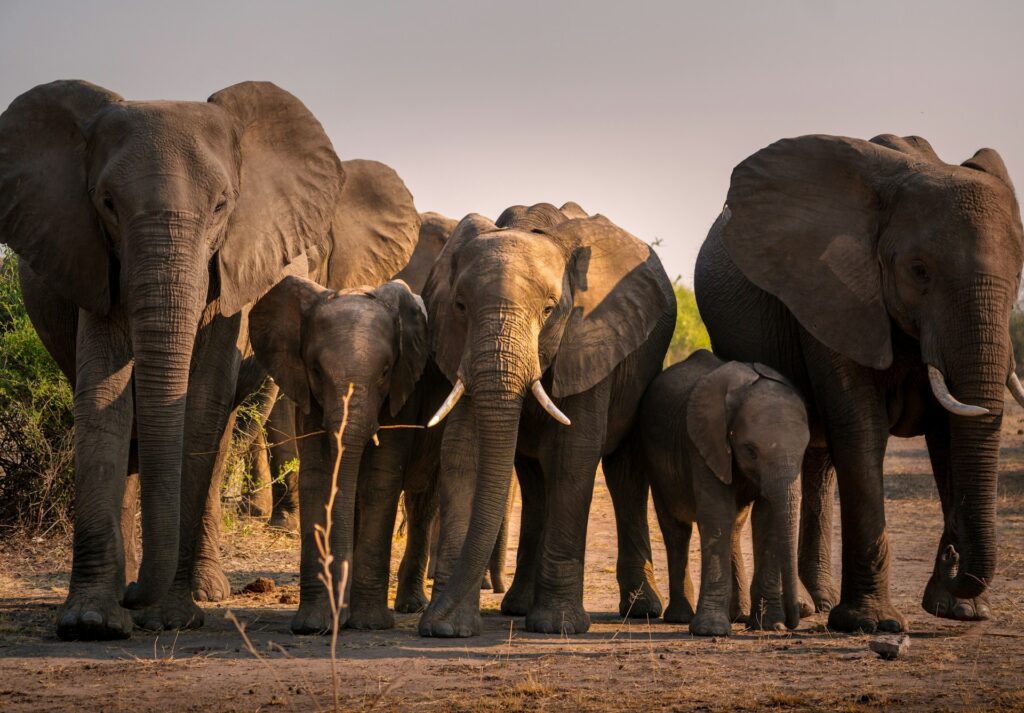
Elephants and Impalas at Chobe River Front
  • It’s a Wildlife Bonanza

And its scenery? That is equally mesmerising!

The Chobe River Front wraps around verdant floodplains, mopane groves, and acacia-dotted plains, creating a stunning array of habitats that are home to all sorts of indigenous wildlife.

Naturally, it’s packed with pursuits to fill your days with the best kind of sightings, from dawn patrols to dusk floats, leaving you knackered yet buzzing.

Some of the top things to do at the riverfront include river jaunts where you’ll hear hippos grunt and occasionally spot crocs just below the surface, their eyes peeking out from time to time, or you can take a drive on land, watching lion prides lazing about, and antelope munching on grass amid buffalo mobs.

The area is also home to the shy Puka antelope, a reddish-brown beauty that can only be seen here. These shy grazers disappear into the grassy edges, making them an incredibly rare and special sighting.

  • It Draws Elephant Hordes!

If you’ve always wanted to see elephants in great numbers, this is the place to do so, and the river front will absolutely not disappoint you for a moment if you plan your trip for the right time of the year.

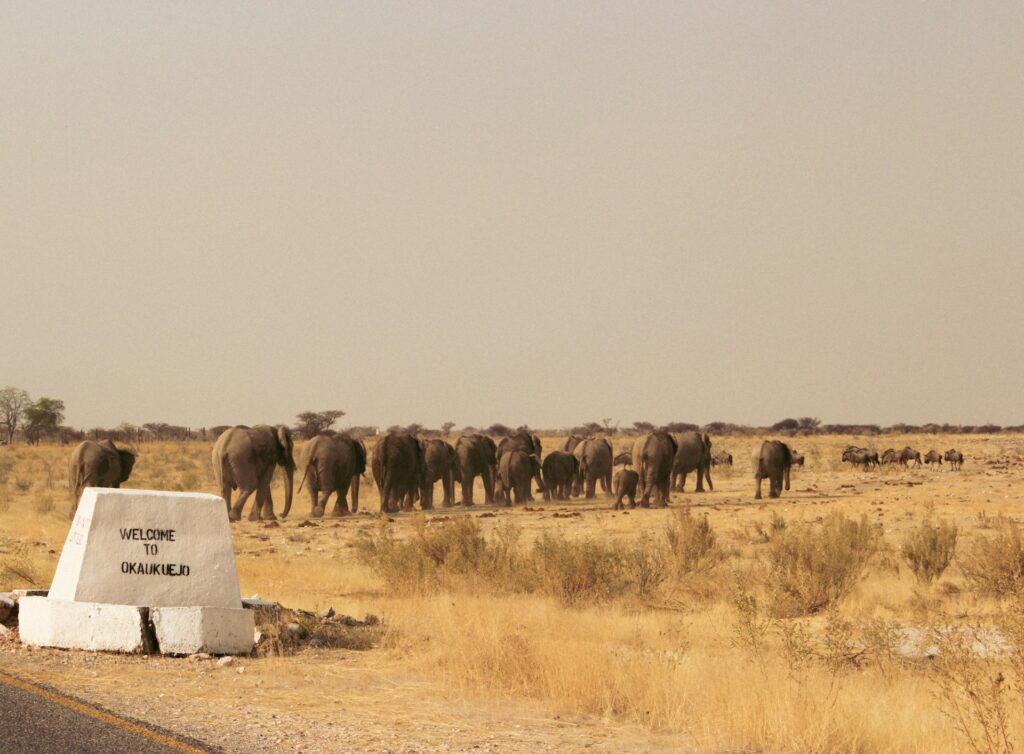
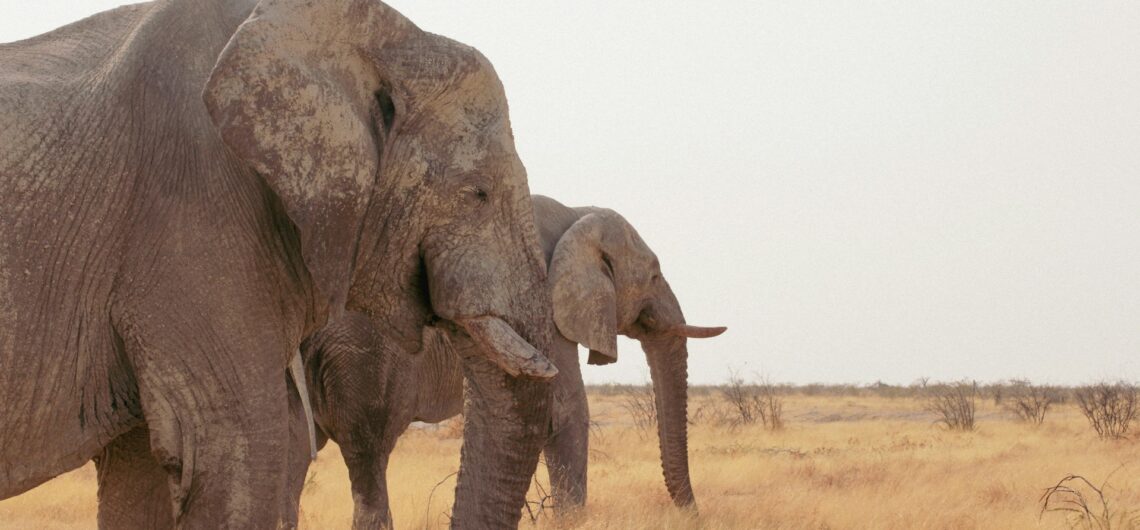
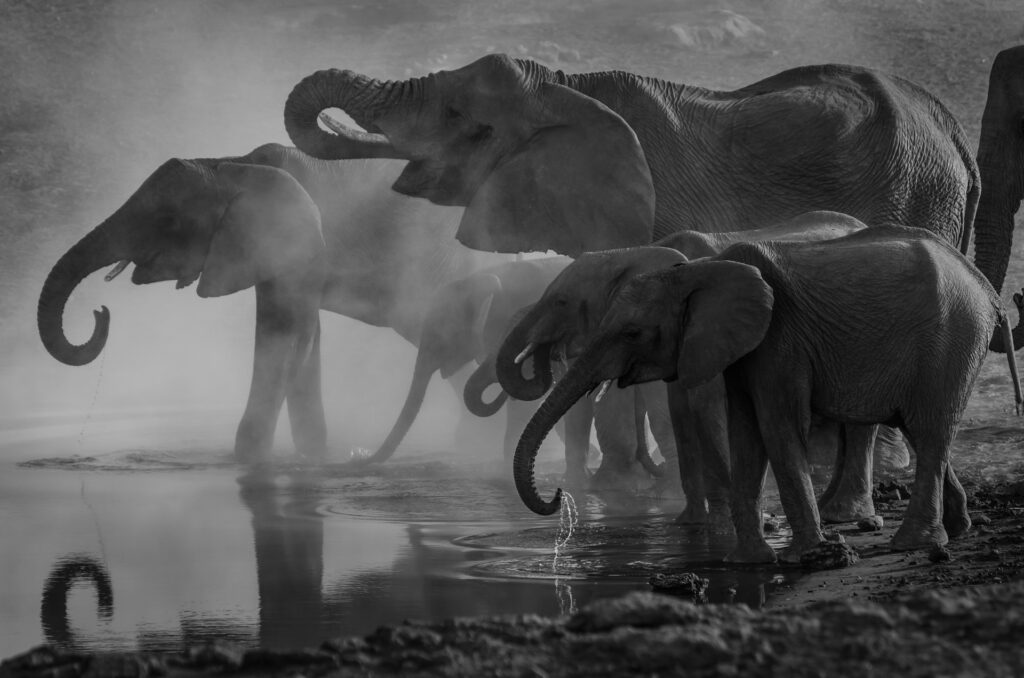
While elephants dominate year-round, their dry-season arrival is a safari spectacle. Come May to October, the dry spell funnels up to 10 000 elephants a day to the water’s edge, with the matriarchs leading calves and the rest of the family splashing across the shallows like a grey armada.

Chobe’s lagoons and channels also form vital wetlands, sheltering crocodiles that can grow to a terrifying and impressive 5 metres, and hippo pods numbering hundreds.

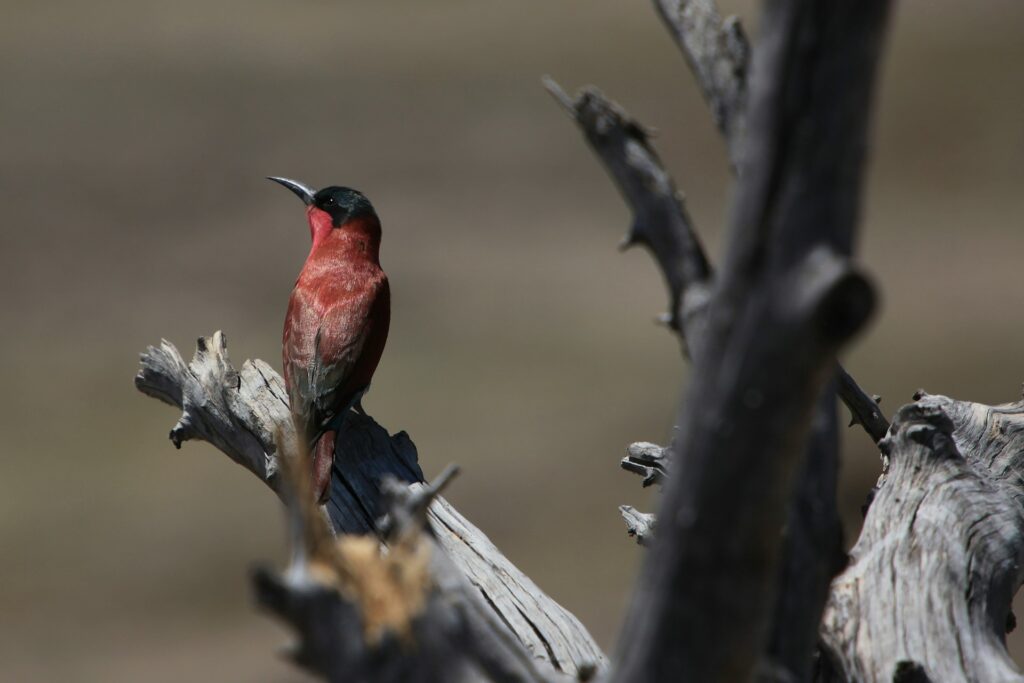
And if you love watching birds, a visit to Chobe will certainly not disappoint. Giant kingfishers, Fish Eagles, and Southern Carmine Bee-Eaters, to name a few, can be regularly spotted here.

Bee Eater in Chobe National Park
  • It’s Made for Watery Escapades

The Chobe River Front’s position makes it just the place to enjoy a few aquatic antics.

Steady breezes whip up ripples that will have your boat drifting slowly along the water, where you can look for wildlife or for birds.

There are also calmer pockets that are suitable for mokoros that will take you through papyrus-fringed channels.

If your Botswana trek includes this stretch, have a look at the inclusions on offer, as many outfits bundle cruises, though extras like private houseboat hires will certainly add an extra lavish layer.

And speaking of extensions, a visit here can include a Namibia tour too. The Chobe River Front is close enough to Namibia that it is often merged into a Namibia safari or even a holiday in Zimbabwe to see the Victoria Falls.

  • It Has a Few Geological Peculiarities

A quick hop from the main river channel, you’ll find the Selinda Spillway, a bone-dry channel that only springs to life during hefty floods, linking the Okavango to the Chobe like a seasonal vein.

The area’s bedrock is ancient, too.

Aeons back, this was a shallow sea, and we know this because the fossils of ancient clams and corals can be found in the area. If you happen to be strolling the riverbanks, make sure that you look for these relics. You’ll be really lucky to find one of the millions of years-old fossils.

Zebras drinking water in Namibia
  • It has Africa’s Longest Mammal Marathon

Chobe is the finish line for Africa’s longest known big-mammal migration.

Every year, zebras trek an epic 483 km from Namibia’s Nxai Pan to the Chobe floodplains, a route that is a test of endurance. The zebras navigate through Namibia’s harsh landscapes, crossing into Botswana and skirting the edges of the Kalahari Desert’s fringes before reaching the Chobe River Front. The migration usually starts when the rainy season begins, between November and December.

Elephant in Chobe

Trips to Chobe are not normally marketed as Namibia tours, given that Chobe National Park is in Botswana, but since it borders Namibia, it’s often included in tours to close to the area.

Trade the everyday for an extraordinary escape along Botswana’s northern edge, where you’ll get to watch herds of elephants gathering at the water’s edge, as the river glows like liquid amber at dusk.

It’s the epicentre of Chobe National Park’s riverine ecosystem, famous for massive elephant herds (over 120 000), diverse birdlife (450+ species), and stunning floodplains teeming with wildlife.

May to October (dry season) for peak elephant gatherings and easy game viewing; November to April for lush landscapes, bird migrations, and fewer crowds.

Take boat safaris on the Chobe River for close-up views of animals drinking at sunset, safer and more intimate than game drives.

Yes, with guided tours and luxury lodges nearby like Chobe Game Lodge, anti-malarial precautions are advised, but wildlife encounters are exciting and safe.

Absolutely, around 300 zebras trek 300 miles from Namibia’s Nxai Pan to Chobe’s floodplains annually, peaking in the wet season (Nov-Dec).

About the Authors African Travel Concept Namibia Team

At African Travel Concept Namibia, our team of experienced travel and safari professionals is dedicated to turning first-hand African expertise into clear, reliable advice. We research, review, and refine every article so you have the most current and accurate information when planning your trip.

If you’ve ever dreamed of having a getaway that’s both grounding and exhilarating, a beach safari in Namibia might just be the holiday you didn’t know you needed.

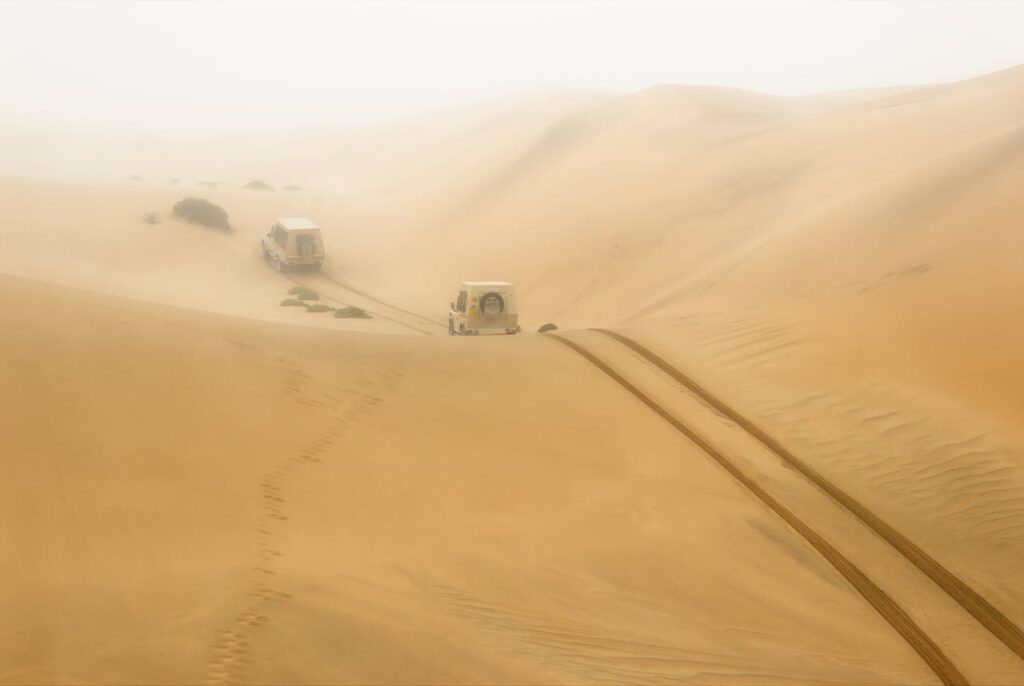
The Namibian coastline stretches up the west boundary of the country for around 1 572 kilometres. Between the attractions along this stretch, there are great expanses of desolate emptiness, where it’s just you, the beach, the distant dunes and the dreadfully cold Atlantic Ocean. Driving through dry desert and then suddenly encountering dense fog can feel alarming and otherworldly, but it makes for an experience unlike any other.

It’s safe to say that a beach safari in Namibia isn’t your typical safari. Going from tasting the salt on your lips and watching the waves to walking through small towns with the best kind of vibe is far from the stereotypical safari trip.

If you are looking to experience the very best of Namibia, a trip that will take you from the lively city to the windswept coast, or vice versa, in this guide, we’re sharing some helpful information that you can use to make your plans, and in the video below, you can see where this kind of journey will take you.

What is a “beach safari”?

A beach safari in Namibia is an intoxicating mixture of desert and coast.

It’s the sort of holiday that will give you a complete taste of what the country has to offer, by guiding you on a route that includes wildlife, dunes, beaches, small towns, coastal attractions and activities, and plenty of time to relax, whether you do so while meditatively driving the long and quiet roads, or while walking the sands, with the wind in your hair.

A beach safari in Namibia can include 4×4 drives across ochre dunes, and tracking desert-adapted elephants and lions that somehow thrive in this surreal landscape, before swapping the dry desert hum for the invigorating ocean spray as you kayak among dolphins and seals in Walvis Bay, or take a quad bike ride along Swakopmund’s stunning shoreline.

A beach safari in Namibia is just the sort of holiday for anyone daydreaming about a modern castaway-style retreat from the world.

Luxury Namibia Safaris in 2026

Is Swakopmund worth visiting?

Swakopmund is quirky and eclectic, often attracting the more artistic souls. It is renowned for its stunning German architecture and is a significant part of Africa’s coastal heritage.

Many travellers are attracted to Swakopmund because it is the sort of place that can keep you guessing what will happen next, even if you have a travel itinerary in place.

Swakopmund is where a beach safari in Namibia slows down a little, giving you time to catch your breath, surf the dunes, sip local gin while watching the sunset, and chat with locals who’ll tell you there’s no place quite like it.

Home to just under 60 000 residents, the town is a real vibe in every sense of the word and has numerous different attractions to keep you busy or help you chill.

You can visit coffee shops that roast their own beans and dine at seafood restaurants serving oysters plucked straight from the bay.

The Swakopmund Jetty is perfect for a quiet sunset stroll, and if you are a fan of the German-style architecture, you can visit the Woerman House, which is now a library, or the Altes Gefängnis prison.

You can also spend some of your time at the National Marine Aquarium, where you can see marine life, like stingrays, sharks and Cape fur seals, which survive the harsh cold Benguela Current. This is Namibia’s only aquarium.

Swakopmund Jetty

Other attractions worth visiting include the Swakopmund Museum, which is a treasure trove of natural history and local culture, and the Kristall Galerie, home to one of the world’s largest quartz crystals.

Game viewing in and around the town is not as plentiful as you find if you were visiting a dedicated safari destination like Etosha, but if you are a budding botanist, you will want to earmark some time in your calendar to visit the Goanikontes oasis or the area around the Khan River. In this area, you will be able to see the Welwitschia mirabilis plant, a living fossil of sorts that is able to live well over 1000 years!

Adrenaline-seekers visiting Swakopmund can go sandboarding or quad biking in the dunes, and there is also the option of dolphin cruises in nearby Walvis Bay. A great way to spend a day in the town is to spend a morning browsing boutiques and art galleries before winding down with a beach picnic or craft beer tasting at The Tug or Swakopmund Brewing Company.

Swakopmund has that rare kind of energy that makes it stick around in your memory long after you’ve left. It’s the perfect coastal chapter in your beach safari in Namibia, where you will find freedom, relaxation and some excitement, if it is an adventure you’re after.

Swakopmund from above

When is a good time to visit Swakopmund?

Swakopmund is a year-round destination, but for a beach safari in Namibia, the sweet spot is between May and October.

The skies are clear and cobalt blue, the air is crisp but warm enough to be comfortable all throughout the day, and the small amount of wildlife sightings you might have here are at their peak, as the inland parks’ watering holes begin to dry up. 

Coastal mornings can be misty, a lovely subject for photography, while the afternoons bask in golden warmth.

May to October are the winter and early spring months in Namibia, and so you’ll want to make sure that you pack clothing that will allow you to dress in layers. A warm jacket and pants are a must because the mornings and evenings in this desert environment can get cold. But you’ll also want some light clothing, because by midday, and especially when out in the sunshine, you run the risk of overheating.

If you fancy fewer crowds and soft light, late April or early November are better times to travel.

What should I know about Swakopmund Sands?

Swakopmund Sands Hotel is a popular hotel in the town, and it is near the beach, on what’s been dubbed the Platinum Mile.

Its rooms open up to sea breezes and the soothing sound of waves, giving you just the place for a peaceful pause in your beach safari in Namibia itinerary.

The suites at Swakopmund Sands are spacious, the design is thoughtful, and their delicious breakfasts are sure to set you up for a busy day of dune adventures. The hotel also provides a same-day laundry service, Wi-Fi, and it is close to some of the town’s best restaurants.

The hotel is far from flashy, and that’s exactly why travellers love it. It feels authentic, warm, and wonderfully unhurried.

What is the significance of Heroes’ Acre?

A short drive from Windhoek, Heroes’ Acre is a national monument honouring Namibian independence heroes. It is also a burial ground for those who have in some way or another contributed to the country’s history, culture and fight for liberation.

The site was erected in 2002, around 10 km south of Windhoek, and it gives visitors a moment for reflection and perspective.

Heroes’ Acre acts as a reminder to both citizens and travellers of the country’s resilience and pride. It’s often the final chapter of a beach safari in Namibia, bringing context and meaning to the journey.

Standing there, gazing over the valley below, you will realise that Namibia has an incredible legacy and while its population might be small, its people are mighty.

What’s on offer at the Windhoek Game Camp?

Set just outside the capital, a short 20 minutes north of the city, Windhoek Game Camp is just the spot to see giraffes, zebra, and antelope without leaving the property.

It’s a great finale or start to your beach safari in Namibia.

Windhoek Game Camp has 8 luxury tents, a place to go on nature walks, free Wi-Fi, and a pool. As for dining, the camp has a restaurant, where guests can have a complimentary breakfast each morning before they set out on an adventure, as well as a spacious self-catering kitchen for those who prefer to make their own meals.

The camp is only available to overnight guests, so you can look forward to peace and privacy.

The Coast and Ocean Seen on the Beach Safaris in Namibia

A beach safari in Namibia can be a gentle reawakening. It’s the sort of holiday where the city clocks lose their power, and where, for once, you can just relax without having to worry about the pressures of your daily stresses.

Between the hush of the dunes and the hush of the tide, you’ll find a kind of peace that your soul has been yearning for. All you need to do now is book your spot.

Etosha National Park tops the list for classic safaris, but for a unique twist, the Skeleton Coast and Damaraland regions redefine the concept with their raw beauty and desert-adapted wildlife.

Yes! Namibia’s Atlantic coast, particularly Swakopmund and Walvis Bay, is ideal for those seeking a beach escape with a wild edge.

Absolutely. Namibia’s entire western border is a coastline, with beaches that stretch endlessly and are often kissed by fog.

You can, but you might not want to, as the Benguela Current keeps the water cold. Many prefer kayaking or sandboarding instead!

Windhoek lies roughly 350 km from the Atlantic, or about a four-hour drive to Swakopmund, a scenic journey with landscapes that change from city pulse to ocean breeze.

About the Authors African Travel Concept Namibia Team

At African Travel Concept Namibia, our team of experienced travel and safari professionals is dedicated to turning first-hand African expertise into clear, reliable advice. We research, review, and refine every article so you have the most current and accurate information when planning your trip.

Only those who have been privileged enough to dip their toes into the cool waters of the Orange River and then walk barefoot over the millions of years old warm, rust-coloured sands of the Kalahari understand just how profound this experience is.

Because while there is so much to see and do in the area, and there’s not a single place you’ll travel to in Southern Africa that won’t stop you in your tracks for a little while, nowhere is that feeling of awe and sense of beauty more vivid than along the banks of the Orange River or on the terracotta sands of the Kalahari.

For travellers planning a Namibia or South African tour itinerary, Orange River Tours, that take you onto the river and through parts of the Kalahari, capture the essence of this unique landscape in a way that no other tour can, and when you walk close to where the water carves through rock, where the silence feels like a companion rather than an absence, you’ll begin to understand just how lucky you are to be here.

If you’ve ever wondered what makes the southern edge of Namibia so magnetic, in this guide, we’re taking you to one of Southern Africa’s best-kept secret places to show you why this destination should be on your travel radar.

Before you dig into our Orange River Tour guide and learn all about this special place, let our YouTube video take you on a bird’s-eye view trip through some of the spectacular places you’ll read about later on in this post.

Why is the Orange River special?

The Orange River, also known as the Gariep River, is the longest river in South Africa, and it forms one of Namibia’s most striking natural borders.

Flowing westward, from its source in the Drakensburg Mountains, for more than 2 000 kilometres, the Orange River forms a living watery ribbon through the Kalahari desert, creating a stark contrast between lush riverbanks and the ochre tones of the dry sands, and providing a life giving source of hydration for both the wildlife in the area, and the farmers who grow dates, wine grapes, various types of citrus, and all sorts of vegetables.

This is why the Orange River is so special.

And aside from providing nourishment, the river is also a source for hydroelectric power generation, and it is also the backdrop for Orange River Tours.

When travelling here, the experience is at once peaceful and humbling, a gentle reminder that even in a land defined by dryness, life finds a way to flourish.

Orange River Tours

What tourist attractions are found on the Orange River?

Orange River Tours open the door to seeing a variety of natural wonders.

The most celebrated section of the river lies near the Ai-Ais Richtersveld Transfrontier Park, a UNESCO World Heritage Site that covers parts of both Namibia and South Africa. Here, deep canyons and volcanic formations frame the river, creating an interesting vista.

There is also the nearby Fish River Canyon, Africa’s largest canyon, which is not to be missed. It’s a geological marvel, and it is best viewed in the soft light of morning or late afternoon, when the shadows show off its immense scale.

Those who choose to stay closer to the water can enjoy river rafting, birdwatching, and swimming in calmer stretches of the river.

As for accommodation, camping is preferred by some, but there are a few lodges available in the area, and in the evenings, you can unwind beneath star-filled skies while enjoying the soothing sounds of the river.

River Rafting during Orange River Tours

Is it worth going on an Orange River tour?

In a word, yes. Orange River Tours are among the most rewarding and lesser-known experiences, and they are particularly attractive to any travellers who are looking for an out-of-the-ordinary holiday.

Orange River Tours will give you plenty of gentle physical activity amidst spectacular natural beauty, and you’ll also have more than enough time for moments of quiet contemplation.

Unlike a safari, where you move through landscapes in vehicles, here you move with the landscape, carried by the current, part of the scenery rather than an observer of it.

And a big part of the appeal of a tour on the Orange River is that, just about all year round, the days and the waters are warm.

What does Felix Unite offer?

If you are looking to book river trips in South Africa, Felix Unite River Adventures is one of the most trusted names for Orange River tours. They have decades of experience in leading safe, sustainable expeditions, and their team is known for their attention to detail, from their well-maintained equipment to their expert local guides who’ll teach you a thing or two about the river and its fascinating ecosystem.

With them, you can sign up for all kinds of river tours, everything from short paddling experiences to multi-day canoeing safaris, complete with riverside campsites and hearty meals prepared over open flames.

Each day is determined by your pace, and you’ll have plenty to keep you entertained, such as paddling, swimming, relaxing, and making new friends with your fellow intrepid travellers.

Felix Unite is family-friendly, and they go out of their way to make the trip as fun as possible. They provide quality gear, support vehicles, and guidance every step of the way, allowing you to focus entirely on the beauty around you.

What’s notable about the Kalahari Anib Lodge?

Before or after your Orange River tours, Kalahari Anib Lodge makes for an exceptional stopover.

Located right on the edge of the Kalahari Desert, on the border of Namibia, the lodge has sandy-hued chalets that blend in well with the desert, surrounded by grasses that gently sway in the wind, and two swimming pools that mirror the desert horizon. The atmosphere is comfortable, and guests here can look forward to utter peace and quiet.

Guests can join guided nature drives through the red dune landscapes, spotting springbok and gemsbok along the way, or they can take peaceful walks around the lodge grounds.

For families, it’s the ideal place to unwind after a couple of action-packed days on the river, with the friendly staff, open spaces, and the soothing sounds of desert life setting the tone for the best kind of getaway.

Is it worth staying at the Alte Kalkofen Lodge?

If you’re travelling between Keetmanshoop and the Fish River Canyon, Alte Kalkofen Lodge, which you’ll find in Southern Namibia, is an experience in itself and well worth staying at.

The name means “old lime kiln”, and the property has been thoughtfully built around the remnants of an early 20th-century industrial site.

Surrounded by quiver trees and wide horizons, the lodge provides a tranquil retreat with its comfortable stone chalets and shaded verandas.

The gardens are designed to be a welcome burst of green in the arid south, and the hosts are known for their warm hospitality. It’s the kind of place where you will just want to slow down for a while, and you’ll leave feeling relaxed and as though you have added a delightful chapter to your travel story.

For those exploring Namibia at a leisurely pace, a night or two spent here connects the journey between the Orange River and Namibia’s southern highlights just beautifully.

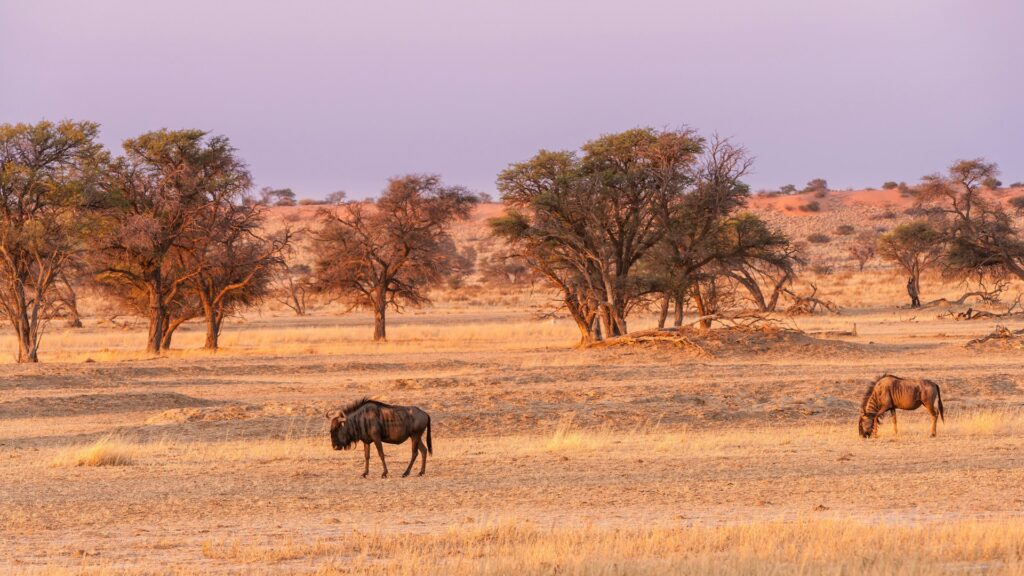
Wildebeest in the Kalahari Desert

Orange River tours are not about the grand gestures or even luxury, but about the simple moments, like when you dip your raft’s paddle in the river, or when you set up camp, knowing that for the next few days, it’s just you and the wilderness.

Here, where rivers flow and deserts glow, you find a stillness that stirs your soul.

With expert partners like Felix Unite and exceptional stays in beautiful places like Kalahari Anib and Alte Kalkofen Lodge, every detail of this trip is set to give you the most incredible holiday, so if you’re looking for a journey that will give you movement with meaning, let the Orange River guide you.

South Africa’s private reserves, such as Madikwe and the Eastern Cape, are ideal for families, with malaria-free zones, top guides, and engaging children’s activities.

Two to four days is ideal for a full experience, one long enough to unwind, explore, and truly absorb the peace of the river and the surrounding desert.

Kenya’s Maasai Mara and Tanzania’s Serengeti provide exciting, educational experiences for children, blending wildlife with cultural encounters.

Namibia is widely regarded as one of the safest safari destinations in Africa, with excellent infrastructure, friendly locals, and well-managed national parks.

Yes, in calm stretches it’s perfectly safe to swim, especially during guided tours where conditions are monitored by experienced guides.

About the Authors African Travel Concept Namibia Team

At African Travel Concept Namibia, our team of experienced travel and safari professionals is dedicated to turning first-hand African expertise into clear, reliable advice. We research, review, and refine every article so you have the most current and accurate information when planning your trip.

Some places don’t just catch your eye; instead, they have a peculiar but most welcoming habit of settling within your soul.

Namibia is one of those places.

While the country is lauded for its culture and its wildlife, it is the landscapes that have made it famous.

A country sculpted by sand, wind, and the passing of geological time, when you travel through Namibia, it can feel rather surreal, almost as though you are spending each day walking through some sacred and living artwork.

One of the best ways of seeing the best of Namibia is to book a landscape tour.

Not only does such a tour introduce you to the nation’s numerous, fascinating landscapes, but along the way, you’ll still get to experience the cultures, see the wildlife, and tour through all of the other lesser-known but equally intriguing and beautiful attractions.

Landscape tours in Namibia are the epitome of adventure.

Camp Doros Luxury Accommodation in Namibia

What makes Namibia so beautiful?

What makes Namibia so beautiful is its dramatic and completely varied landscapes. And unlike other places, when you go on landscape tours in Namibia, you will be blown away by the sheer scale of the landscapes.

Some of the landscapes that have made Namibia famous for being so beautiful include the red dunes of Sossusvlei that look as though they have been set alight in the dawn sunrise, the Fish River Canyon, the second largest canyon on Earth, where, when standing at the edge you can watch its deep folds unravel into infinity, and the Skeleton Coast, where the Atlantic crashes against shores littered with shipwrecks and bleached whale bones, a haunting reminder of that we are all at the whim and mercy of nature’s grip.

Namibia is also so beautiful because you actually have the peace and quiet to soak it all in.

While other destinations can be incredibly busy, leaving you feeling so hurried that you end up not really stopping for a moment to fully appreciate what it is that you are seeing, with so few people visiting and living in Namibia, you won’t be rushed by the crowds on your landscape tour.

Spitzkoppe, Namibia

What is the perfect tour to see its beauty?

For travellers wanting to see all of Namibia’s astounding beauty on one trip, our Diverse Landscapes Tour is the answer.

Taking place over a period of 24 days, it shows you the best of Namibia, from city to desert, coast to canyon, and culture to wildlife.

On our landscapes tour, you’ll experience:

Windhoek

All of Namibia’s tours start and end in Windhoek, the country’s eclectic but rather laidback capital city.

The interesting mix of German colonial architecture and modern culture makes it worth a pause, and you can easily spend the day visiting craft markets, sampling Namibia’s much-loved game steaks, or enjoying a glass of South African wine in a bustling café.

Windhoek is about the only place where you’ll have a crowd around you. Once you leave the city for the wilderness, you’ll be treated to solitude like you’ve never had before.

Kalahari Desert

Most travellers know that Namibia is home to the Namib Desert, after which it gets its name, but not everyone is aware that there is another desert that they can visit when on landscape tours here.

Famous for its red sand, the Kalahari, which covers part of Namibia as well as South Africa and a bit of Botswana, is home to springbok, meerkats, and the resilient San people, whose traditions are woven into the desert’s story.

Fish River Canyon

The Fish River Canyon is a spectacle of stone and shadow.

As the second biggest canyon in the world, the Fish River Canyon has iconic panoramic views and a couple of beautiful hiking trails to enjoy, but travellers often say that it’s the silence that is the most memorable and enchanting characteristic of the canyon.

An Aerial View of the Fish River Canyon in Namibia

Namib Desert

The Namib is the world’s oldest desert, and on landscape tours, you will certainly be spending a lot of your time here, and you won’t just be seeing sand.

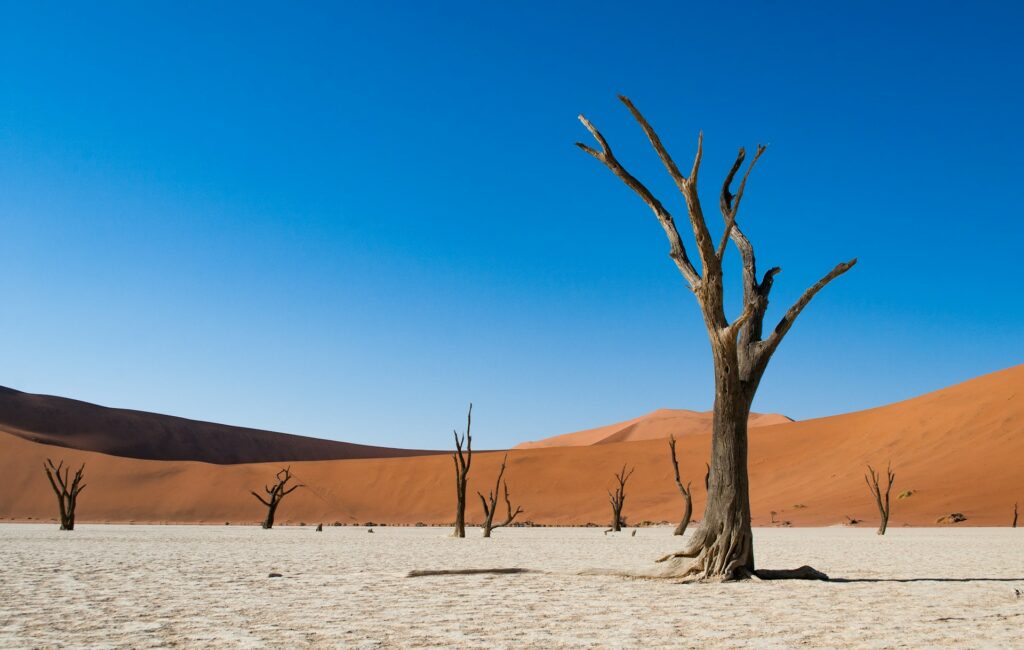
Within the Namib, there is a place called Sossusvlei, which is famous for its huge dunes, of which Dune 45 is the biggest and the most popular amongst travellers, who like to climb it to take in those sunrise and sunset views, while nearby Deadvlei, with its surreal clay pan, which is dotted with numerous 900-year-old petrified trees, can also be visited.

Lüderitz and Kolmanskop

Lüderitz is a quirky coastal town where you can see German colonial buildings and take a walk to the Atlantic Coast, which is home to all sorts of interesting wildlife, including the cutest Cape Seal colonies.

And just a short drive away from Lüderitz, you’ll arrive at Kolmanskop, Namibia’s most famous ghost town. A trip here feels like walking through a time capsule as you’ll see abandoned homes that are being swallowed by the desert sands, with each window framing an eerie but beautiful story of Namibia’s diamond past.

Swakopmund

Swakopmund is Namibia’s swanky coastal town that attracts all sorts of travellers, including those who are looking to indulge in a more bohemian vibe.

Namibia’s most popular seaside town has palm-lined streets, excellent seafood restaurants, and the salty tang of the Atlantic.

It’s also a hub for a few optional excursions, like boat cruises to see dolphins and seals, or scenic flights over the nearby Skeleton Coast that reveal shipwrecks hidden in the sand.

Damaraland in Namibia

Damaraland

This stunning region is unlike anywhere else in Namibia.

Here, you’ll be treated to the sight of elephants adapted to desert conditions walking between dry riverbeds, and you’ll get to visit Twyfelfontein’s rock engravings, some of which are over 6 000 years old, and tell the stories of early hunter-gatherers.

Travelling through Damaraland also means encounters with the semi-nomadic Himba people, who bring a cultural depth that is sure to stay with you long after you leave.

Etosha National Park

Etosha National Park is one of Africa’s great wildlife stages.

At the waterholes that are dotted across the park, you might find a mix of zebra, giraffe, and elephants drinking peacefully side by side, while predators like lions and leopards straggle nearby, barely visible in the background.

Etosha is also one of the few places where you can still see the critically endangered black rhino.

Waterberg Plateau

The sandstone cliffs here are not only striking, but they are also home to some of Namibia’s rarest species, including sable antelope and white rhino.

Walking trails are the best way to see the sweeping views of the plains below, making a trip here a peaceful conclusion to your 24-day journey before returning to Windhoek.

The Deadvlei in the Namib Desert

Is the Diverse Landscapes tour available all year round?

Yes. Namibia is one of those rare destinations where travel is possible and thoroughly enjoyable throughout the year.

During the dry months (May–October), you’ll have more opportunities to see wildlife around Etosha’s waterholes, and travelling through the desert is a lot more comfortable.

In the summer rains (November–April), the land turns into a softer, greener version of itself, with blooming wildflowers and dramatic skies over the desert making it the ideal time for photographers.

Is this tour good for couples?

Without question, landscape tours are great for couples!

Namibia has a quiet romance about it, and this tour is filled with moments made for two.

Walking hand in hand through Kolmanskop’s sand-filled rooms, or watching the sunset over the Namib Desert’s towering dunes, before spending the evening dining under the stars at a remote lodge, or sharing the hush of Etosha as elephants pad softly to a moonlit waterhole, are just some of the experiences couples can enjoy.

The 24-day journey will give you the space, quite literally, to reconnect.

Kolmanskop Ghost Town Namibia

How do I book this tour?

Booking is straightforward and can be done through the official Namibia Safaris website.

The tour includes:

  • 22 nights in comfortable standard rooms
  • 22 breakfasts and 16 dinners (excluding Windhoek, Lüderitz, and Swakopmund)
  • A detailed information package with itinerary and route description
  • All taxes and levies

When packing for landscape tours, you should bring comfortable shoes, warm jackets, sun protection (hat, cream, sunglasses), a camera, personal medication, and of course, a sense of curiosity.

With its length and inclusions, the Diverse Landscapes Tour is a life experience.

But places are limited, especially during peak months, so booking early ensures you won’t miss the chance to step into Namibia’s masterpiece.

Unlike many African destinations that focus primarily on wildlife, Namibia’s tours highlight surreal and varied landscapes. These natural wonders are often experienced without the distraction of heavy crowds, allowing visitors to enjoy both beauty and solitude.

No, you don’t need prior hiking or safari experience. The tours are designed for all types of travellers, with comfortable pacing and optional excursions. While some walking trails are available, most highlights are accessible to people with moderate fitness levels, making the experience enjoyable even for first-time adventurers.

In addition to breathtaking scenery, Namibia is rich in wildlife. Travellers often spot elephants, giraffes, zebras, and antelopes, along with predators like lions and leopards, in Etosha National Park. Desert-adapted elephants, black rhinos, and playful seal colonies along the coast are some of the unique species you may encounter.

Yes, Namibia is one of the safest countries in Africa for tourists. Experienced professionals guide tours, accommodations are carefully selected, and travel routes are well-organised. As with any trip, basic precautions, like carrying sun protection and keeping hydrated, will make your journey both safe and enjoyable.

Namibia can be visited year-round. The dry season (May–October) is ideal for wildlife viewing, while the rainy season (November–April) transforms the landscapes into lush, green panoramas with spectacular skies. Your choice will depend on whether you prefer dramatic desert hues or more vibrant seasonal contrasts.

About the Authors African Travel Concept Namibia Team

At African Travel Concept Namibia, our team of experienced travel and safari professionals is dedicated to turning first-hand African expertise into clear, reliable advice. We research, review, and refine every article so you have the most current and accurate information when planning your trip.

Ask any traveller who has been to Namibia what makes Namibia unique, and they’ll often go quiet for a while, thinking carefully about how best to answer you. 

That’s because this is not the sort of question that you can give a quick, off-hand answer to. Namibia is unique in just about every way, including the way that it makes travellers feel. 

In the abrupt stillness of the Namib Desert, watching the surreal play of light and shadow across the dunes, or while out on safari in Etosha National Park, there is a sense of being somewhere that feels both enduring and otherworldly, and that creates an experience that defies a neat description of what makes Namibia unique.

If you’re wondering whether Namibia deserves a spot on your travel list, here’s a closer look at what makes it stand out, not only from other African destinations, but from the world’s most sought-after holiday spots.

A Lion under a Tree in Etosha National Park

Is Namibia different from South Africa?

At first glance, it might look as though Namibia has quite a lot in common with South Africa, and that’s because it does. 

Both countries have a desert (South Africa has the Kalahari, and Namibia has both the Kalahari and the Namib), both countries share strong safari traditions, and both have some of the most surreal scenery.  

But what makes Namibia unique, and so different from South Africa, is that its population is much smaller, so those who travel here can look forward to peace and quiet, even in the most popular tourist destinations.   

While South Africa brims with energy and bustling cities, Namibia is about solitude, reflection, and landscapes that stretch out with an almost meditative quality, and as such, the overall holiday can feel a lot more intimate. 

Even national parks like Etosha feel unhurried, giving you game viewing experiences that will allow you time to breathe and observe. 

Namibia is also different from South Africa in that it has far fewer biomes. 

Namibia is characterised by its desert sands and its almost year-round dry conditions, while South Africa has far more variety when it comes to biomes. 

The Ultimate Guide to the Fish River Canyon

What is the Natural Wonder of Namibia?

One could argue that Namibia as a whole is a natural wonder.

All of its neighbours are lush and receive a fair amount of rainfall, but Namibia stays dry, with its deeply coloured sands dominating most of the landscape. 

While the desert sands are part of what makes Namibia unique, there is one region of the country that truly deserves the title of Natural Wonder, and that is the Fish River Canyon. 

The Fish River Canyon is sometimes described as Africa’s answer to the Grand Canyon, yet it has its own unique identity. 

Measuring around 160 km in length and up to 27 km wide, it is the largest canyon in Africa and the second largest in the world. And when you first drive to a lookout point, we promise that you will be blown away by the sights that greet you. 

Standing at the edge, you can see that the layers of rock are telling a geological story that stretches back over 500 million years. 

The silence here is also quite something to experience, and in the off-season it is only broken by the distant cry of a bird or the sound of the wind as it rushes over the rocks. 

One of the best ways to experience the canyon is on foot. 

The canyon has a few hiking trails that you can explore during the permitted season. The hike can be a bit of a challenge, but it is well worth the effort when you get to see the incredible sights that can only be enjoyed when you’re walking through the canyon. 

A monumental natural wonder of this kind can give you the rare luxury of feeling as if it belongs to you alone, at least for a moment, and that is also what makes Namibia unique.

Luxury Namibia Safaris in 2026

Why is the landscape of Namibia unique?

Namibia is one of the oldest places on earth, with the Namib alone being between 55 and 80 million years old, and mostly unchanged except for the shapes of the dunes, which shift in the wind. 

The landscapes here, in the south-west corner of Africa, are quite unlike anywhere else on earth, and they have come to be the very centre of the country’s identity.  

The Namib Desert is not just all sand; it is also home to the towering dunes of Sossusvlei and the fossilised trees of the Deadvlei.  

These dunes have been the subject of plenty of photographs, including a few that have appeared in famous magazines, like National Geographic, and they glow a deep red at sunrise, creating one of the most surreal vistas you’ll ever see. 

And as for the Deadvlei, it is pretty majestic and will have every photographer excited. 

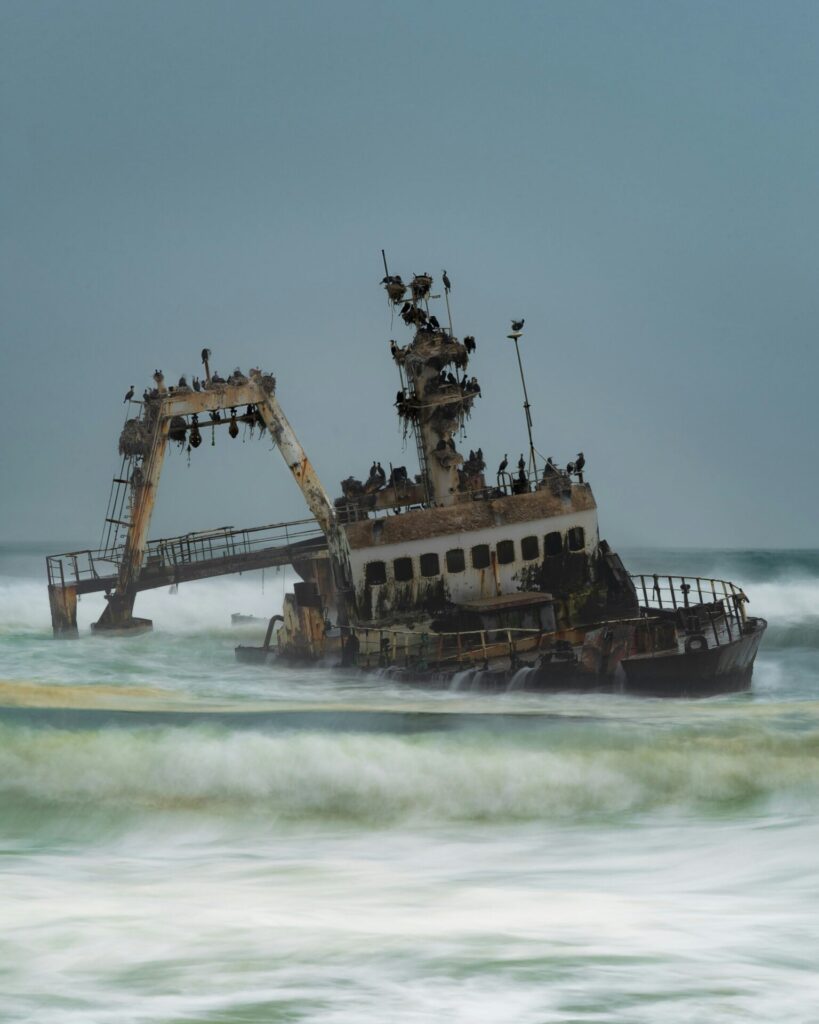
Another landscape that is unique to Namibia is the Skeleton Coast, which has become the final resting place of shipwrecks, now half-buried in sand, colonies of vivacious Cape fur seals, and a mystifying rolling fog that drifts in from the cold Atlantic and collides with the desert heat.

What makes Namibia unique is this juxtaposition: desert meeting ocean, and life thriving in places that seem inhospitable. 

Wildlife here has adapted in extraordinary ways. 

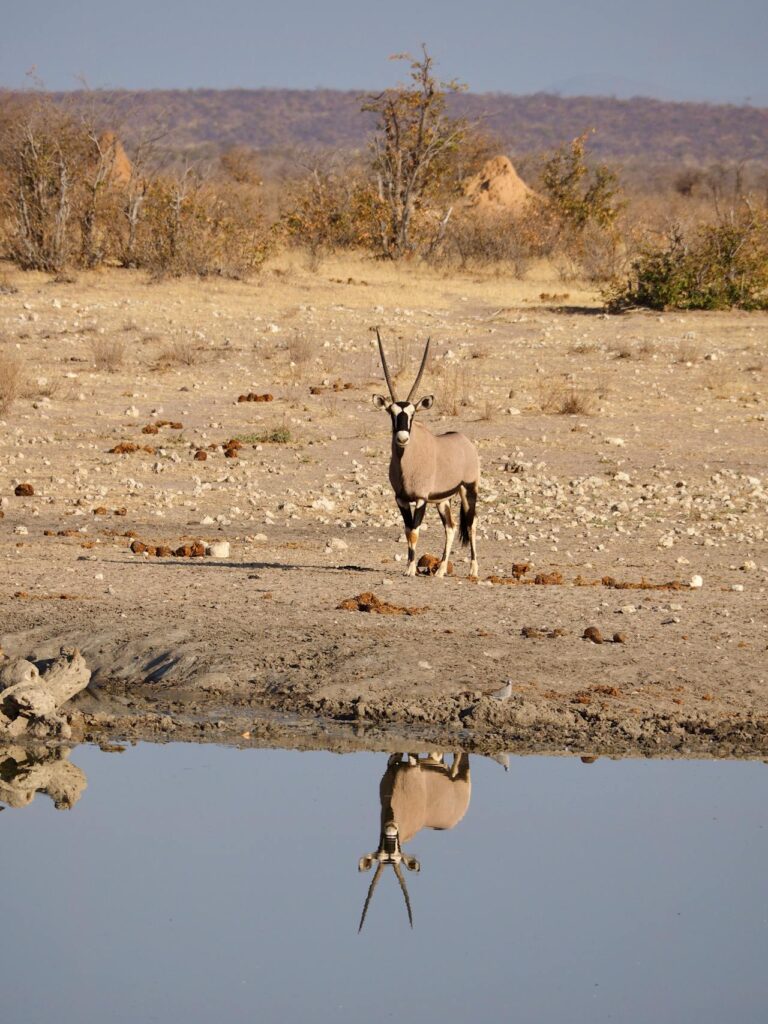
Desert lions roam the arid north-west, elephants migrate through dry riverbeds, and oryx stand like statues against the hot shimmering horizon. The landscapes here, as well as the wildlife that have made it their home, will teach you a thing or two about resilience. 

Stargazing in Spitzkoppen

What are some amazing Namibia facts?

Namibia is a fascinating place, both culturally and geologically:

  • Namibia was the first country in the world to include environmental protection directly into its constitution.
  • The Namib Desert is estimated to be at least 55 million years old, making it the oldest desert on Earth, and it still hosts life of all kinds.
  • Over 40% of the country is under some form of conservation management, which includes national parks and community conservancies.
  • With just about 2.6 million people in an area twice the size of Germany, Namibia has huge open spaces, and most of the land is untouched by man.
  • The Etosha Pan is so massive (about 4 800 square km) that astronauts can see it from space! During the rainy season, it turns into a lake and attracts flamingos.
  • The country has one of the darkest night skies in the world, making it the perfect place to go stargazing.
  • Windhoek, the capital, is one of Africa’s cleanest and most orderly cities, and while it is very modern, it has managed to keep a laidback pace. 
  • Namibia is home to around 3 500 wild cheetahs, the largest population anywhere on Earth.
  • Namibia has wild horses living freely near Garub in the Namib Desert, a rarity in Africa.
  • Namibia enjoys around 300 days of sunshine per year, making it a perfect year-round destination.
  • Namibia is home to over 13 ethnic groups, including the Himba people, who are known for their red ochre body paint and traditional semi-nomadic lifestyle.
Luxury Safari Lodges Namibia

Is Namibia good for tourists and digital nomads?

Absolutely!

For tourists, Namibia is a comfortable place to travel, and travellers will get a real sense of authenticity from the places they visit and the people they meet. 

Safari lodges and camps are thoughtfully placed in wilderness areas, and many of them are eco-conscious, luxurious and intimate. The roads, especially in and around urban areas, are well-maintained, making self-drive safaris a popular option, although it is always advisable to hire a 4×4 if you plan to drive yourself. 

English is widely spoken, which makes life easier for visitors, and Namibia is known to be a safe place to travel. 

And for digital nomads, Namibia is increasingly appealing. 

Windhoek and Swakopmund provide fairly good internet connectivity and work-friendly cafes, while coastal towns give such travellers a peaceful base between explorations. The government has recognised this shift too, with discussions around digital nomad visas to attract long-term stays.

What makes Namibia unique for modern travellers is that it allows both escape and connection. You can work remotely with the Atlantic as your backdrop, or easily keep in touch with family if you are on a trip, and then step out into the wild and be still, hitting the reset button, and just enjoying every moment. 

Wildlife in Namibia

So, what makes Namibia unique?

It’s the combination of its landscapes, its conservation ethos, and its ability to make travellers feel both humbled and inspired. 

In a world that often feels noisy and rushed, Namibia is a place where time stretches and slows, where travellers can linger a while and just be present and part of something special.  

If you’ve been considering whether Namibia is worth the journey, then the answer is a gleeful yes. 

And not just for what you’ll see, but for how it will make you feel. 

The desert is waiting, and it has a way of changing those who walk its sands.

When you’re ready, let us help you plan a Namibian journey that’s relaxed, filled with the best attractions and places to stay, and allows you to experience a country like no other. 

About the Authors African Travel Concept Namibia Team

At African Travel Concept Namibia, our team of experienced travel and safari professionals is dedicated to turning first-hand African expertise into clear, reliable advice. We research, review, and refine every article so you have the most current and accurate information when planning your trip.

Thinking about digital nomading in Namibia? We have just the guide for you. 

Travelling freely while also being able to make a living is the dream, and with remote working becoming more and more acceptable and even ingrained in our work culture, those who don’t have to be tied down to a town are increasingly turning to a nomadic lifestyle.

Around 18 million Americans identify as digital nomads, a term used for those whose entire income is made while they travel, while the number of digital nomads from other countries is on the rise. 

The lifestyle is increasingly appealing for those looking to shun office life. 

As a digital nomad, you have the freedom to determine your own working hours, so if you manage to get all of your work done in 3 hours instead of the usual 8 that you would have in the office, you’ll have the rest of the day to go exploring, which is precisely why so many are looking to experience this lifestyle, even if they only do so temporarily. 

When you are a travelling nomadic worker, you spend your downtime being a tourist, travelling to exciting destinations and attractions between your working hours, and trying out all sorts of exceptional restaurants and cafes, all while enjoying the company of locals and fellow travellers. 

Of all the places you can follow a digital nomad lifestyle, Africa is one of the best, although it might not be the first place that comes to mind.

You would not be completely mistaken for thinking that Africa is not exactly the ideal for a digital nomad, as there are certainly some places where the infrastructure is simply not going to be up to scratch for your needs. Wi-Fi out in the bushveld, for instance, can be sketchy, so when choosing your African destination, you need to do your research thoroughly. 

Namibia is fast becoming a popular place for nomadic workers, and in this guide, we’re going to tell you exactly why this golden desert destination should be included in your travel plans. 

Wildlife in Namibia

Why is Namibia such a unique digital nomading destination?

Digital nomading in Namibia is guaranteed to be completely unlike any other place you’ve worked in before. 

Unlike other popular nomad places, like Bali or Thailand, Namibia is different and, most importantly, it is quiet. 

For digital nomads, this is a destination where productivity and peace coexist.

But let’s talk about the most important things first, the logistics. 

Internet connectivity is pretty good in the urban areas, and it is improving in hubs like Windhoek and Swakopmund. This will give you stable ground to work from before you go venturing deeper into rural regions, in your off time. Starlink is currently not available in Namibia, but the company has submitted a license application. Should the license be approved, digital nomading in Namibia will no longer be limited to the towns and cities. 

The country is also home to plenty of beautiful places to rent, including Airbnbs, and it has its fair share of excellent lodges, too. And Namibia is widely considered to be a stable and safe country to live and travel in, so if you are a solo nomad, you can rest easy. 

While Namibia may feel removed from the modern world, it’s precisely that sense of distance that will help you to focus. Many nomads who have worked here remark on how their creativity flourished when all the usual distractions fell away.

Aside from logistics, there’s something soul-stirring about pausing mid-email and gazing out at ochre sands or skeletal coastlines. 

The balance between your discipline and wonder is what makes Namibia a perfect option for remote professionals.

Desert Wildlife in the Kalahari

Is Namibia a fantastic wildlife destination?

Namibia is one of Africa’s greatest natural stages. 

When digital nomading in Namibia, you will not only get to see an assortment of fascinating animals but you’ll also get to see them up close, and sometimes, all on your own, a rare treat for a safari traveller. 

After a week of deadlines, you’ll be able to close your laptop and, within hours, be watching a herd of elephants at a water hole. 

The wildlife here in Namibia is resilient, shaped by dry conditions, which means sightings feel particularly rewarding and eventful. 

Desert-adapted lions roam the northwest, while you’ll also spot rhinos, giraffes, and all sorts of fascinating other critters and creatures, too. 

Namibia’s safari destinations are far quieter than those in other parts of Southern Africa, allowing you to forge a deep connection to nature that is both grounding and revitalising, a rare but most welcoming tonic for those whose lives often revolve around staring at screens, making digital nomading in Namibia a dream.

If wildlife is what you hope to see while here, make sure that you include Etosha National Park, the Caprivi Strip and Damaraland in your travel plans. 

Is Wi-Fi available in Namibia?

It goes without saying that no digital nomad can work without reliable connectivity. 

For digital nomading in Namibia, the Wi-Fi situation is improving steadily. In Windhoek, Swakopmund, and Walvis Bay, Wi-Fi access is common in cafés, hotels, and co-working spaces. 

Mobile data networks also provide fairly good coverage in urban centres, with 4G available in many populated areas.

However, when you start to venture into those more remote regions, the connectivity starts to get a little bit spotty, and the speed is slow. 

That said, many backpackers, lodges and guesthouses in popular travel corridors fully understand the needs of international guests and, as such, they do their best to provide stable enough internet for video calls and file transfers. 

When you are planning your trip, you really need to do your homework, because while a lodge might say that it has good Wi-Fi, they might mean good for the occasional call or social media upload as opposed to good enough to keep you online throughout your working day. Dropped connections will only frustrate you and take up the time you could be spending exploring.

For nomads who need uninterrupted high-speed internet every single day, basing yourself in cities or coastal towns is the best decision to make, but if your work allows for some flexibility, working offline while in some beautiful lodge or camp way out in the Namib Desert is both possible and absolutely liberating.

What sorts of accommodation is available in Namibia?

Accommodation in Namibia is surprisingly well-suited to digital nomads. 

In Windhoek, Swakopmund, and Lüderitz, you’ll find modern guesthouses, boutique hotels, and self-catering apartments with reliable facilities. These are ideal bases for longer stays, and will give you comfort alongside practical amenities.

For nomads drawn to the quieter corners of Namibia, there are safari lodges and eco-camps that will give you the most peaceful and beautiful backdrop from which to do your work.

Many are equipped with solar power and decent Wi-Fi, so your travels will be both sustainable and functional. 

Some who are digital nomading in Namibia might prefer to live and work from the road. These nomads will need to rent a 4×4 with rooftop tents, which will basically turn the entire country into a moveable office, though in such cases, working offline is often the way forward.

Namibia’s accommodation scene feels like a reflection of the country itself: stylish yet unpretentious, rooted in its environment, and remarkably adaptable to the needs of modern travellers. 

Sandboarding in Namibia

What are great activities to do on a day off?

Digital nomading in Namibia doesn’t mean being tethered to your laptop. 

Most travellers, nomads and your everyday tourists find that Namibia is just the place to completely alter your perspective. There’s so much to see, do and experience in this desert nation, and a lot can be done close to the urban areas, so you don’t even have to plan for multiple days away from your working base. 

On your free day, you might rise early to climb a dune in Sossusvlei, where the sand glows red under the morning sun. Or you could head to the Skeleton Coast and view the haunting shipwrecks, although if you plan to do so, make sure that you book a tour, as the Skeleton Coast is a place that you can only travel through if you have a 4×4 vehicle. Or you could travel through Damaraland, taking in the sights and sounds along the way. 

And once you have soaked in the beautiful destinations and you have the desire to learn something about the cultures of the country, you can visit the craft markets in Windhoek or take a look at the German-influenced architecture of Swakopmund. 

If you are looking for some action, you can go kayaking among seals at Walvis Bay or you can try your hand at sandboarding. You can also just enjoy a laidback walk around the town you are staying in or you can book a hike. 

And of course, Namibia’s wildlife is never far away. A guided safari in a place like Etosha National Park will give you the kinds of memories that will outlast the long hours you spend at work. 

If you are looking for some inspiration, have a look at our tours on Namibia Safaris, where options range from short escapes to extended journeys.

Every activity here has the power to recalibrate you. After a day tracing desert horizons or listening to the wind echo in canyons, even the most mundane work tasks will feel lighter.

All About the Kalahari Desert

Namibia is not the first place most digital nomads think of, but perhaps that’s exactly why it’s such an excellent choice. This is the kind of country that will help you slow you down in the best way, so that you savour both your work and your surroundings. 

Digital nomading in Namibia will give you a productive space in the most extraordinary country in the world. 

For those ready to turn their remote office into something extraordinary, we promise that Namibia won’t be just another stamp in your passport. 

It’ll be a reminder of why you chose this lifestyle in the first place.

About the Authors African Travel Concept Namibia Team

At African Travel Concept Namibia, our team of experienced travel and safari professionals is dedicated to turning first-hand African expertise into clear, reliable advice. We research, review, and refine every article so you have the most current and accurate information when planning your trip.

The year 2026 is set to be a golden one for Luxury Namibia Safaris.

In recent years, as many African travel trends have leaned more towards the luxury experience, Namibia has really taken things to a whole new level. 

As a country that already defines its holiday experiences as just the getaway for those looking for solitude, comfort and reflection, all hallmarks of a luxury tour, there’s no surprise that Namibia has from the start been popular amongst luxury-minded travellers.

With 2026 around the corner, if you find yourself daydreaming more and more about taking a break and heading somewhere new and special, Namibia might be the destination you didn’t have on your radar until you found our guide. If you are the kind who appreciates refined detail, from hand-picked wines to a guide who knows how to position your vehicle for the perfect photograph, booking one of the many Luxury Namibia Safaris is bound to give you the experience of a lifetime.

Luxury Safari Lodges in Namibia

What to Expect on a Namibia Luxury Safari in 2026

Namibia’s safari scene tends to have various elements, and each year comes with a new focus.

2026 will more than likely build on the emphasis of sustainable luxury, a trend that started a couple of years ago and continues to be going strong.

Since before the COVID era, travellers have been looking for ways to minimise the impact they have on the environment and the communities they visit. 

In a place like Namibia, which has a precious and rather fragile environment (it can survive the heat, but wildlife and the desert’s ancient plants don’t easily or quickly bounce back from negligent travel practices), sustainable approaches to every aspect of travel are non-negotiable. 

From the lodges and the way they have been built and how they run, to the luxury Namibia safaris in 2026 that you can book, every aspect of travel here is becoming more and more environmentally friendly, but in a way that does not affect the luxury experience you are treated to.  

By 2026, most of the top lodges will more than likely run entirely on solar power, and integrate eco-sensitive architecture and design experiences that leave a light footprint while providing an extraordinary sense of indulgence.

Namibia Luxury Accommodation 2026

Namibia has plenty of luxury accommodation to choose from, and 2026 will give you more of the same luxurious places to stay. You can expect luxury suites with comfortable furnishings and all the amenities, private plunge pools overlooking the wilderness, and outdoor showers, for those who are keen to get even closer to the natural world around them.

Staff-to-guest ratios in luxury lodges are exceptionally high, which is a good thing. This way, you’re not just another visitor, you’re welcomed like long lost family, and you can look forward to private dining, curated wine lists, and guides who will give you a tour worth remembering. 

Wildlife Safaris 2026

Private luxury Namibia safaris in 2026 are likely to be leaning heavily into flexibility.

Want to skip the dawn wake-up and linger over a slow breakfast before heading out? Your guide will customise the day around you and your desires.

Hot Air Balloon over Sossusvlei

What is the Best Luxury Holiday Destination in Namibia?

Namibia is often referred to as a land of contrasts. 

Its most famous feature is the Namib Desert, which covers most of the country, but aside from the dry sands and dunes, Namibia also has scenic coastlines, fascinating small towns, fossilised forests, and one or two green oases. 

When planning  luxury Namibia safaris in 2026, there are two standout destinations worth visiting:

Sossusvlei and the Namib Desert

The Namib is the world’s oldest desert, estimated to be between 55 million and 80 million years old, and its shifting red dunes are perhaps Namibia’s most iconic image. 

The luxury lodges here more than live up to expectations, and for those craving tranquillity and awe, Sossusvlei is beyond compare.

Etosha National Park

Etosha is Namibia’s premier wildlife destination. 

The park’s waterholes are natural theatres, drawing in herds of elephant, prides of lion, and even the elusive black rhino. 

High-end camps and lodges around Etosha’s edges ensure privacy while giving guests front-row seats to wildlife spectacles. For travellers who want to combine game-viewing with luxury, this is the destination to prioritise.

Wildlife Safari Etosha National Park

What are the Top 10 Luxury Experiences on a Namibia Safari?

Luxury Namibia Safaris in 2026 are not simply about game drives, although that is, of course, the main focus of the trip. 

If you are planning a tour, these are the luxury experiences you can look forward to:

Private Game Drives 

Going on a game drive with your own guide and no strangers sharing the vehicle with you is an understated treat. 

Hot-Air Balloon Flights 

Taking in the sunrise, in silence, and floating over Sossusvlei’s dunes for a few hours, before indulging in a champagne breakfast, is the epitome of luxury.

Stargazing 

Namibia’s clear skies and low light pollution make it a stargazer’s paradise. Most lodges provide telescopes, and some even have starbeds!

Helicopter Flights

Such a trip will treat you to aerial views of shipwrecks, seal colonies, and surreal desert-meets-ocean scenery.

Fine Dining 

Multi-course meals paired with South African wines, served under a velvet-black sky, add something extra to luxury Namibia safaris.

Sandboarding in Namibia

Sandboarding

If you are the type who enjoys trying new things, then sandboarding is something to add to your itinerary.

Wellness Treatments

Desert spas will treat you to a range of treatments infused with indigenous botanicals.

Rhino Tracking 

A conservation-focused experience with skilled trackers will give you a chance to see rare desert-adapted rhinos.

Fly-In Safaris 

Having a private plane to whisk you between regions, turning Namibia’s enormous distances into effortless transitions, is truly luxurious. 

Cultural Encounters

You can sign up for respectful, private introductions to Himba communities and spend time learning about their unique culture.

What is the Best Time of Year to Go on a Luxury Safari in Namibia?

Namibia’s seasons create very different safari experiences. 

May to October (Dry Season) is the ideal time to see wildlife in Etosha, as animals gather at waterholes. Daytime temperatures are comfortable, nights are cool, and skies are clear for photography and stargazing. 

April and November (Shoulder Months) see fewer travellers, and you’ll still have excellent wildlife sightings and temperate conditions. This is the perfect time if you prefer privacy.

December to March (Wet Season) is the time of year when the rainfall turns parts of the desert into a surprising carpet of green. Birding is superb, but some roads may be less accessible. This time of year is less about wildlife and more about landscapes.

For most, the dry season is the sweet spot for Luxury Namibia Safaris in 2026.

A Lion Yawning in Kgalagadi Transfrontier Park

Our Recommended Itinerary Items for a Namibia Luxury Holiday

At ATC Namibia, we’ve spent many years travelling through the country’s best destinations, staying in the best luxury lodges, and from experience, this is how we recommend that luxury safaris in Namibia in 2026 should be laid out, especially if this is your very first visit to the country.

  • Days 1–3: Sossusvlei 

Plan for a hot-air balloon ride, guided dune walks, and sundowners on the edge of the Namib.

  • Days 4–6: Damaraland 

Go rhino tracking on foot, explore the dramatic rocky outcrops, and visit a few local communities. 

  • Days 7–10: Etosha

Sign up for a few game drives around the park and visit a few of its famed waterholes. You can also indulge in an evening of wildlife viewing and gourmet dining.

  • Optional Extension: Skeleton Coast

Fly to one of Namibia’s most remote regions, and see eerie shipwrecks before enjoying a beach picnic and a luxury tented camp stay.

This kind of holiday will treat you to a little bit of everything, giving you just over a week to see the best of what Namibia has to offer. 

Luxury Safari Lodges Namibia

How to Find and Book Luxury Safari Tours in Africa?

When you are looking for Luxury Namibia Safaris in 2026, your process should start by choosing a tour company that prioritises private travel and is able to curate the tour around your desires. 

For the ultimate luxury experience, you should look for:

  • Personalisation with itineraries shaped around your pace, interests, and comfort level.
  • Small, exclusive lodges that have fewer than 15 rooms to ensure tranquillity and privacy.
  • Experienced guides who know not only the wildlife but also the history, geology, and cultural nuances.
  • Transparent sustainability because the best operators should highlight conservation projects and community engagement.

Booking early is always essential because Namibia’s top lodges are intentionally small, and space in 2026 will be limited long before the year arrives.

How Much Does a Luxury Vacation to Namibia Cost?

You should think of luxury Namibia safaris in 2026 as an investment, not an expense. 

Costs will vary depending on where you choose to stay, how long you travel, your activities, and whether you include private flights between regions.

Luxury desert lodges in Sossusvlei are generally and understandably quite high in price because they include stylish accommodation, all your meals, and guided activities such as dune walks and stargazing.

Private safari lodges near Etosha will give you a range of price options, with your accommodation choices including just about everything, from camping to exclusive luxury stays. These stays usually include private game drives, fine dining, and wellness options.

Fly-in safari packages that cover 10 days across multiple destinations with private flights, all-inclusive lodges, and curated activities included are possibly the most expensive trips of all.

Flying Safaris in Namibia

For many travellers, the higher price point is justified by the rare experiences, personal attention, and absolute comfort that make Namibia one of Africa’s most enchanting luxury destinations.

Planning a Luxury Namibia Safari in 2026 means having a holiday that focuses on the wildness of Africa but has all the creature comforts. 

If this is the sort of holiday you daydream about, speak with us today, and we’ll help you find or design an itinerary that reflects your dreams, your pace, and your idea of perfection.

About the Authors African Travel Concept Namibia Team

At African Travel Concept Namibia, our team of experienced travel and safari professionals is dedicated to turning first-hand African expertise into clear, reliable advice. We research, review, and refine every article so you have the most current and accurate information when planning your trip.

Sometimes, all you need is the wide open road, and there’s no better way to catch a breeze and air your mind than when roadtripping in Namibia. 

With not much else but long, empty stretches of tarmac, open windows letting in the scent of flowers and nature, some good tunes and even better company, a road trip is the most iconic holiday a free-spirited traveller can plan.

And there’s no shortage of exceptional roads to travel. From the historic Route 66 in the United States of America to South Africa’s Chapman’s Peak Drive,  travellers are spoiled for choice. 

But there is one road trip that is so off the tourist trail that it is almost a sin to share it. Almost. 

Cutting through the ancient desert while roadtripping in Namibia, following dusty, well-worn but still safe to travel on roads, which will take you through a few of Namibia’s most beautiful destinations, is a little-marketed road trip that only a few ever get to experience. 

If there is one place on earth where you’ll feel a sense of true freedom, it is here, in Namibia, a land that is so underpopulated that the roads through it are so empty that, until you reach a small town, you wouldn’t be looked at strangely for thinking that perhaps while you were driving, the world stopped, and everyone else got off.

Roadtripping in Namibia is the ultimate holiday, and in this guide, we’re going to give you some insights into where to go and how to travel. 

Before you get into our guide, be sure to have a look at our latest YouTube video about Namibia desert safaris. 

Best Time to Visit Namibia

What makes Namibia such an ideal roadtrip destination?

Although you technically could drive from one side of Namibia, through the desert, to the other in a day, where’s the fun in that? 

One of the greatest joys of a road trip is that you aren’t in a rush to be somewhere, and the destinations on this trip deserve your time and attention to be fully appreciated.

These are some of the places to see when roadtripping in Namibia (in no particular order). 

walking the fish river canyon

Fish River Canyon

A place of silence at the Edge of the Earth

Carved by millennia of being battered by wind and water, the Fish River Canyon is the second-largest canyon on the planet, and when standing at its edge, you’re confronted with a view so overwhelming that it feels almost surreal. It’s one of the most popular stops for those roadtripping in Namibia.

If you are looking for a night stopover, then Fish River Lodge is a must. The lodge has created a sense of being suspended between earth and sky, with its floor-to-ceiling windows that allow the landscape to be fully enjoyed. 

What to do in Fish River Canyon

  • Enjoy guided hikes along the rim or into the canyon itself
  • Relax with a glass of wine at Fish River Lodge’s terrace while the sun sets
  • Take a scenic drive to remote viewpoints rarely seen by visitors

Kolmanskop

A Ghost Town Where Time Stands Still

Just a short drive inland from Lüderitz, you’ll see houses emerging from the desert sands. This is Kolmanskop, a ghost town slowly being consumed by drifting dunes. 

Once a thriving diamond settlement, its crumbling mansions and sand-filled hallways now create a striking, almost creepy scene. It’s a reminder of how fleeting human ambition can be in the grand scheme of things.

What to do in Kolmanskop

  • Join a guided tour to learn about the diamond rush era
  • Photograph the extraordinary sand-filled interiors at sunrise
  • Explore the old bowling alley and theatre for a glimpse of 20th-century life
Luderitz Namibia

Lüderitz

Just the place for a Coastal Pause

Arriving in Lüderitz, after days of driving the desert roads, is a welcome reprieve. 

The town’s German colonial architecture, standing out brightly against the Atlantic sky, lines the quiet streets. The harbour hums with seabirds, while nearby, the desert brushes right up against the ocean’s edge. 

Lüderitz is a fantastic culinary stop where you’ll find fresh oysters and seafood to dine on, crisp wines to indulge in, and a laidback vibe.

What to do in Lüderitz

  • Stroll through town to admire Art Nouveau architecture
  • Enjoy oysters fresh from the Atlantic at a local restaurant
  • Take a private boat cruise to Diaz Point for panoramic coastal views

Quiver Tree Forest

Ancient Silhouettes of the Desert

If you are roadtripping in Namibia, near Keetmanshoop, you can visit the Quiver Tree Forest, a grove of ancient Aloe dichotoma, some over 200 years old, that stand like sentinels against the desert sky. 

Their spiky, starburst shapes make for a photographer’s dream subject, especially at dusk when a golden light bathes the rocky landscape. 

While in the area, you can also visit the nearby Giant’s Playground, an ancient maze of dolerite rock formations. 

What to Do at the Quiver Tree Forest:

  • Take sunrise or sunset photos for stunning silhouettes of the quiver trees.
  • Explore Giant’s Playground to wander among its bizarre rock stacks.
  • Camp at the nearby rest camp for a night under the stars.
Wild Horses seen on a Namibia Tour

/Ai-/Ais Hot Springs

An Oasis of Serenity

Almost hidden away at the southern end of Fish River Canyon within the /Ai-/Ais-Richtersveld Transfrontier Park, the /Ai-/Ais Hot Springs will give you a soothing retreat from the dry desert experienced during Namibia desert safaris.  

It’s warm, mineral-rich waters bubble up at 60°C, making it the perfect place to rest your tired body after days spent in the car. 

What to Do at /Ai-/Ais Hot Springs:

  • Soak in the thermal pools for their therapeutic benefits.
  • Hike nearby trails to explore the park’s unique flora and geology.
  • Stay at the /Ai-/Ais Resort for comfortable lodging and pool access.

The Wild Horses of Garub

On the plains near Aus, along the road to Lüderitz, and if you are really lucky, you’ll spot the free-roaming wild horses of Garub

This enigmatic herd, possibly descended from German cavalry mounts or escaped farm stock from World War I, represents the desert’s untamed spirit. 

What to Do at Garub:

  • Visit the viewing platform near Garub for a chance to spot the horses.
  • Stay at Klein Aus Vista for cosy lodging and guided desert tours.
  • Photograph the herd against the desert backdrop, especially at dawn.
Stargazing Accommmodation

5 Lesser-Known Things to Do While Travelling Through the Namib

Road trips are not just about the destinations, but about the other things you can stop and do along the way. If you are looking for a place to stretch your legs, these are the lesser-known things to do while roadtripping in Namibia.

Explore the Fairy Circles 

When you are roadtripping in Namibia, along the Namib’s gravel plains, you’ll find the mysterious fairy circles; circular patches of barren land surrounded by grass, ranging from 1.5 to 25 meters in diameter. 

These enigmatic formations, sometimes attributed to folklore and other times the result of plain old termite activity, are best explored on guided walking tours in the NamibRand Nature Reserve. 

Take a Living Desert Tour from Swakopmund

A Living Desert Tour from Swakopmund is a guided excursion that focuses on finding the “Little Five” (Namaqua chameleon, sidewinder snake, Namib dune gecko, Fitzsimons burrowing skink, and white lady dancing spider). 

Sleep Under the Stars at Sossusvlei Lodges

For an unforgettable night, book a stay at one of Sossusvlei’s luxury lodges that have “star beds”.

The Namib’s clear, unpolluted skies will give you the best view of the Milky Way and its countless constellations. 

Explore the Sperrgebiet National Park

Once a heavily restricted diamond-mining area, the Sperrgebiet National Park is now cautiously opening to visitors and only through exclusive guided tours. 

This remote region, which stretches along the southern Namib coast, has rare succulent flora and ghost towns like Elizabeth Bay, making it a standout stop for Namibia desert safaris. 

Stop in the Tiny Town of Helmeringhausen

Helmeringhausen, a blink-and-you’ll-miss-it town, is just the place to take a break. This quirky roadside stop, tucked along the C14 route, has a homemade apple pie that’s earned a cult following, so be sure to grab a slice while you are here, when you are roadtripping in Namibia.

Welwitschia Mirabilis

The Strange Beauty of Welwitschia mirabilis

Among the Namib’s most peculiar treasures is the ancient Welwitschia mirabilis, a plant that defies time and absolutely thrives in the harshest of deserts, with some specimens living for over 2 000 years. 

This living fossil, often called the “desert octopus” for its sprawling, tattered appearance, has just two leaves that grow continuously throughout its life, splitting and curling into leathery, ribbon-like strands under the relentless Namibian sun. 

These leaves, which can stretch up to 12 feet long, are often covered in battle scars, having been frayed by wind and scorched by the heat. 

Named after Austrian botanist Friedrich Welwitsch, who discovered it in 1859, the best place to see these ancient wonders when roadtripping in Namibia is along the Welwitschia Drive, a scenic route in the northern Namib near Swakopmund, where designated viewing sites protect these botanical relics within the Namib-Naukluft National Park. 

Night Drives Namibia

What Is the Best Time to Visit the Namib Desert?

The desert regions are best visited during the cooler months, from May to October, if you want the best conditions for roadtripping in Namibia. 

Daytime temperatures are comfortable, skies are clear, and wildlife viewing is at its peak. 

Luxury travellers will also appreciate that lodges are more accessible during this season, with roads in better condition for long drives. 

That said, November to April can also be a great time to travel, as the desert changes after light rains, and parts of the land become covered with ephemeral greenery and wildflowers.

Namibia Honeymoon Safaris

It’s Time to See this World Wonder with your Own Eyes

The Namib Desert is not just a backdrop to fabulous destinations, it’s a magnificent attraction in its own right.

From the grandeur of Fish River Canyon to the haunting quiet of Kolmanskop and the refreshing coastal air of Lüderitz, roadtripping in Namibia can awaken something we as a society have forgotten: the simple pleasure of stillness and the excitement to see what lies beyond the next curve.

You can choose self-drive options, where you rent a 4×4 vehicle equipped for long desert stretches and stay at charming lodges along the way, or guided tours that let you sit back while an expert driver navigates Namibia’s open landscapes. Some itineraries focus on highlights such as Fish River Canyon, Sossusvlei, and the ghost town of Kolmanskop, while others take you deeper into offbeat routes like the Sperrgebiet National Park or the Quiver Tree Forest. These packages often combine scenic drives with immersive experiences such as stargazing, wildlife viewing, and cultural visits to small desert towns. Whether you’re after a luxurious lodge-to-lodge adventure or a rugged camping expedition under the Milky Way, there’s a package that delivers freedom, solitude, and breathtaking scenery.

The Fish River Lodge is one of Namibia’s most sought-after desert retreats because it offers a front-row seat to one of the world’s geological wonders, the Fish River Canyon. Perched dramatically on the canyon’s edge, the lodge feels like it’s suspended between earth and sky. Its design merges with the landscape, featuring floor-to-ceiling windows that open to endless vistas of rock and silence. Visitors come not just for the view, but for the experience, guided hikes that trace ancient trails, sundowners on the terrace as the canyon glows in fiery orange light, and peaceful evenings under an impossibly starry sky. The lodge also offers access to viewpoints and trails rarely seen by the average traveller, adding a sense of exclusivity to the adventure. It’s that combination of remoteness, comfort, and otherworldly scenery that makes Fish River Lodge an unforgettable stop on any Namibia desert safari.

Klein-Aus Vista is special because it serves as both a tranquil desert hideaway and the perfect base to witness one of Namibia’s most captivating sights, the wild horses of Garub. Nestled among granite outcrops near the small town of Aus, this lodge offers a cosy escape surrounded by vast, sun-warmed landscapes. Guests can explore hiking and biking trails that wind through rugged terrain, visit old World War I ruins, or head out on guided tours to spot the elusive wild horses that roam freely across the plains. Klein-Aus Vista also has a variety of accommodation options, from comfortable chalets to secluded campsites, catering to travellers seeking either comfort or solitude. What makes it truly stand out, though, is its sense of calm, a place where time slows, the desert hums quietly, and the horizon stretches endlessly in every direction.

Kolmanskop is famous as Namibia’s eeriest and most photogenic ghost town, a haunting remnant of the country’s diamond rush era. Once a bustling settlement filled with German miners, elegant homes, and a bowling alley in the middle of the desert, it was abandoned when the diamonds ran out in the 1950s. Today, the desert has taken over, and sand drifts through doorways and up staircases, swallowing the town room by room. This surreal collision of human architecture and raw nature has made Kolmanskop a dream for photographers and history lovers alike. Guided tours bring the past to life, revealing how ambition and wealth briefly thrived here before nature reclaimed its domain. The result is a place that feels frozen in time, a poetic reminder of the desert’s quiet power to endure long after human footprints fade.

Lüderitz is known for its fascinating ocean views, and desert mystique. This coastal town, cradled between the Atlantic Ocean and the Namib Desert, will give you the most striking contrast of colours and cultures. Its German Art Nouveau buildings stand brightly against blue skies, telling stories of Namibia’s colonial past, while the salty air and bustling harbour remind visitors that this is a living, breathing port town. Lüderitz is also a culinary icon, famous for its fresh oysters, seafood dishes, and crisp local wines. Travellers often take a leisurely stroll through its streets, explore the nearby ghost town of Kolmanskop, or sail out on a private boat to Diaz Point for sweeping coastal panoramas. And when it comes to places to stay, it doesn’t get much better than the Luderitz Nest Hotel.

About the Authors African Travel Concept Namibia Team

At African Travel Concept Namibia, our team of experienced travel and safari professionals is dedicated to turning first-hand African expertise into clear, reliable advice. We research, review, and refine every article so you have the most current and accurate information when planning your trip.

Life can be relentless sometimes.

The endless brightly lit screens, never-ending messages, social media notifications and all of the other distractions we contend with these days can make it seem as though the world around us is demanding more of our time and, quite frankly, our sanity.

At some point, the only way to catch your breath and feel like you again is to step away entirely and sink into a silence and slow pace that is so complete that you remember what it feels like to breathe without feeling as though you are late for something.

There are a few places left that will give you the silence and solitude that you need to truly rest your body and your mind, and Namibia is one of them.

Spending some time out in the Namib Desert, with its silent but awe-inspiring dunes, walking the ancient sands and staying in remote luxury lodges where you can be completely out of signal range, is a wellness safari experience that every traveller can benefit from. 

Here, deep in the Namib, wellness safaris are not a trend or just another holiday, they are a soulful healing balm, a journey that cradles the spirit in peaceful stillness and reminds weary travellers that serenity and time to tune out and be out of contact is not a luxury but something every needs to do at least a few times a year. 

Family Walking on a Namibia Dune

Why are wellness safaris so popular?

Lying on a shaded deck after a guided mindfulness walk, with the desert stretching to the horizon in front of you, is just what any tired, overstimulated soul needs in order to be revived. 

According to Travel Weekly, wellness tourism is one of the fastest-growing sectors of global travel, and it is projected to reach nearly $1.3 trillion by 2025. 

Wellness safaris have risen to prominence because they give travellers something that most hotel spas and urban retreats, those experiences typically marketed as a wellness retreat, simply cannot, which is a complete escape into nature and a holiday that is unmarred by tiring noise, crowds or tech distractions. 

In Namibia, a country that is well off the beaten track and far removed from those most commonly overmarketed and thus overstaurated safari destinations, travellers can experience both wellness and wilderness. 

There’s still access to typical wellness activities like yoga at dawn and spa treatments, especially should you choose a luxury lodge, but you’ll also get dunes where you can have a meditative moment, and game drives, where all of your attention is fully focused on seeing what is right in front of you and where you will without a doubt have no cellphone signal. 

Namibia stands out within this trend precisely because of its rare combination of remoteness and refined comfort. Unlike crowded wellness resorts elsewhere, the country’s intimate lodges are designed for guests to be able to have those unbothered moments of peaceful reflection, ensuring that travellers return home not just rested, but renewed.

Self-Drive Namibia Tours

Is Namibia a good place to relax in?

Namibia is made for relaxation. 

The country’s low population density (Namibia famously has a population that is a mere 2 million or so people sharing land that is 824 292 km², or roughly half the size of Alaska) means privacy is the rule rather than the exception, while the dry climate, clean air, and endless horizons create a setting where the body naturally resets. 

The weather also plays a role, as the heat can make one feel really lazy, while it will also give you the perfect excuse to spend your day next to a swimming pool, doing as little as humanly possible. 

According to the Namibia Tourism Board, many wellness retreats here have been purposefully designed to merge architecture with the environment, encouraging guests to experience both stillness and a sense of connection to the land.

And no matter where you choose to have your wellness safari in Namibia, you will find that every destination is sublime and more than capable of helping you forget the daily stresses that you contend with back at home. 

Lodges in areas like Sossusvlei, Namib-Naukluft National Park, and NamibRand Nature Reserve allow guests to experience relaxing open-air sleepouts, which are designed to treat you to the most incredible stargazing, while most lodges also have desert-facing yoga decks, and spa treatments rooted in natural local botanicals. 

What more could you ask for from a wellness holiday?

Stargazing in Namibia

Why is stargazing in Namibia so famous?

Those photos you’ve seen of night skies, the ones where the heavens are filled with billions of stars and an array of celestial colours, are not an edited exaggeration. 

Nightfall in Namibia is something truly out of this world and quite possibly something that you have to see to believe. With some of the lowest light pollution levels in the world, the desert skies show off the Milky Way with dazzling clarity, giving you a night sky that so few get to enjoy.

The NamibRand Nature Reserve, declared Africa’s first International Dark Sky Reserve in 2012, has set the standard globally for stargazing, with its pristine conditions drawing astronomers, dreamers, and those who want to sit and be still for a while. 

Spanning over 200 000 hectares of wild, untouched wilderness, this reserve will give you the best vantage point from which to gaze at the stars as they burn brightly enough to cast faint shadows, and pick out constellations that tell stories unobscured by the glow of city lights.

For those on a wellness safari, nights spent under these skies are as profound as any daytime ritual. 

To lie back on a soft dune (or a soft star bed), wrapped in a blanket, with the cool desert air gently swirling around you, is to surrender to the cosmos. 

As galaxies arc across the heavens, don’t be surprised if their ancient light evokes in you a sense of both insignificance and profound connection to the universe. 

Local guides, often well-versed in both astronomy and indigenous star lore, can further enrich the experience by sharing tales of how the San people interpreted the same skies for millennia, weaving their myths from the stars’ patterns.

In a world that often feels chaotic and overwhelming, Namibia’s skies will give you a rare gift: perspective. 

To gaze upward is to be reminded of the Earth’s place in an infinite expanse, and that can be a humbling yet grounding realisation.

etosha national park safaris

Is a Namibian safari suitable for groups?

Absolutely, and there are plenty of different types of guided Namibia safaris that you can book. 

While many visitors enjoy a spot of solo travel, wellness safaris in Namibia are also beautifully suited to small groups of friends, families, or colleagues. 

Aside from shared safaris, certain lodges have also created packages specifically designed for that communal experience, with guided meditations, group yoga sessions, and shared meals around a fire and under the stars, all being part of the trip

Travellers considering a group retreat should look to specifically curated itineraries such as group wellness safaris, which combine relaxation with gentle, unhurried exploration, ensuring that you get to see a variety of wildlife without feeling overwhelmed or rushed. 

Activities are generally paced to suit varying energy levels, with options including leisurely game drives, guided nature walks, or even hot-air balloon rides over the desert. These itineraries are put together to ensure that no one feels overwhelmed or rushed, creating space for both adventure and introspection.

With group sizes often kept small (with between six to ten guests), the experience feels intimate while still allowing for social connection. 

A group wellness safari can create a shared rhythm of calm that strengthens relationships as much as it soothes the individual, no matter what activities you decide on or which safari you choose. 

Namib Desert Holidays

The Namibian desert is a sanctuary for the body and mind.

If you allow it, its silence can be immensely restorative, its wide open skies humbling, and its lodges just the place to kick up your feet and turn off your phone. 

For anyone worn thin by the grind of daily life, a wellness safari in Namibia is more than a holiday. It is a reset, a return to yourself, a chance to remember how peace feels.

If your spirit is tired and you’re ready to exchange stress for stillness, you can book an unforgettable safari right now. Our team specialises in creating wellness safaris in Namibia, customising each journey to soothe, restore, and inspire. 

You deserve to spend time in a place that nourishes rather than takes. Let us help you unwind in a place that is as far from the stress of life as you can get. 

About the Authors African Travel Concept Namibia Team

At African Travel Concept Namibia, our team of experienced travel and safari professionals is dedicated to turning first-hand African expertise into clear, reliable advice. We research, review, and refine every article so you have the most current and accurate information when planning your trip.

Standing atop a golden dune, staring out at the horizon that seems to go on forever, and seeing just a glint of the cold Atlantic ocean in the distance, is just the sort of stuff the best holiday memories are made of. 

Beneath your feet, the sand is warm and soft, and in your hands is a board that will take you on the most freeing and most exhilarating ride of your life!

Of all the activities you can do in this fascinating desert destination, sandboarding in Namibia is an experience that will give you the best seat from which to enjoy the Namib’s beautiful sands, and unlike many other experiences you can have, this one is rather hands-on. 

A bucket-list experience that’s all about natural beauty as well as some intensely heart-racing good fun, it’s no wonder Namibia is drawing travellers who want more than a feet-up, postcard holiday.

Is it possible to sandboard in Namibia?

Absolutely!

And what’s more is that sandboarding in Namibia is no gimmick; it’s a fully-fledged sport, backed by expert guides and equipment, and it takes place in some of the most stunning destinations like Swakopmund and Walvis Bay

In Swakopmund, which tends to be the more popular of the two towns to go sandboarding in Namibia, outfitters like Alter-Action Sandboarding and Nande Explorer Dune Sandboarding will take you out for some time on the dunes. 

Alter-Action Sandboarding was founded in 1996, and for a long time, they were the only company offering such an experience. The team is responsible for developing the safest and most effective methods for tackling the dunes. They also spent time finding the dunes most suitable for sandboarding on, and they perfected the “Stand-Up” method. 

Unlike snowboarding, you don’t need years of practice to get started, although if you have never done it before, you will definitely want to have an instructor to help you on those first runs. Even if you are good at skiing, the change in ground consistency can take some getting used to. 

That said, the sandy slopes are far more forgiving (and far less painful to full on), the boards are designed for speed, and lessons are accessible for all levels of experience. 

Some operators even provide lie-down boarding for those who prefer to glide belly-first at lightning speed rather than attempting the braver alternative, which is standing up. 

Namibia is one of the few places in the world where you can genuinely say you’ve surfed the dunes.

dunes swakopmund

Why are the dunes of Namibia famous?

Namibia’s dunes are iconic not just for their size but also for their colour, shape, and easy accessibility. The dunes aren’t just piles of sand; they are land formations that have become central to Namibia’s identity.

The dunes have also become a subject for photographers, a playground for sandboarders, and a marvel for geologists. With the Namib Desert being the oldest on the planet, knowing that you are walking across dunes that have changed shape a million times over millions of years can be quite an extraordinary feeling.

Among the most famous dunes are:

  • Dune 45 (Sossusvlei) – Probably the most photographed dune in the whole world, Dune 45 is especially beautiful when its sharp ridges glow crimson at sunrise and sunset.
  • Big Daddy (Sossusvlei) – At around 325 metres, this dune towers above the desert floor, and climbing it is a challenge for even the fittest climbers.
  • Dune 7 (Walvis Bay) – Recognised as the highest dune in Namibia, Dune 7 is perfect for sandboarding, and when you get to the top, you will be treated to spectacular views across the Namib.
  • The Skeleton Coast Dunes – Wind-sculpted and beautiful, often covered with mist, these dunes sit dramatically close to the ocean.

Namibia’s dunes are ideal for sandboarding because most are Star Dunes, which are characterised by growing straight up vertically rather than spreading out. They are completely different from typical dune formations.

Best Time to Visit Namibia

What’s the weather like in Namibia all year round?

As a desert country, many travellers imagine that they will be travelling through an unforgivably hot country, but that is not exactly true, depending on the time of year you intend to travel.

Namibia has a dry climate and over 300 days of sunshine a year. But conditions do shift through the seasons:

  • Summer (December–February) – At this time of the year, the inland areas get immensely hot, with daytime temperatures often exceeding 35°C, though the coastal areas like Swakopmund remain cooler thanks to the Atlantic breeze.
  • Autumn (March–May) – Temperatures in autumn become more moderate, the skies remain clear, and sandboarding conditions are superb.
  • Winter (June–August) – The winter days are pleasantly warm (20–25°C), but the nights can drop close to freezing, especially inland. The dry air makes the sand compact, which makes it great for riding!
  • Spring (September–November) – Temperatures climb again, and quickly, making spring a prime time to make the most of a few desert activities before the peak heat of December sets in.

The year-round sunshine is one of the main reasons sandboarding in Namibia has become so popular, because there is almost always a good time to go.

When’s the best time to go sandboarding in Namibia?

The sweet spot for sandboarding is typically from March to October

During these months, the daytime heat is manageable, the skies are crisp, open and blue, and the dunes are stable underfoot. 

Sandboarding towns like Swakopmund and Walvis Bay remain relatively cool year-round, but if you are heading inland towards Sossusvlei, your trip is best tackled outside of December to February, especially if you plan on combining sandboarding with dune hikes. The heat at this time of the year can be formidable, and there’s little shade on a dune.

For those chasing iconic photos of fiery red dunes at sunrise, April and September are ideal times to visit.

Self-Drive Namibia Tours

Is it safe to visit Namibia alone?

Namibia is regarded as one of the safer African destinations for solo travel. 

English is widely spoken, the infrastructure is well-developed, and guided tours are plentiful. 

Towns such as Swakopmund, where sandboarding in Namibia is most popular, have a welcoming traveller community and numerous trusted operators who prioritise safety (all you have to do is check the online reviews). 

As with any destination, common sense applies, so you should avoid walking alone late at night in unfamiliar areas and always travel with reputable companies for your excursions. 

But overall, solo visitors often find Namibia is not just safe but refreshingly easy to travel through.

Namibia Dunes

It’s Time You Tried Something New

Few experiences combine natural beauty with sheer fun quite like sandboarding in Namibia. The dunes themselves are as iconic as any world landmark, but what sets this activity apart from the others is the feeling you’ll get; it’s just you, a board, and a desert that feels alive with movement once you start sliding.

If you’ve been dreaming of adding something unforgettable to your bucket list, it’s time to stop imagining and start planning. 

Our travel specialists will help you design your sandboarding journey in Namibia so you can focus on the excitement, not the logistics.

Namibia’s dunes are waiting, and the ride of your life is just one booking away.

About the Authors African Travel Concept Namibia Team

At African Travel Concept Namibia, our team of experienced travel and safari professionals is dedicated to turning first-hand African expertise into clear, reliable advice. We research, review, and refine every article so you have the most current and accurate information when planning your trip.