

There’s no holiday like a desert holiday.
With the hot, dry wind blowing in your hair, making you feel delightfully lazy, and as you drive through what feels like it could be uncharted lands (although it’s not, because Namibia’s roads are highly organised), a desert holiday is the trip of a lifetime.
Namibia for UK tourists is a real treat.
For anyone who wants to experience the serenity that only comes from being in a place so quiet that you can hear your heartbeat and feel your mind slowing down, allowing you to be fully present, Namibia is the place to go.
Over the years, the country has crept up onto the world’s list of must-visit destinations, and yet, while it has been pinned onto many a Pinterest travel bucket list, the country has managed to hold onto its mystery. And with so few travellers visiting each year, Namibia for UK tourists remains a sublime, unrushed destination.
If you are planning to visit Namibia, and you’re coming from the UK, think of this as your ultimate guide to an extraordinary getaway you’ll never forget.
Do UK citizens need a visa to visit Namibia?
Namibia for UK travellers is an easy trip to plan, largely because you won’t be drowning in paperwork.
UK passport holders travelling for tourism can enter Namibia without having to arrange a visa in advance, provided their stay is within the permitted period, and their passports are valid for at least six months beyond their return date.
When arriving in Namibia, you can expect to be asked for details about where you’ll be going once your time in the country has come to an end, as well as proof of your accommodation. Don’t be offended or surprised; this is a standard practice, and it helps the authorities.
For anyone planning an extended stay or if you are a digital nomad who combines leisure with work, different rules apply, and you’ll find that more paperwork is required.
For the majority of luxury travellers, however, Namibia for UK tourists remains pleasantly low on bureaucracy, which makes the early planning stages feel more relaxed than if you were travelling to some other place.

Do you need malaria tablets for Namibia from the UK?
Health advice for Namibia really depends on both the timing of your trip and your travel itinerary (i.e. where you are going in the country).
Unlike other Southern African countries, the risk of contracting malaria is mostly limited to the far north and north east of the country, particularly after the seasonal rains, which usually fall during the summer, which is the country’s travel off-season.
Many high-end Namibia safaris, which are popular among Namibia for UK travellers, take place in regions where the risk is minimal. And since most safaris take place in the dry, winter months, the risk is even lower.
But we can’t tell you whether or not to take tablets; we can only strongly advise you to consult a travel health clinic or doctor well before you leave on your Namibia trip, to discuss tablets and other preventative measures.
Aside from medication, there are some other things that you can do to protect yourself from the incredibly annoying mozzies.
Simple things like wearing long sleeves and pants in the evening and bringing along a good repellent often form part of a sensible approach.
You should also rely on personalised advice rather than depend on blanket assumptions you read on the web, especially when travelling to Namibia from the UK on a carefully planned itinerary.

Do I need a visa for Namibia from South Africa?
This question often arises for travellers stitching together southern Africa journeys, since the neighbouring countries form what is known as the SADC region, which can be mistaken for them sharing travel rules.
The entry requirements for each country are based on nationality rather than your point of departure.
UK citizens crossing into Namibia from South Africa must follow the same visa free rules as those arriving directly from London.
Instead of worrying about further red tape, it’s safe to say that border posts from Namibia to South Africa are generally efficient and well managed, particularly if you are travelling on popular routes.
What matters most is making sure that you have the correct documentation to hand over and enough time built into your journey to cover any delays or hiccups.

Is Namibia expensive for tourists?
Namibia sits firmly in the premium travel bracket, particularly for those who are specifically looking for a holiday characterised by privacy, space and excellent accommodation.
Naturally, luxury lodges, light aircraft transfers and personalised experiences do not come cheaply.
That said, you should always think of the pricing as a reflection of the quality, the calibre of the places you’ll visit, and the sense of exclusivity that many travellers crave.
Namibia for UK tourists, is deeply appealing to those who value depth over volume and those who are willing to invest in something meaningful.
When viewed through that lens, the cost feels justified rather than unfairly inflated.
Is Namibia cheaper than South Africa?
Comparisons between Namibia and South Africa can be exceptionally misleading.
South Africa caters to a broader range of budgets because it has such an incredible variety, while Namibia focuses mostly on low impact tourism, with fewer guests.
In Namibia, you might have higher nightly rates, but you’ll also get to enjoy quieter camps and a stronger connection to the place, due to having exclusive sightings, where it’ll often be just you and the scenery or wildlife.
For travellers weighing up where to go in Africa, Namibia tends to suit those who prioritise serenity and thoughtful travel over having a lot of variety on a single trip.
The value lies in how the journey feels, not just in the numbers on a spreadsheet.

Is Namibia safe to visit from the UK?
Safety is a common concern, and while other destinations in Africa might have a bit of a scary reputation, Namibia is not one of those places.
Namibia is generally considered a safe destination, with minimal crime.
It is also considered one of the more politically stable and secure countries in the region, with a strong tourism infrastructure and welcoming communities.
But it should go without saying that when travelling through Namibia, as with any destination, you need to be sensible and have your street smarts, particularly while you are in towns.
Booking a guided tour is generally the best option if safety is a big worry for you. These kinds of tours allow visitors to focus on the experience rather than logistics, and it can also help them feel safe and secure.
For many, Namibia for UK tourists is a comfortable and calm sort of trip, even if this is your very first visit to Africa.
When is the best time to visit Namibia?
Namibia is absolutely stunning year-round, but the dry season from May to October is especially popular with travellers.
Wildlife viewing is at its best, the temperatures are mild and pleasant, and the roads are in good condition (they can flood in places during the summers).
The shoulder months are not to be scoffed at, though.
Spring and Autumn will give you spectacular light, and there are fewer visitors, which appeals to photographers and those specifically hoping to have a quiet trip.
The timing of your Namibia safari will also affect how the landscapes look as well as the overall atmosphere, so the best month to visit Namibia really just depends on what you hope to take away from the journey.
Remember, thoughtful planning makes all the difference.

Is a Namibia safari memorable?
A safari in Namibia is the most fascinating trip you can have.
The sense of wide open spaces, the mars-like landscapes and rock formations, the stillness no matter where you go, and the way wildlife moves across the ancient terrain all leave the best kind of lasting impression.
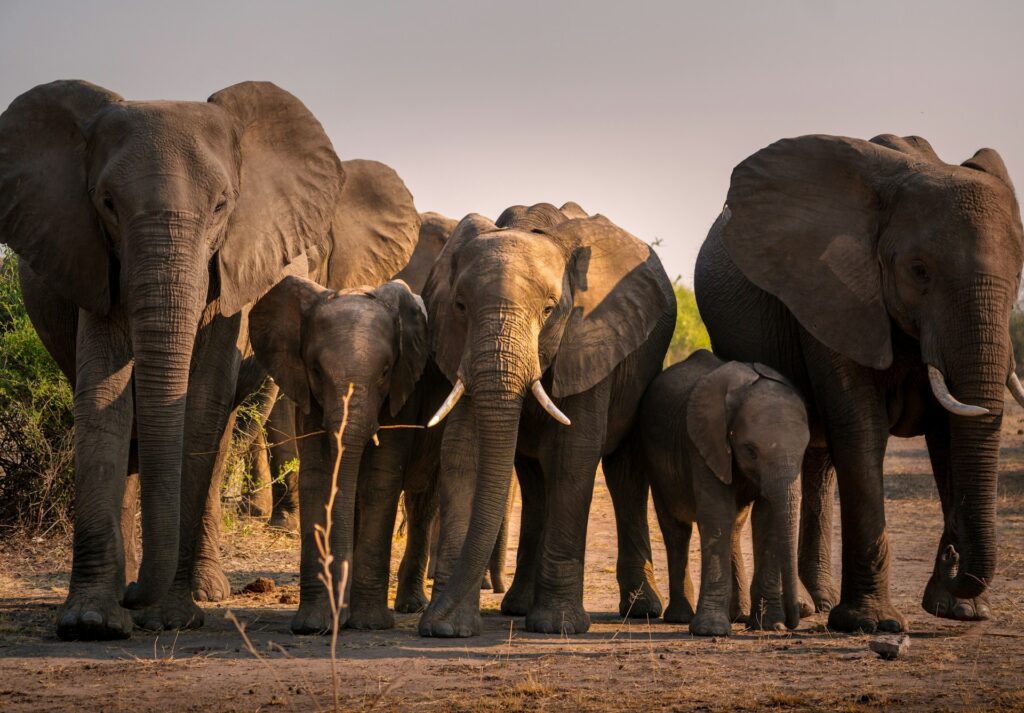
Namibia safaris often include walking experiences, sightings of uniquely desert-adapted species, like elephants, guides who are just about part of the land and some of the most luxurious lodges.
It is a style of safari that lingers in the memory long after the flight home, precisely because it feels unhurried and grounded. And because it takes place in a country that is more desert than typical safari grassland, safaris in Namibia for UK travellers are absolutely one of a kind.
Is Namibia very different to the UK?
In many ways, Namibia feels worlds away from the UK, so yes, Namibia and the UK are chalk and cheese.
While the UK has more rain than it knows what to do with, Namibia barely gets a drop.
Namibia is also more rural than urban, so you’ll be trading in overcrowded cities and busy villages and hamlets for a slower pace, expanding horizons of sand dunes, and barely any other people.
Yet despite its remote appeal, there is also an ease of travel that surprises first time visitors.
English is widely spoken, service standards are high, and the cultural exchange feels warm rather than overwhelming.
This balance is part of what makes Namibia for UK tourists such a great choice for those ready to step beyond familiar borders without feeling out of place.

If Namibia’s calling to you, follow that feeling.
Let’s start shaping your trip.
Popular Namibia for UK travellers flights from London to Windhoek usually take around 14 hours, including one stopover, often in Johannesburg or Frankfurt.
The Namibian dollar (NAD) is pegged to the South African rand, and both are accepted nationwide.
English is the official language, making communication easy for UK visitors. You’ll also hear Afrikaans and indigenous languages.
In cities and most lodges, tap water is safe. In remote areas, bottled or filtered water is recommended.
Yes, tipping is appreciated. Around 10% in restaurants and a few pounds per day for guides or drivers is standard.
