
When most people plan their Namibia safari, and they’re at the part where they are putting together a list of destinations they hope to visit, Mahangu National Park often doesn’t make the cut.
Out of the way and far less spoken about than Etosha National Park, Mahangu is somewhat of an enigma; secluded, elusive for some travellers, and quite exclusive.
The park is small, and it sits right on the border of Botswana. Its location makes it an off-the-beaten-track destination, but if you do find yourself travelling north and you’d like to go someplace special, a safari in Mahangu National Park is not to be missed.
Did you know?
- Mahangu is home to 300 recorded bird species, roughly two-thirds of every species found in Namibia.
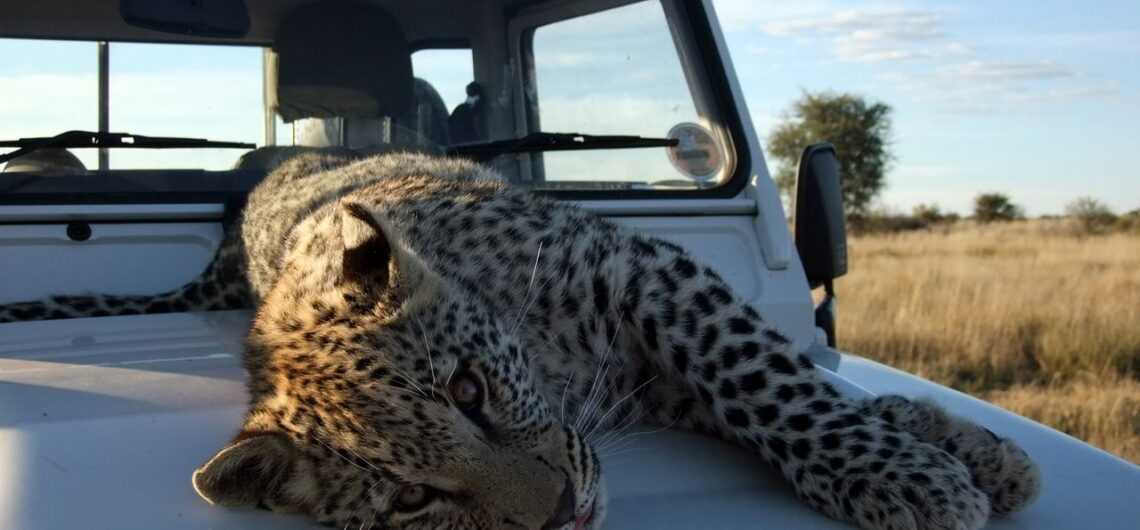
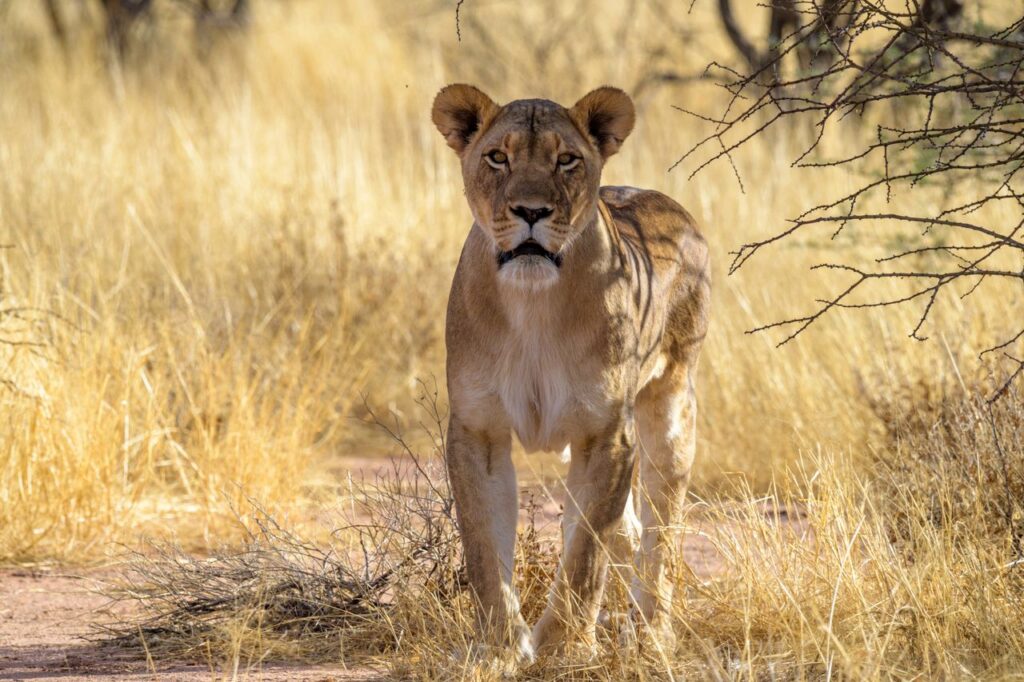
- Lions, leopards and hyenas are the park’s principal predators.
- Game viewing is at its finest in the dry winter months.
- The main road linking Namibia to Botswana runs straight through the park, so self-drive visitors pass wildlife along the way.

The Story Behind Mahangu National Park
Although it’s not a name that appears on every must-visit list, Mahangu has a lot of history.
Its official name is the Mahango Core Area, though most travellers still know it by the older spelling, Mahangu.
The park is on the western bank of the Okavango River in Namibia’s Kavango East region, close to the village of Divundu and the rapids at Popa Falls, and it covers a modest 245 square kilometres.
To give you some perspective, it is about 80 times smaller than the Kruger and 91 times smaller than Etosha.
But its small size is not at all a bad thing.
Mahangu forms the western wing of Bwabwata National Park, a reserve with a more complicated history.
It began life as the Caprivi Game Reserve in 1966, was upgraded two years later, and then spent the years of Namibia’s liberation war as a South African Defence Force military zone, off-limits to tourists.
It was only after independence in 1990 that the land could be returned to a conservation area, and in 2007 it was joined with the neighbouring Mahango Game Reserve under the Bwabwata name.
Today the park forms part of the Kavango Zambezi Transfrontier Conservation Area, a shared conservation project spanning Namibia, Angola, Botswana, Zambia and Zimbabwe, and its shared status makes it exceptional for extensive wildlife viewing.
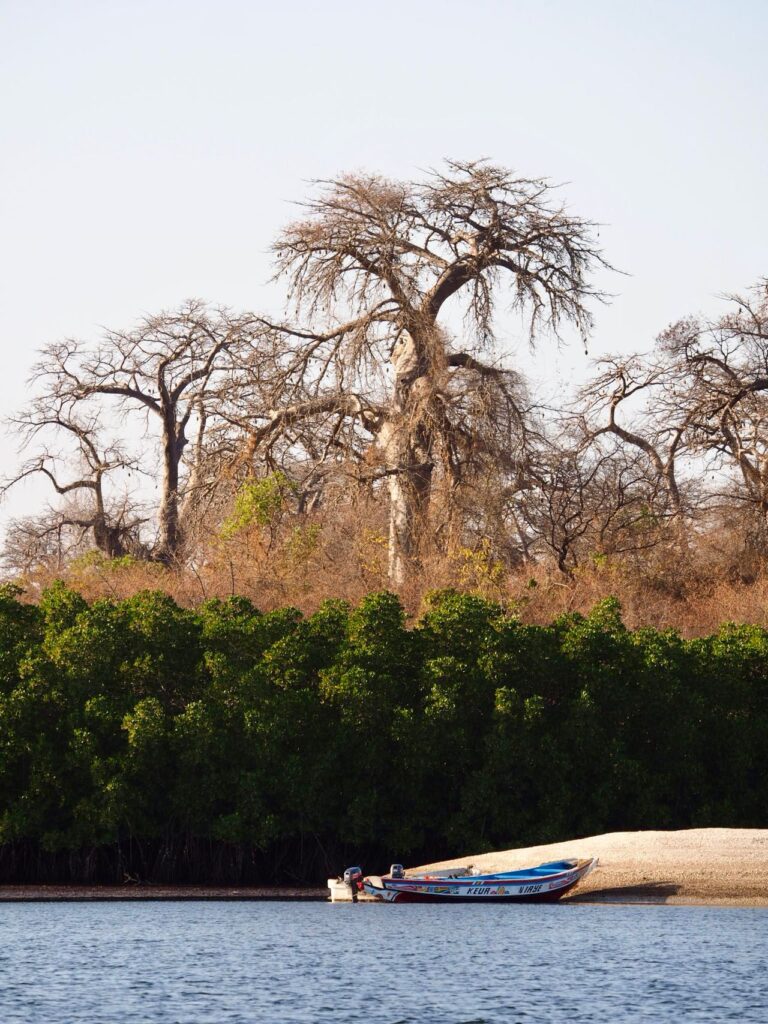
As well as being home to various animals, the park also has ancient baobab forests that stand along the riverine. They make for the most magnificent sight, especially as this is one of the only places in Namibia where you’ll see these amazing trees.
Finding Your Way to Mahangu National Park
Tours to the park will start in Windhoek, with a connecting flight to Rundu, a Kavango River town that has scheduled air links to the capital.
From there, the B8, Namibia’s Trans-Caprivi Highway, runs east for roughly 200 kilometres to Divundu, where a short turn south onto the C48 brings you to the park gate.
That same C48 doubles as a transit route for travellers continuing on into Botswana, so Mahangu sees a steady trickle of through traffic alongside its game viewers (the route goes right through the park).
Inside the park, there is a good waterfront road that follows the river south towards Kwetche and is manageable for most types of vehicles, while a second loop pushes further west through drier bush and old omuramba drainage lines, where you’ll be driving through sand and so will need a four-wheel drive.
Luckily, the most common way to visit the park is on a guided tour, so you won’t have to worry about making your way along the bumpy roads.
Unlike Etosha, however, Mahangu is only open for day visitors.
Gates open from sunrise to sunset, with no overnight camping inside its boundary.
Most travellers choose to stay at a riverside lodge nearby and drive in for morning and late afternoon game viewing. These are the best times of the day to see wildlife, while the weather is cool.
Why Mahangu National Park is Just the Place for a Slower Safari
When you are in the process of creating your own list of the best places for a safari in Namibia, you might just run into the same problem that travellers before you have.
The well-known parks are well known for a reason, and their popularity usually results in almost overcrowding a sighting, which not only kind of lessens the experience but also robs you of any sense of exclusivity and privacy, if that is something you wanted from your safari.
In Mahangu, even though the road connecting Namibia to Botswana runs right through it, the crowds are almost non-existent, because it is considered a more out-of-the-way place. Most Namibia tours focus on the southern reaches of the country, and even those that go north don’t go this far unless the tour is specifically created to do so.
The park is also far smaller than other places, so a morning drive covers a lot more ground compared to the long, dusty circuits that are so common on larger reserves.
And you’ll have an excellent chance of seeing 4 of the Big 5, as everything except rhino has a home in the park.
For a more comprehensive Namibia itinerary that also includes the Zambezi region, Chobe or Victoria Falls, Mahangu makes for a wild link between them, and it deserves its place among the luxury safari destinations in Namibia.
The Wildlife of Mahangu National Park
Mahangu’s unique position makes it one of the best places in Namibia to have that authentic wildlife safari everyone visiting Africa dreams about.
While the midday heat is enough to push both guests and wildlife into a shady spot, those late afternoons spent along the Okavango are when Mahangu really shows off.
As the worst of the heat begins to let up, elephant and buffalo herds come down to drink and bathe, and there is often a grunting hippo pod nearby and the occasional crocodile enjoying the last of the sunrays, somewhere along the bank.
One of the best spots in the park to view wildlife is at the picnic spot by the river. Strangely enough, the park only has 1 official picnic spot.
Antelope, including the incredibly rare sable and roan, can also be spotted here.
Out on the floodplain, you might come across red lechwe and sitatunga, animals built for the wet ground, while along the drier woodlands, there are herds of giraffe, zebra, kudu and impala.
The park is not without its share of predators, with lion, leopard and cheetah seen throughout the area, and the wider Bwabwata ecosystem remains one of Namibia’s last strongholds for African wild dog.
Mahangu’s elephants are migratory, and throughout the year they tend to move between Angola and Botswana’s Okavango Delta as the seasons change. As such, sightings are never quite guaranteed and always a little more special for it.
Birders Really Love Mahangu National Park
If you are the kind of traveller with a passion for bird watching, Mahangu will be an extra attractive location.
The park’s floodplains, papyrus beds and reed islands create precisely the habitat that draws Bwabwata’s recorded checklist past 450 species, and a considerable number of them can be found along this one stretch of river alone.
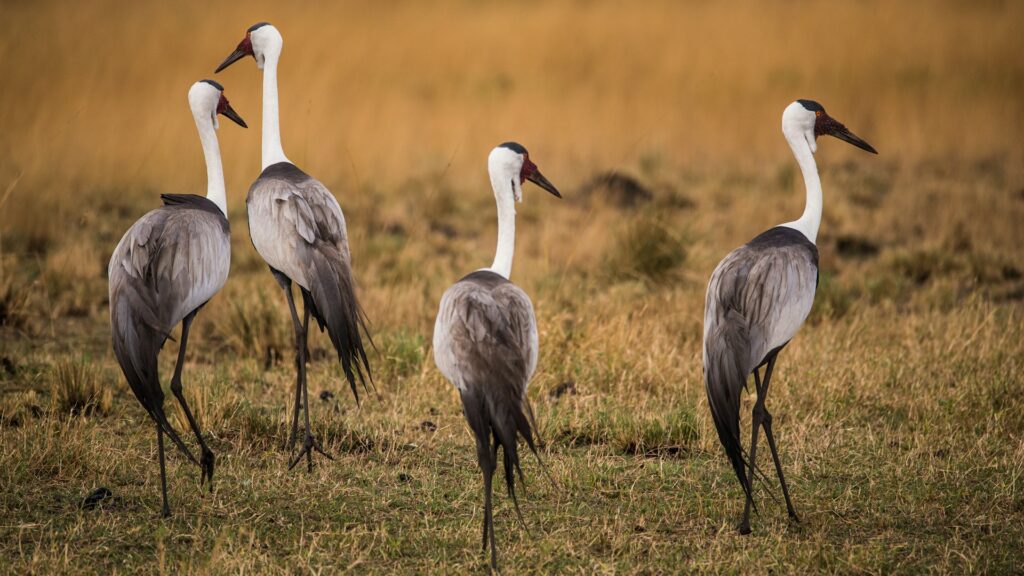
Wattled crane and African skimmer tend to prefer the open floodplain, while the forest edges are home to Narina trogon and western banded snake eagle.
Pel’s fishing owl, one of Africa’s most difficult birds to spot, turns up here often enough to draw specialist birding trips, and the astoundingly beautiful Cape parrot can also be seen in Mahangu, flitting through the trees.
The wet season, November to March, is generally considered the best time to visit if you want to see plenty of birds, as migrants arrive in their thousands and at dawn, the floodplains fill with song.
On Choosing the Best Time to Visit Mahangu National Park
Mahangu National Park will give you something to see all throughout the year, but planning the best time for your trip is going to depend on exactly what it is that you would like to see.
The dry months, from about May through to the end of October, will give you the best wildlife sightings as game of all kinds moves steadily towards the river as other water sources shrink. This can give you a bit of a more predictable viewing experience.
The peak for wildlife sightings in Mahangu is generally between June and August, which are also months that will give you the best temperatures.
November through March is the best time to visit if you want to see the birds.
Rain falls mostly in January and February, averaging around 550 to 600 millimetres a year, which is quite a lot for the region, and the bush turns green overnight, spreading game more widely across the region while at the same time welcoming all sorts of birds.
And if you are just looking to spend a few days soaking up the sunshine in a luxurious location, well away from the rest of the world, the Mahangu is a great place to visit anytime.
Finding Your Bearings in The Mahango Core Area
The Mahango Core Area is directly south of Divundu, with the Okavango River to the east and the Botswana border along its southern edge.
The C48 runs straight through as its spine, doubling as the border transit route mentioned earlier, and it is from this road that the two internal loops branch off.
The eastern waterfront loop hugs the river down towards Kwetche, where game and birding are about the best, while the western loop crosses sandier ground past an old omuramba drainage line and a scattering of the park’s largest baobabs.
If you are a self-drive visitor, you should treat the waterfront route as your focus, and add the western loop only if you have time and a suitable vehicle to spare.

The Okavango’s floodplains and ancient baobabs enchant most travellers, and with the right tour, you can see this magnificent destination in comfort and style.
Start planning your journey to Mahangu National Park today.
Mahangu National Park, officially the Mahango Core Area, lies within Bwabwata National Park in Namibia’s Kavango East region, on the western bank of the Okavango River near Divundu, roughly 200 kilometres east of Rundu along the B8 highway.
Not quite. Mahangu forms the western section of Bwabwata National Park. The two were separate reserves until 2007, when Namibia’s conservation authorities combined the former Caprivi Game Park and Mahango Game Reserve under the single Bwabwata name.
The dry months from around May to October draw wildlife to the river’s edge for easier viewing, while November to March brings migrant birds and a livelier birding calendar, at the cost of more scattered game.
Yes. A standard vehicle can manage the waterfront road along the Okavango, though the western loop through the sandier Omuramba route calls for a four-wheel drive. The park permits day visits only, from sunrise to sunset.
Elephants, buffalo, hippos and crocodiles gather along the river, alongside sable and roan antelope, red lechwe and sitatunga. Lions, leopards and cheetahs are present, and the surrounding Bwabwata landscape shelters some of Namibia’s last African wild dogs.
