

Having travelled through the Namib, specifically to see the spectacularly beautiful Sossusvlei and Deadvlei, I found myself back on Google, looking for other attractions in the area to fill the last day that I had in the desert.
Sesriem popped up, and since it was so close to where I was staying, I decided to set out early to see what the fuss was all about.
Sesriem Canyon is situated in the same area as Big Daddy Dune, Dune 45, and, of course, Sossusvlei.
Cut by the Tsauchab River through layer upon layer of sedimentary conglomerate and sandstone, it is one of Namibia’s most atmospheric places, though it is less photographed than the dunes and less visited than Fish River Canyon.
That makes it the perfect place for anyone who wants a unique experience or a spot to sit a while and just be.
Where is Sesriem Canyon?
Sesriem Canyon sits within the Namib-Naukluft National Park in western Namibia, about 60 kilometres from the small town of Sesriem, which serves as the gateway settlement and park entrance.
It is located at the point where the Tsauchab River, which also feeds the famous saltpans of Sossusvlei, carved its way through ancient rock over millennia.
The canyon runs for roughly one kilometre in length and drops to a depth of approximately 30 metres in places.
Its name is a direct piece of colonial-era history. The word “sesriem” is Afrikaans for six thongs, referring to the six lengths of ox-hide rope that early settlers needed to tie together in order to lower a bucket far enough to reach the water pooled at the canyon floor.
Today, Sesriem Canyon is one of the least visited spots in Namibia, which makes it a bit of a must-see if you want to be one of the few who get to explore this fascinating attraction.
What will you see in Sesriem Canyon?
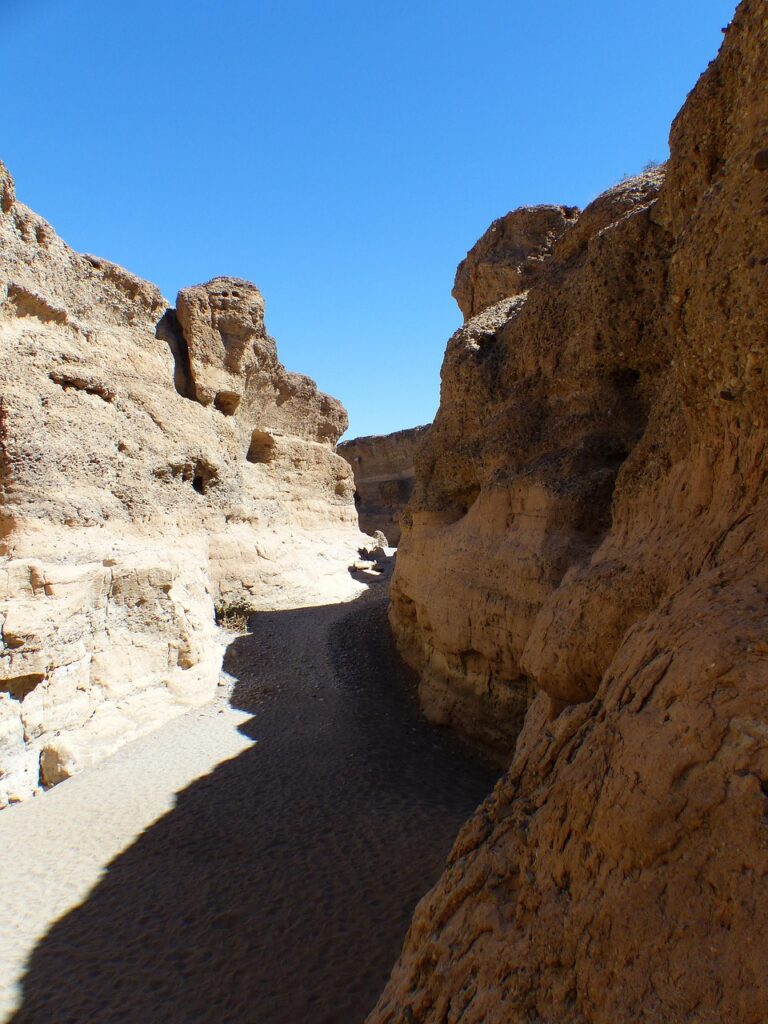
The canyon walls are the first thing that will leave you entranced.
Smooth in places, fractured in others, the rocks have warm tones of ochre, rust, and cream, and the colours change throughout the day as the sun moves overhead. In the early morning, shadows pool in the lower sections, and the rock takes on a cool, almost violet quality. By mid-afternoon, the same walls are bright and bleached.
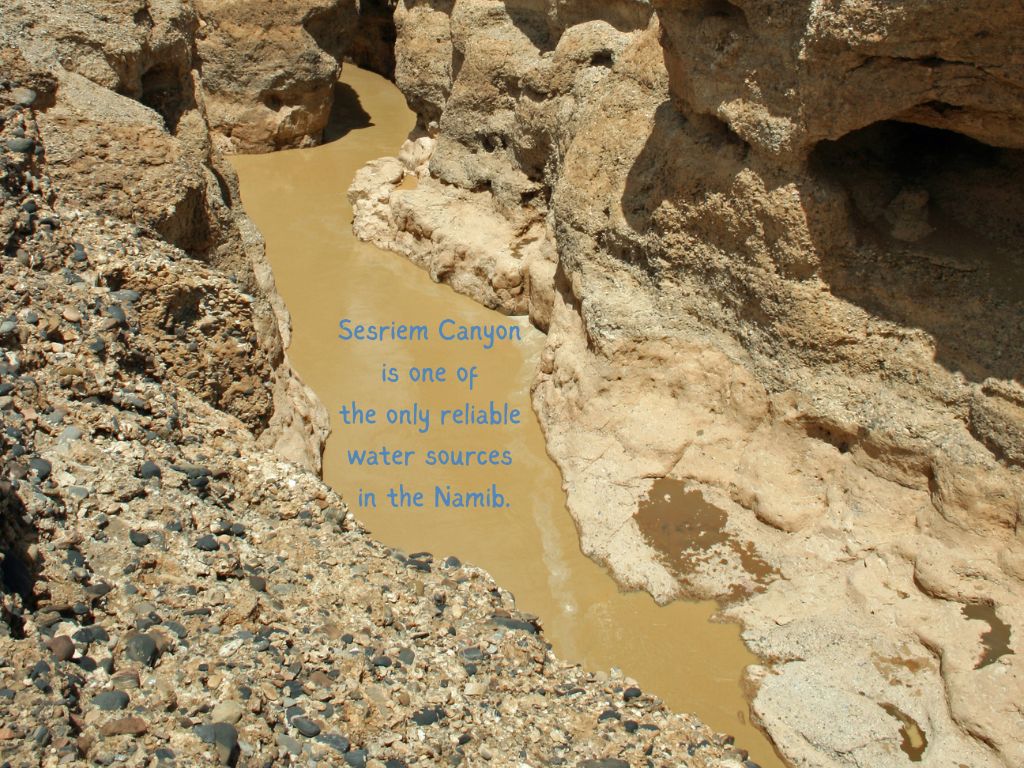
At the canyon’s deepest point, a natural pool of water forms after good rains.
This was the very same water source that made Sesriem a viable resting point for desert travellers for generations, and it still holds water for much of the year, even in dry seasons. The pool is not deep enough to swim in, but it is remarkable simply for existing at all in such an arid environment.
If you look closely at the canyon walls, you will see something that takes a moment to understand. The conglomerate rock is embedded with rounded pebbles, tumbled smooth by a river that was far more powerful than the seasonal trickle of the Tsauchab today.
These are the remnants of ancient flood events, pressed into stone and held there for millions of years.
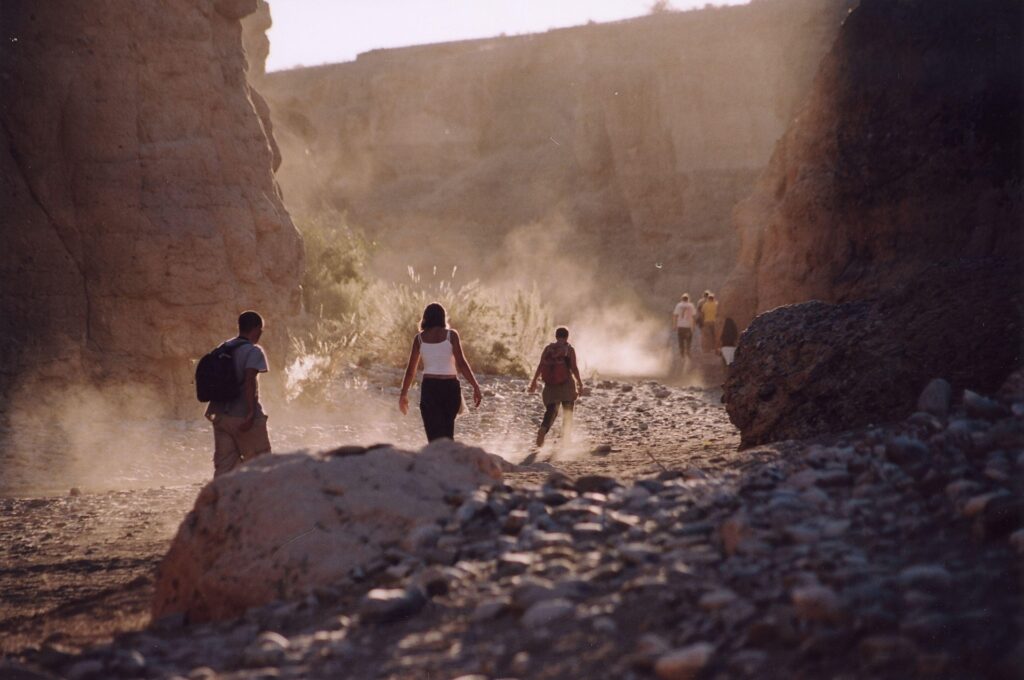
I forgot to mention, Sesriem Canyon is a great place for a hike, and you don’t need to be super fit to make the most of your trip here. This walk can be more of a meander, and there’s no pressure to do the whole thing. If you are short on time, you can walk a short way, enjoy the sights, sit a while, and then head back to your car.
How To Get There
Sesriem Canyon is accessed through the Sesriem gate of the Namib-Naukluft National Park.
The gate is located approximately 340 kilometres south of Windhoek via the C26 and C27 roads, or around 380 kilometres via the tarred B1 and C14 route, which is the more comfortable option in a standard vehicle.
The canyon itself is just one kilometre from the Sesriem gate, and it is accessible on a good gravel road. A 4×4 is not needed to reach the canyon, though, since you are probably also planning on seeing Sossusvlei and Dead Vlei, and since your tour will continue from here, you might want to get yourself a 4×4 if you are self-driving.
Many visitors choose to stay at one of the lodges or campsites within or adjacent to the park, which allows early gate access to Sossusvlei before sunrise, which is something you should plan for, since the heat can get extreme later in the day.

Tips for Planning a Sesriem Canyon Visit
You don’t need much planning to see the best of Sesriem Canyon, but you should keep these tips in mind:
Go early or go late. The canyon is at its most beautiful in the soft light of early morning and late afternoon, when the shadows lengthen, and the rock colours become richer due to the contrast. The middle of the day is harsh on both the eyes and the body, as temperatures in the Namib regularly exceed 40 degrees Celsius in summer (and they are not much better in winter).
Wear closed shoes. The canyon floor requires some careful footing, and the rocks can be uneven and sharp in places. It is a manageable walk for most, but sandals are not a practical choice (neither are brand-new hiking boots because you don’t want to end up with blisters).
Bring far more water than you think you need. The Namib is one of the driest places on earth, and the combination of the intense heat and dry air means dehydration happens quickly and without you even realising. Bring lots of water and keep sipping it throughout your walk.
Book accommodation inside the park if your budget allows. The Sesriem gate closes at sunset, and guests staying outside the park cannot re-enter after closing time. Lodges within the park boundaries will give you the benefit of staying past the gate hours, which means you can linger in the canyon in the evening long after day visitors have left.
Visit Sesriem Canyon and Sossusvlei on the same day. They are less than 65 kilometres apart within the park and pair naturally as a full-day itinerary. Many guided Namibia safaris include these places in a single, unhurried day.
The Flora, Fauna, And What to Do in Sesriem Canyon
The canyon is home to a surprising number of plants and animals, given its apparent severity, both the dryness and the heat would kill most plants and wildlife.
Fig trees grow from cracks in the rock, with their roots threading into fissures where the moisture lingers longest. Reeds and sedges cluster around the pool at the canyon’s base, and because they are green and slightly incongruous, they stand out against the stone.
Rock hyrax are a near certainty. These small, round mammals, which are impossibly cute and improbably the closest living relatives of the elephant, sun themselves on the canyon ledges with an endearing lack of concern for passing visitors. And if you look up at the canyon walls, you might just spot swifts or cliff-nesting birds, their calls echoing off the rock in ways that give the narrow space an unexpected acoustic quality.
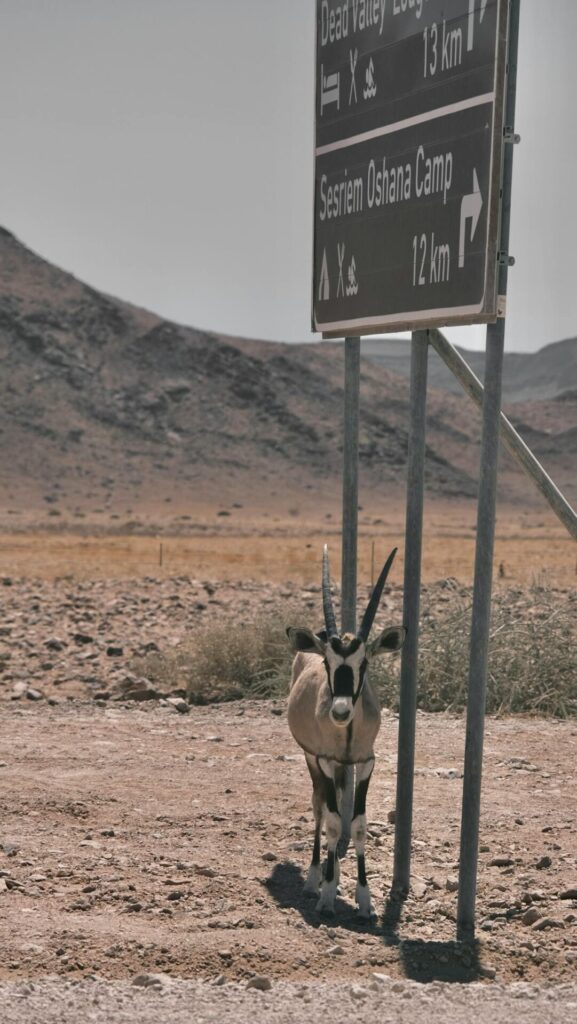
Desert-adapted animals, including klipspringer and Hartmann’s mountain zebra, have been recorded in the wider area, and the occasional jackal passes through in the early hours.
The rest of the Namib-Naukluft National Park is also home to a healthy leopard population, though sightings at Sesriem itself are rare.
Walking is the main thing to do while visiting Sesriem Canyon.
The path along the canyon rim and down into the gorge itself takes between 45 minutes and two hours, depending on how far you walk and how long you’d like to stay.
There is no formal guided trail required, though having a knowledgeable guide to lead you is going to add considerably to the experience, particularly when it comes to reading the geology and seeing those smaller details that are easy to miss.
Photography is one of the reasons many people are drawn here.
The play of light on ancient stone, the geometry of shadow and rock, and the scale of the canyon walls against human figures produce interesting images without requiring any technical acrobatics.
PLAN YOUR SESRIEM CANYON TOUR WITH NAMIBIA SAFARIS
Yes, and more so if you are already visiting Sossusvlei. Sesriem Canyon is one kilometre from the park gate and takes very little additional time to include. It is a genuinely ancient, atmospheric place and one that many visitors find more quietly moving than the dunes, precisely because it is less crowded and less expected.
The cooler months between May and October are considered the most comfortable for visiting. Summer temperatures in the Namib can exceed 40 degrees Celsius during the day, making early morning the only truly pleasant time to explore the canyon in warmer months. After good rains, the canyon pool holds water and the surrounding landscape takes on an unusual, brief greenness.
No. The canyon is accessible on a standard gravel road, and a 4×4 vehicle is not required. However, if you plan to continue to the Sossusvlei saltpan beyond the 2×4 parking area, you will need either a 4×4 or a place on the park shuttle service.
Most visitors spend between one and two hours at the canyon. The main walking route along the canyon floor and rim is manageable for most fitness levels, though the terrain is uneven in places. Comfortable, closed shoes are recommended, along with more water than seems necessary.
Yes, and this is the most common way to do both. The canyon and Sossusvlei are within the same national park, less than 65 kilometres apart. Many guided Namibia tours include both in a single day, with Sossusvlei and Dead Vlei in the early morning and Sesriem Canyon on the return. It makes for a full but unhurried itinerary.
