
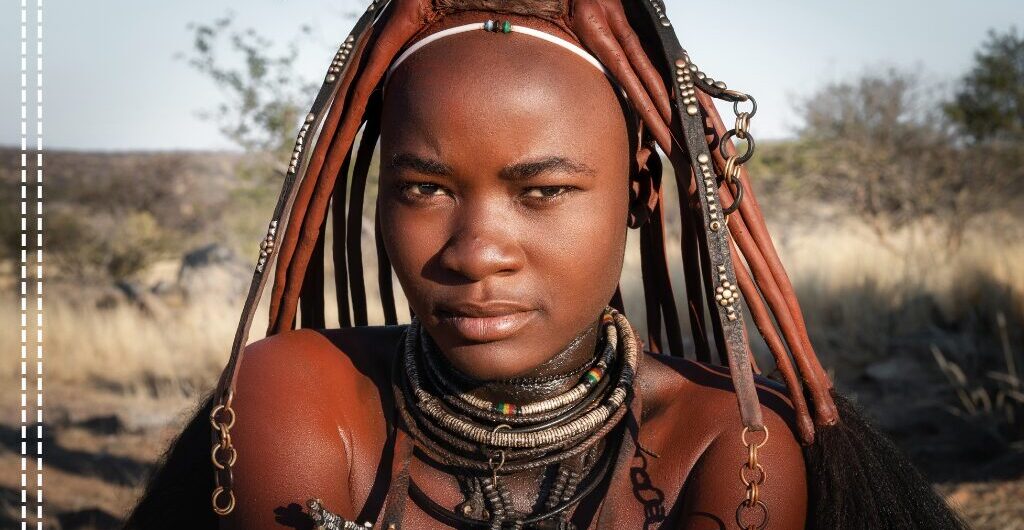
The dust in Kaokoland has its own distinct colour, one that is hard to miss.
It’s not like the pale gold you find further south in the Namib, the familiar colour that has become synonymous with the desert and gets in everywhere when the wind blows, but a deeper, darker rust colour.
It is the same reddish hue that appears on the skin and hair of the Himba people, who use it to create otjize, a paste of ground ochre and butterfat applied with a reverence rarely seen these days.
It has become their most recognisable feature, while also being one of the tribes most sacred practices.
Kaokoland is Himba country, and its villages have looked much the same for generations, long before the word ‘tourism’ meant anything at all.
As the wider world has drawn closer, interest in the Himba way of life has grown with it.
For travellers making their way through this part of Namibia, spending time in one of these villages remains the most meaningful way to understand this tribe, and to come away with a deep respect for their commitment to a traditional way of living.
In this guide, we’ll share everything you need to know before visiting the Himba villages of Namibia.
The Himba Way of Life
The last thing you want to do is walk into a culture with absolutely no background knowledge. Respectful interactions with anyone whose lifestyle you are unfamiliar with should always begin with knowing a bit about them and how they live.
Family is very important among the OvaHimba, and it is structured in a unique way.
Every person belongs to a patrilineal clan, called an oruzo, which decides where they live and who leads the household.
At the same time, they also belong to a separate matrilineal clan, the eanda, through which cattle and other inheritance pass down from a mother’s brother rather than a father.
It’s an arrangement that surprises most first-time visitors, and it means a Himba child grows up with a very different sense of belonging; one could even say that their sense of belonging is deeper than that of Western families.

Aside from family, little in Himba life exists apart from cattle.
In this culture, wealth is not measured in currency but in horns and hooves, and a family’s standing in the community rises and falls with the size of its herd.
Goats are also important, providing milk and meat when the cattle numbers are lower, and both animals are kept in a kraal, a circular enclosure of thorned branches, to keep predators out.
A homestead without livestock is almost unthinkable in the Himba culture, and even marriage negotiations are settled using cattle, with a bridewealth agreed between families long before a wedding takes place.
Because grazing in Kaokoland is unpredictable and rain arrives in short, uneven bursts, Himba families move around although they are not fully nomadic people.
When the land nearby stops providing for the herd, a homestead will pack up its huts, which are made from little more than sapling frames bound with mud and dung, and resettle somewhere the grass hasn’t yet been eaten down to the roots.
This makes the Himba Namibia’s last true semi-nomadic pastoralists, which means that when you are planning to visit Himba villages, it might not be as easy as finding a point on a map and heading to it. For this reason, and a couple of others, booking a tour is the better option.

Himba Culture
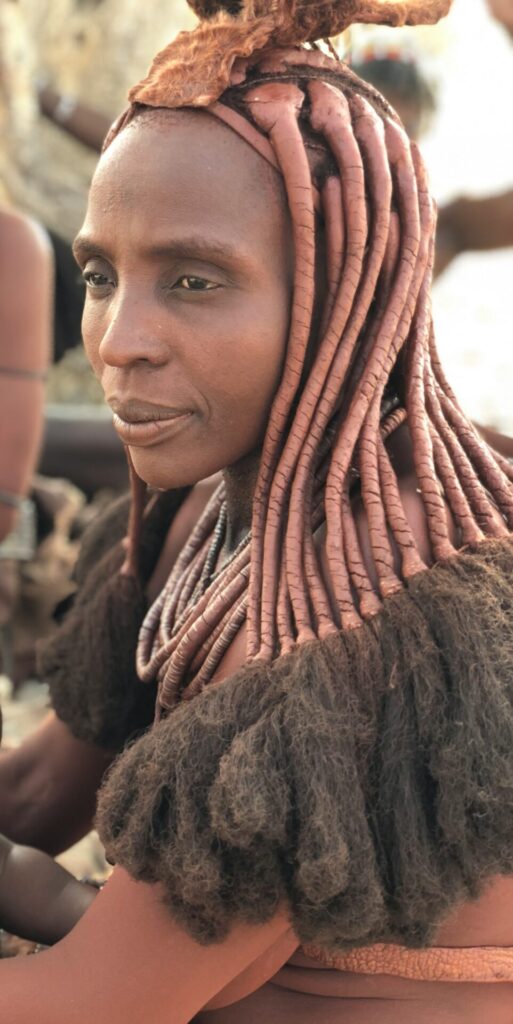
Ask most travellers what they picture when they think of the tribes of Namibia, and the answer is nearly always the same: skin the colour of ochre and mud-covered braids of the Himba people, even though they might not know the name of the people they are picturing.
That colour of the skin of the Himba people is iconically striking and comes from otjize, a paste made by grinding ochre stone into a fine powder and working it into butterfat until it turns to a thick, fragrant balm, often finished with a little omuzumba resin for scent.
Women apply it daily, working it into their skin and along the length of their hair.
But while Otjize is strikingly beautiful, it isn’t simply decorative. In a climate this dry and this hot, the paste works as a barrier against the burning sun and biting insects.

Because water is too precious to spare on daily washing, many Himba bathe in smoke instead, kneeling over a bowl of smouldering coals scattered with herbs until the fragrance settles into their skin. Women in the Himba culture are not allowed to wash with water at all, another reason why they use Otjize and smoke baths.
Still, ask a Himba woman why she wears it, and she’ll probably talk more about beauty before practicality. Red, in Himba belief, is the colour of the earth and of life itself.
Hair is also important in this culture, and it has its own kind of language.
A girl’s plaits are styled differently to a married woman’s, and the Erembe headdress, a striking crown of sheepskin and braided hair, is reserved for women who are newly married or who have recently had a child.
Jewellery follows a similar theme.
Necklaces made from iron, copper or ostrich eggshell aren’t chosen at random; they signal whether a woman is married, while the thick iron anklets many women wear once protected the lower leg from thorns and snake bites and now double as a kind of musical percussion with every step.

Visiting a Himba village
A Himba village is somebody’s home; it is not an open-air museum, so it is not a good idea to rock up at a village and invite yourself in.
The best visits are arranged through a guide with a good existing relationship with that specific community, ideally someone who can translate more than just words.
You can expect to be welcomed into the kraal, shown how otjize is made, and given the chance to sit with the women as they go about ordinary, daily tasks.
A Himba village tour is slow, low on spectacle, and can be immensely moving and insightful, adding a dash of something extra special to your overall Namibia tour.
There are a handful of things worth knowing before you go:
- Choose a guide with a standing relationship with that particular village, not a general permit to visit any homestead nearby.
- Ask before photographing anyone, especially children, and accept a no without pressing further.
- Pass any small gifts you have through your guide rather than handing them directly to children. (Maize meal, sugar or cooking oil tend to be more useful than sweets, and cause far fewer squabbles.)
- Let your guide manage any contribution you’d like to give to the community.
- Avoid touching anyone’s otjize, hair or jewellery unless you’re invited to.
- Stay close to the group rather than wandering towards huts or livestock unaccompanied.
- Remember that many Himba communities have chosen to welcome travellers, but that choice doesn’t mean that their daily life is a performance staged for an audience. Be respectful, always.

You won’t bring much home from a Himba village, but you will remember the humble people, the feel of otjize between your fingers, the low call of herders bringing cattle home, and the soft smile exchanged with a woman whose name you just didn’t catch.
We build every Himba village visit around moments like these, to give you a unique cultural experience that no other brochure can live up to.
The best way to visit a Himba village is through a guide who already has a standing relationship with that particular community, rather than one with a general permit to visit any homestead nearby. A good guide does more than open the gate. They translate not just language but context, helping you understand what you’re seeing rather than simply looking at it. On arrival, you can expect a welcome into the kraal, a demonstration of how otjize is made, and time spent sitting alongside the women as they carry on with their day. It’s a slow, low key kind of visit, closer to a quiet exchange between hosts and guests than a spectacle, and that is exactly what makes it worthwhile.
Himba women apply otjize, a paste made from ground ochre stone worked into butterfat and scented with omuzumba resin, both for beauty and for practicality. In a climate this dry and this hot, the reddish balm forms a barrier against sun and insects, and stands in for washing with water, which is far too precious to spare for daily bathing. Many women use smoke baths instead, kneeling over smouldering herbs until the fragrance settles into the skin. Ask a Himba woman why she wears it, though, and she’s likely to speak first about beauty rather than function. In Himba belief, red is the colour of the earth and of life itself, and otjize is worn with real pride.
Photographs are often welcomed in a Himba village, but only once permission has been given, and that applies to everyone in frame, including children. If someone says no, the right response is to accept it without pressing further. It also helps to let your guide manage any contribution tied to photography rather than paying for pictures directly on the spot, since that keeps the exchange respectful rather than transactional. A Himba village is somebody’s home, not a backdrop, and the most rewarding visits are the ones where the camera stays secondary to the conversation.
The Himba are semi-nomadic rather than fully nomadic, and they are considered Namibia’s last true semi-nomadic pastoralists. Their villages are found across Kaokoland in the country’s remote northwest, where grazing is unpredictable and rain falls in short, uneven bursts. When the land around a homestead stops providing for the herd, the family will pack up their sapling and mud huts and move to where the grass hasn’t yet been grazed down. Because of this, Himba villages aren’t always where a map might suggest, which is one of the main reasons a guided visit tends to work far better than trying to find one independently.
Small, practical gifts are usually the most appreciated, and maize meal, sugar and cooking oil tend to go further, especially as the tribe is semi-nomadic and can struggle to get such items. Rather than handing anything directly to children, it’s best to pass gifts through your guide, who will know how the community prefers to receive them. The same goes for any broader contribution to the village. Letting your guide manage this keeps things dignified for everyone involved. Otjize, hair and jewellery are best left untouched unless you’re specifically invited to.
