
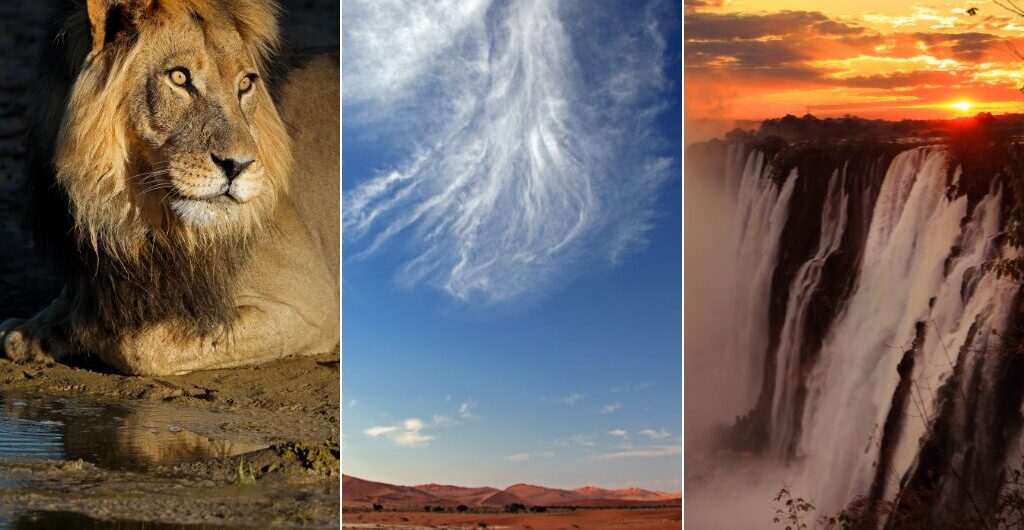
Taking the long and scenic roads through Namibia, travelling through Botswana and ending up gazing at the legendary Victoria Falls makes for one heck of a road trip.
It is the sort of holiday that you’ll find yourself retelling for years to come, a trip that becomes a part of your life story and gives you a unique perspective of the world that you’ll carry with you for the rest of your life.
It is also the sort of holiday that requires more than just a little bit of planning, and in this guide, we’re going to help you get started.
What the Ultimate Namibia/Victoria Falls Tour Can Look Like
16 days spent travelling, quite literally, from one side of Africa to just about the other, is the easiest way to get the very best impressions and experiences from each destination.
Signing up for a guided tour that follows a route that moves from red sand to white salt to green water allows you to leave the bulk of the stressful planning logistics to someone else, while you get to enjoy all the fun parts.
And the tour would look sort of like this:
The Road Begins in the Kalahari
It might seem an unlikely place for your holiday to begin, but starting your southern Africa tour down in the south of Namibia, amidst the iron oxide-covered red sands and dunes of the Kalahari, is an excellent place to start this most epic trip.
Morning walks, game drives to see the unusual black-maned lions, and spending the evening gazing up at the sea of stars will ground your trip and give you the most bang for your buck, so to speak.
It Continues into Sossusvlei, Swakopmund and the Foggy Coastline
From the Kalahari, the road runs west to the Namib, where the dunes grow taller with each passing minute.
Sossusvlei sits inside the Namib Desert, a sand sea which UNESCO inscribed as a World Heritage Site in 2013, and is undeniably one of the country’s most popular places to see.
The Namib is often described as one of the oldest deserts on earth, and its ridges are best climbed before sunrise, when the sand is still cool underfoot. The area is also where you’ll see the Deadvlei and its petrified camel thorn trees, which stand blackened against a white clay pan and are estimated to be around 900 years old.
Several Namib beetles drink from that same fog, collecting droplets on their backs.
And after days of dry desert air, the coast is a most welcome surprise.
Swakopmund was founded in 1892 under German colonial rule, and has since become Namibia’s swankiest town, with its alluring half-timbered buildings, deliciously good coffee and a fog that rolls in from the cold Benguela Current, all giving the town its wonderful character.

And Then It Carries on Into Etosha, Where You’ll Have a Safari
Across the country, on the opposite side of the coast, the scenery that shimmers past the window turns from sand to salt, acacia trees and wildlife.
Etosha National Park is next up on a tour of this kind, and it’s the salt pan, so large it can be seen from space, that gives the park its name.
Etosha was first proclaimed a game reserve in 1907, which makes it one of the oldest protected areas in Africa.
Wildlife gathers at the park’s waterholes throughout the day, and some camps floodlight theirs so that you can enjoy a spot of nighttime game viewing. The best seat on safari may turn out to be a low wall at 10 at night, watching a usually shy rhino arrive for a drink.
Then You’ll Travel through the Okavango and Kwando
After so much dry country, the Okavango Delta is the plot twist of a Namibia and Victoria Falls holiday.
Rain that falls on the Angolan highlands takes months to travel south, so the flood reaches Botswana in the dry season, usually from June to August, pulling animals onto islands of green. UNESCO named it the 1 000th World Heritage Site in 2014.
Days are delightfully slow here. Travelling aboard a mokoro, a traditional dugout canoe, gliding low through water lilies, while frog song and crickets ignite your senses, and an elephant is heard before it is seen, is what makes a safari here so special.
The Kwando River region follows, known for large elephant herds and for African wild dogs (every wild dog has a unique coat pattern, so no two are ever alike).
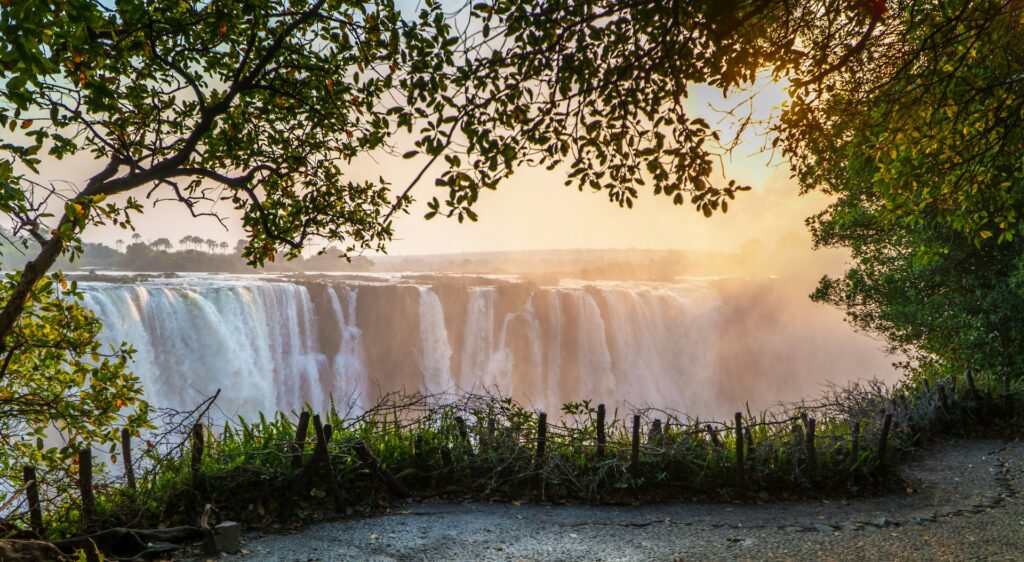
And finally, you’ll reach the Victoria Falls, a monumental natural attraction that has enchanted travellers and left them awe-inspired for over a century.
How to Decide on a Victoria Falls & Namibia Tour Package
This route you’ve just taken in your mind with us, which is one of our signature experiences, crosses 3 countries; it is really 3 trips stitched neatly together, and the stitching decides whether the tour is graceful or exhausting.
The best way to decide if a Namibia and Victoria Falls holiday is the right one for you is to have the answers to a few questions, like:
How many hours are spent in a vehicle on the longest day? Namibia’s distances are real, and a neat line on a map can look like 6 hours of bumpy gravel road.
Where are the nights near Sossusvlei spent? Lodges inside or beside the park gate reach the dunes before the sun climbs and the crowds arrive.
And does the Etosha stay include a camp with a waterhole at its door, and does the Falls leg include both sides or only one?
Group size is also such an important consideration.
A small group or a private departure change how much time can be spent beside a lioness or with a San tracker.

Tips For a Long Haul Southern Africa Tour
Tours to Southern Africa are best spread out over a week or 2.
Such a long tour means that not only do you need to pack carefully, because for most of the time you will be well away from towns, but you must also know how to pack light, because the last thing you want to do is lug around heavy bags.
These are some of the tips we advise you to stick to:
Pack in a soft bag.
Transfers can have strict carry weight limits, often around 20 kg, and hard cases simply take up too much space.
Pack layers.
Because Namib mornings are cold, Swakopmund wears fog, and game drives in the Delta start in the dark. And anywhere you go, by midday, it will be summer-like. Wearing layers of clothing will keep you comfortable.
Treat yourself to a buffer day.
A long-haul flight followed straight away by a long drive wastes the Kalahari on a tired mind.
Check entry requirements.
This is something you should do for every country on the route well before departure, since rules for visitors have changed in recent years.
Carry a few small notes for tips.
The country has card machines, but the staff don’t carry their own around.
Speak to a travel health clinic about malaria.
The Okavango, Kwando, the Victoria Falls and even parts of Namibia are all in malaria risk areas depending on the season.
And leave only footprints behind you.
Namibia was the first African country to write protection of the environment into its constitution in 1990, and its conservancies rely on visitors to keep that promise. Keep voices low at waterholes, stay in the vehicle when asked, and buy directly from community projects if a souvenir catches your eye.
What is the Best Month to go on this Tour?
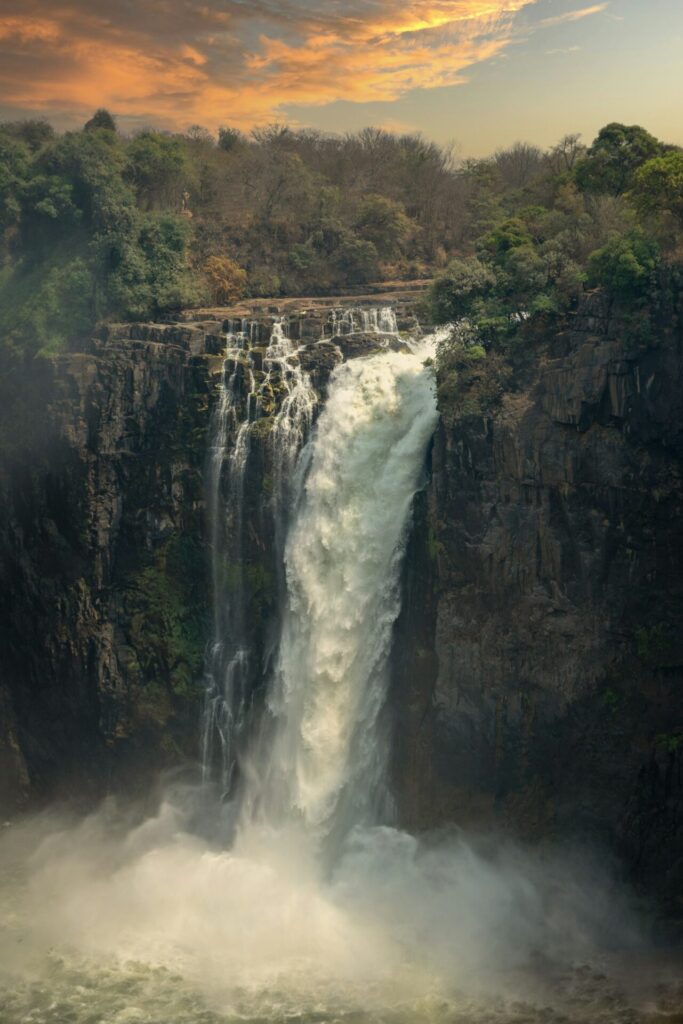
According to Zambia Tourism, high water from March to May will give you the Victoria Falls at their most dramatic, but all that water kind of ruins the view of the falls, due to its immense misty spray of water.
If you do end up choosing a tour that follows a route that includes the Okavango and Etosha, June and July are both excellent months.
During these months, the mist has thinned, the views are clearer, and the river is still full.
If you opt for a tour that includes Zambia, then September and October are better, and it is safe enough to swim in Devil’s Pool, the rock pool on the Zambian side where the low water makes it possible to take a dip at the very edge of the falls’ drop.
It typically runs from mid-August to January, and the heat builds as it does.

Few routes in southern Africa change their character as quickly as this one, and that is exactly what makes it such an intrepid, bucket-list holiday.
This route runs for 16 days, travelling from the Kalahari through Sossusvlei, Swakopmund, Etosha and the Okavango Delta before ending at Victoria Falls. Most travellers find that two weeks is the minimum to avoid rushing the long drives between regions.
No. The Victoria Falls sits on the Zambezi River on the border between Zambia and Zimbabwe. It is usually reached from northern Botswana, which is why it works well as the final stop after Namibia and the Okavango Delta.
The dry season, from May to October, is generally best. Water is scarce, so animals gather at Etosha’s waterholes and become much easier to find. Mornings are cold, so layers are essential.
Neither wins outright. The Zimbabwe side has water flowing over the main Falls year-round and the classic front-on views. The Zambia side has Devil’s Pool during low water, so many travellers visit both.
Speak to a travel health clinic before departure. The Okavango, Kwando and Victoria Falls regions can fall in malaria risk areas depending on the season, while risk is lower in the Namib Desert.
