
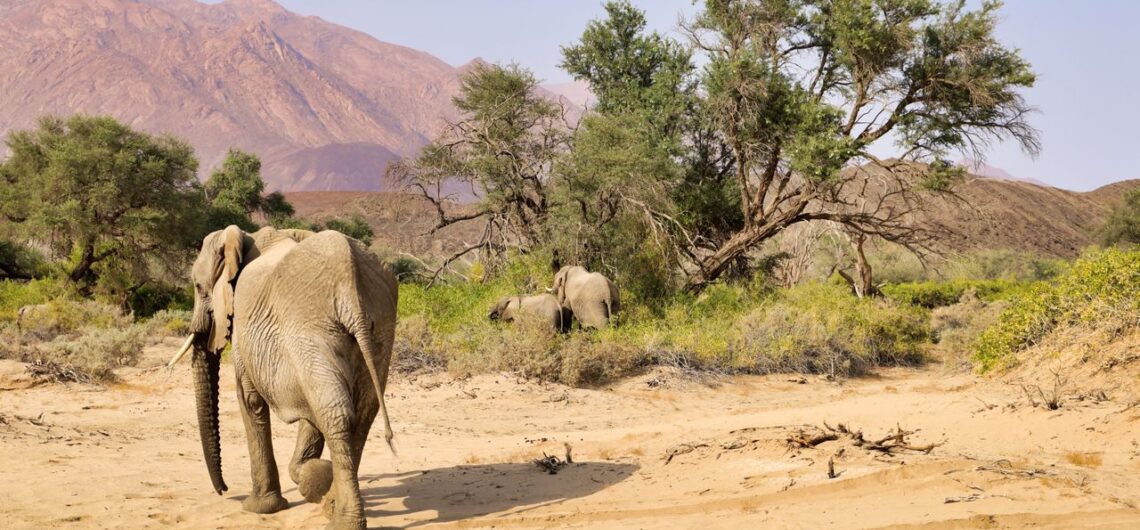
Kaokoland and its surroundings are one of the last remaining wilderness areas in Southern Africa, tucked into the north of Namibia between the Hoanib River and the Kunene River.
It is a place where you instinctively tread lightly, wanting to preserve the ancient and dramatic lands you are travelling through.
The area is in a remote location, and being so far away from pretty much everything makes it perfect for an intrepid adventure, though for the same reason, you need to make sure that your trip is planned down to the last breakfast.
In this stop-by-stop guide, we’re going to show you the best way to spend 15 days in Kaokoland, from the route and the lodges where you will rest, to everything you need to pack.
Our Recommended Tour at A Glance
15 days and 1 long, winding road, our Kaokoland tour is one of the more comprehensive options and our recommendation for first-time and returning visitors wanting a guided experience.
This is what our tour looks like:
- You’ll begin and end in Windhoek
- The route includes Windhoek, Sossusvlei, Swakopmund, Twyfelfontein, Opuwo, Epupa Falls and Etosha
- You’ll have a personal guide and driver
- Breakfast and dinner are included each day
- You’ll travel around in an air-conditioned vehicle
- The best time to travel is between May and October

Destination Highlights
Kaokoland sits in the north-west corner of Namibia’s Kunene Region, and it is one of the least explored parts of the country, a place where rivers bring the desert to life. Here, remote is the luxury.
Windhoek
A hilltop capital of Namibia.
Windhoek is where most tours start. Sitting 1 650 m above sea level, the capital is home to around 300 000 people, and although other towns have grown over the years, Windhoek is still the largest city in Namibia.
Stately historic buildings from the turn of the century give the city its singular look and have become a big attraction, best seen during a walking tour.
The Tintenpalast, the historic seat of government, is one of the city’s biggest landmarks and takes its name from the German for palace of ink. Right beside it, the Christuskirche is another spectacularly beautiful building to see, as is the nearby white-walled Alte Feste, once a fort, and now a museum that reflects the history of the country.
What to do in Windhoek?
- Go on a walking tour to see Tintenpalast and the Christuskirche
- Visit the markets and craft shops
- Raise a sundowner at Hotel Thule
Sossusvlei and Sesriem
Huge red dunes, a dried-up salt pan and a canyon with a pioneer’s name.
Sossusvlei is a dune wonderland.
Within this sandy landscape, there’s an endless sea of dunes, some up to 300m high, surrounding a large, dried-up pan, stretching as far as the eye can see. Their colours change from pale apricot to vivid reds and oranges throughout the day, as the sun moves across the clear skies.
You can climb one of the highest sand dunes in the world, and if you want to see the pan, a 4×4 can take you across the last 5km.
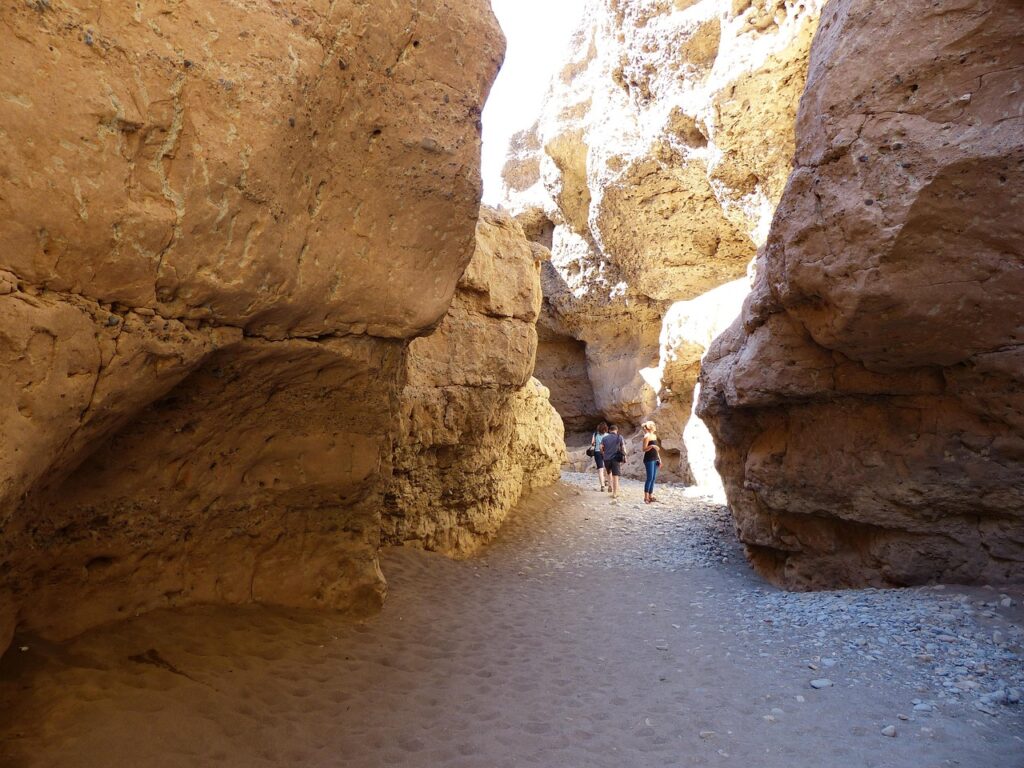
At the entrance to Sossusvlei, centuries of erosion have cut Sesriem Canyon, a narrow gorge about 1 km long that plunges 30 to 40m.
Deep pools at its foot refill after a rare bout of good rains, and the name comes from a time when early pioneers had to tie six lengths of rawhide thongs together to reach down into the pools and draw water from them.
What to do in Sossusvlei and Sesriem?
- Climb Big Daddy Dune
- Peer into the depths of Sesriem Canyon
- Watch the floodlit waterhole at Sossusvlei Lodge
Swakopmund and Walvis Bay
A seaside town with a lagoon full of dolphins and Namibia’s best seafood
Namibians love Swakopmund. A weekend here gives them a respite from the inland heat, and there’s plenty to see and do.
Founded in 1892 during German colonial rule, the town served as the main harbour of the territory for many years, and its colonial architecture has been beautifully preserved.
Woermann House (built in 1905) is now an art gallery, and the Woermann Tower, which once watched for ships coming into the harbour, Die Alte Kaserne, the Hohenzollern Haus and the Railway Station Building are all historical landmarks you can explore while you are in the town.
And just 30km away is Walvis Bay, where you can enjoy a 3-hour dolphin cruise, where pelicans and flamingos, and dolphins and seals, often spotted swimming alongside the boat, can be seen (and the occasional seal may jump aboard to get a snack!)
Walvis Bay has some exceptional seafood restaurants, so if that is your kind of meal, you can really indulge yourself here.
What to do in Swakopmund and Walvis Bay?
- Cruise the Walvis Bay lagoon in search of dolphins
- Walk along the Swakopmund Jetty
- Dine at one of the fine restaurants in town
Twyfelfontein and Damaraland
An open-air gallery of Stone Age art, set among coloured rocks and basalt.
Twyfelfontein means doubtful fountain, and it lies just west of Khorixas in Damaraland, a place that feels unique and mysterious.
It resembles a large, open-air art gallery, and the rock engravings left here by Stone Age artists are regarded as one of the richest collections in Africa.
The site is a protected UNESCO World Heritage Site, and the landscape around it is just as striking.
South of Twyfelfontein is Burnt Mountain, a panorama of desolation, with coloured rocks that contrast vividly against the grey-black surroundings, and the Organ Pipes, which are a mass of basalt slabs in a ravine gouged out by an ancient river.
What to do in Twyfelfontein and Damaraland?
- Look out for the desert wildlife
- See the coloured rocks of Burnt Mountain and the Organ Pipes
- Rest on the lodge deck above the Huab Valley
Kaokoland and the Himba
One of the last true wilderness areas in Southern Africa, and the home of the semi-nomadic Himba.
Kaokoland lies between the Hoanib River and the Kunene River and holds a variety of landscapes, from the Namib Desert in the west to Mopane forests in the east.
Along the Kunene, wild fig trees, baobabs and makalani palms form an oasis, and elusive desert elephants roam freely.
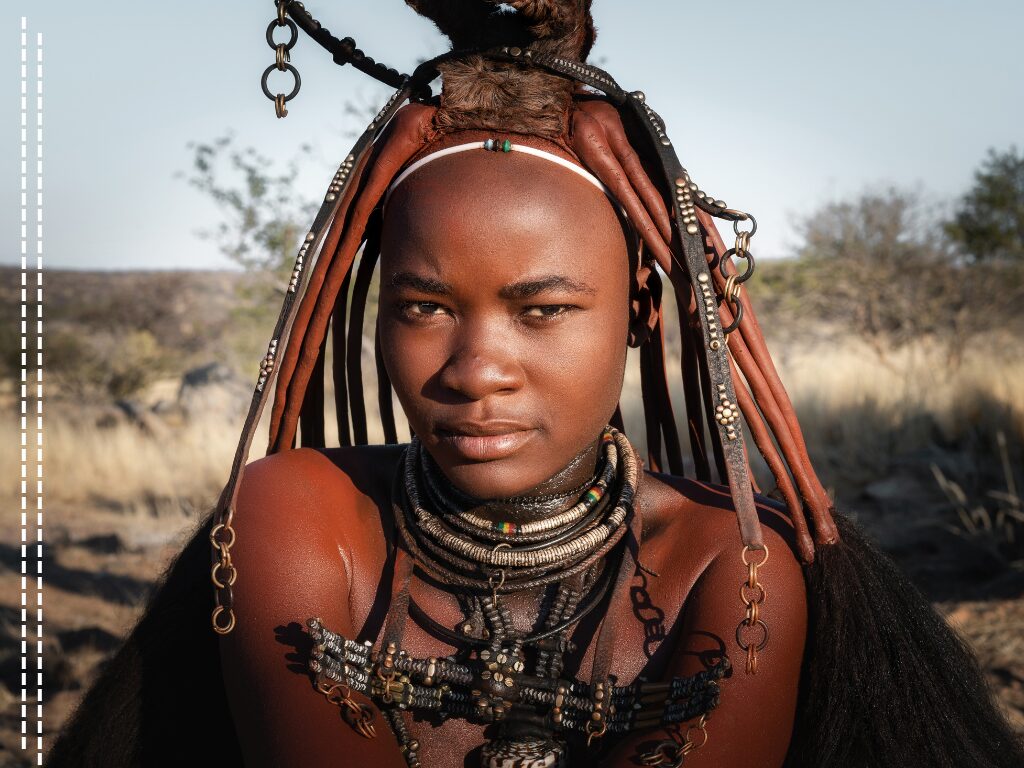
This is also the home of the Himba, a semi-nomadic people who breed cattle and goats and who still live according to their old customs.
Between 20 000 and 50 000 Himba live in the Kunene region, and their clothes, hairstyle and jewellery all have deep meaning to the community. Himba women are conspicuously beautiful and can spend several hours on their beauty care each morning, rubbing their bodies with a cream of butterfat and ochre powder that gives the skin a reddish tinge.
What to do in Kaokoland?
- Visit a traditional Himba village
- Keep an eye out for desert elephants
- Settle by the pool at Opuwo Country Lodge
Epupa Falls
Cascades on the Kunene River, framed by baobabs and makalani palms.
Epupa Falls is one of the prime tourist destinations in Namibia.
It is a series of cascades where the Kunene River falls a total of 60m over about 1.5km, dividing into a multitude of channels and forming rock pools that you can swim in, but you should rather skip lest you encounter a croc.
What to do at Epupa Falls?
- Watch the sunset from a deck bar above the falls
- Take a birding hike or a 4×4 route
- Join a crocodile hike

Etosha National Park
The great white place of dry water
Etosha National Park covers 22 270 sq km of saline desert, savannah and woodland, which makes it one of the largest parks in Africa.
Its defining feature is the Etosha Pan, a shallow depression of about 5 000 sq km that, for most of the year, is a bleak expanse of white, cracked mud shimmering with mirages.
Herds of game against this eerie backdrop, the “great white place of dry water”, make Etosha an unforgettable place.
A total of 114 mammal species live here, including the rare black rhino and black-faced impala, along with about 340 bird species, roughly a third of them migratory.
What to do in Etosha National Park?
- Spend a full day game viewing in the park
- Look out for black rhino and black-faced impala
- Settle into the exclusive waterhole hideout

5 Other Things to Do While Touring Kaokoland
Aside from the destinations above, these are 5 other things to look forward to and do along the way:
- Stop at the Warmquelle spring
On the road to Opuwo, you can pause at Warmquelle, a perennial spring in the wilderness of Kaokoland.
- Raise a glass on Sundowner Hill
At Epupa Falls Lodge, watching the falls from Sundowner Hill with a glass of wine in hand makes it easy to want to stay for more than one night.
- Savour oysters and sparkling wine on the lagoon
After the dolphin cruise at Walvis Bay, a light lunch of snacks, oysters and sparkling wine is served.
- Linger at Uukwaluudhi Safari Lodge
The main building and every room sit on the hillside, with uninterrupted panoramic views over savannah plains where antelope, zebra and giraffe graze beside the Mopane and Terminalia woodland. There are 12 luxury en-suite twin rooms and one family unit with two bedrooms, and a large wooden deck and swimming pool in front of the thatched main building.
- Travel along Van Zyl’s Pass
Van Zyl’s Pass is a 4×4 route in the Okangwati area of Kaokoland, leading down into the Marienfluss, and it is often described as the toughest pass in Namibia. It was built by Ben van Zyl, then Commissioner for Kaokoland, who followed game trails to mark the way down, with work beginning in 1965.
- See where the Tsauchab River meets the pan
Sossusvlei is a landscape of dunes, but in a good rainy season, it becomes something softer. The Tsauchab River flows into the pan and creates a haven for water birds, an unexpected sight in the middle of the dune country.
Even in the dry season, the pan has life, with oryx, springbok and ostriches feeding on the sparse vegetation along the watercourse.

Your Kaokoland Adventure is just a Few Clicks Away
Book the Kaokoland guided tour and leave the planning to us. Your guide, your lodges and your activities are all arranged, so that all you need to bring is a sunhat, a camera and a little curiosity.
The dry season, from May to October, is the best time to go. Temperatures are cooler, and animals are easier to spot in national parks like Etosha.
The tour lasts 15 days. It begins and ends in Windhoek and travels through Sossusvlei, Swakopmund, Twyfelfontein, Opuwo, Epupa Falls and Etosha.
Yes. You have the opportunity to climb one of the highest sand dunes in the world, after a 4×4 ride for the last 5 km to Sossusvlei.
Etosha is home to 114 mammal species, including rare black rhino and black-faced impala, and about 340 bird species, a third of them migratory.
Swimming in the rock pools is possible, but take care, because crocodiles may be in the area. Keep a lookout and ask your guide before you get in.
