
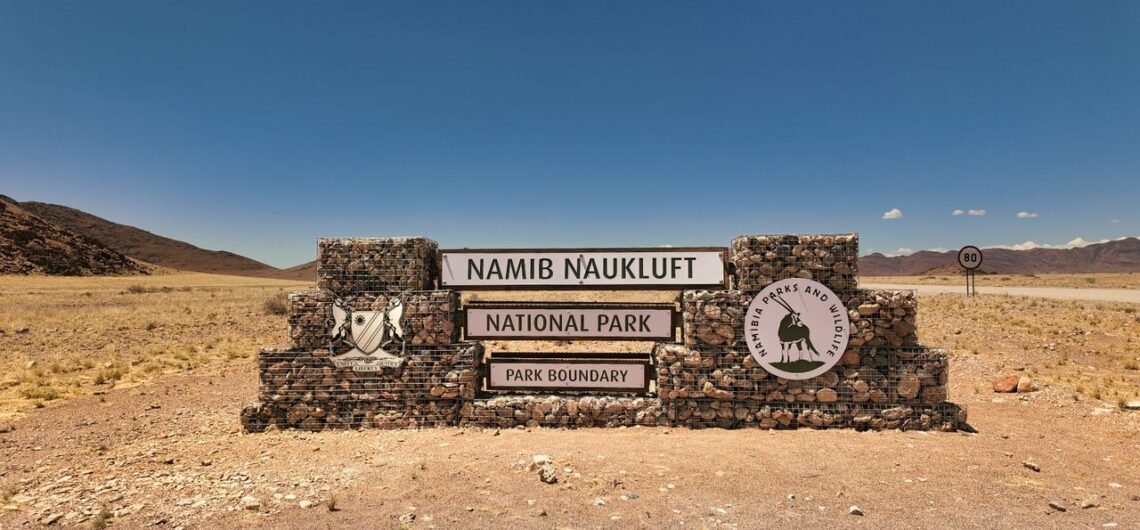
Of all the destinations I travelled to during my 2-week tour, Namib-Naukluft was one of the most intriguing and not for the typical reasons.
When I was researching destinations to add to my trip, I wanted to include as many safari-style places as I could. But what I didn’t really appreciate is that the Namibia safari experience is anything but conventional, and nowhere is that more apparent than here.
Namib-Naukluft National Park covers 49 768 square kilometres of western and southern Namibia, making it the largest game park in Africa and the fourth largest in the world.
The Namib Desert is the park’s most prominent feature, and at approximately 55 million years old, it is recognised by geologists as the oldest desert on the planet.
These two facts alone explain why you’ll see this park mentioned on nearly every serious Namibia itinerary, though it doesn’t at all explain why finding comprehensive guides to this place is almost as rare as a rainy day in Windhoek.
This guide covers what Namib-Naukluft National Park actually is, what travellers see and experience there, when to visit, and how to plan a safari that does the park justice.

A Little Bit of Background on Namib-Naukluft National Park
Namib-Naukluft National Park was formed in 1979 through the merger of the Namib Desert Park and the Naukluft Mountain Zebra Park, and was later expanded to include the Sossusvlei area, the Sesriem Canyon, and sections of the Namib Sand Sea.
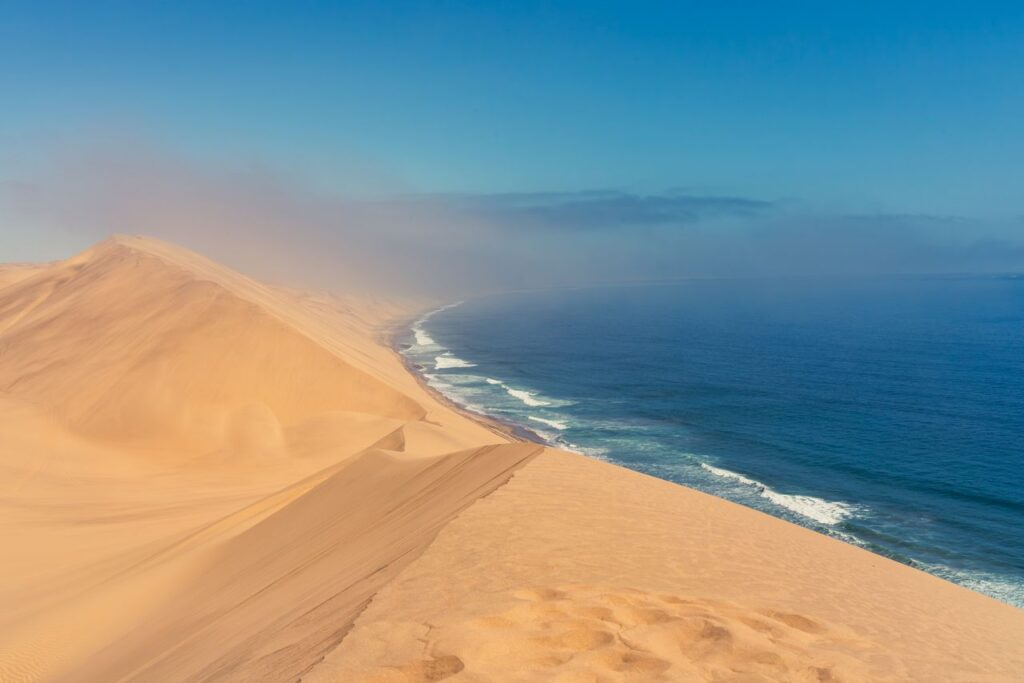
The Namib Sand Sea side of the park was declared a UNESCO World Heritage Site in 2013, and is recognised for its unique dune formations and the rare coastal fog ecosystem that sustains life in one of the driest environments on Earth.
The park includes three distinct ecosystems within a single boundary: the gravel plains of the Naukluft Mountains, the red dune sea of the central Namib, and the rocky outcrops near the Atlantic coast.
Three ecosystems within one park is unusual for a desert reserve, and it is also why wildlife sightings here are more varied and interesting than first-time visitors expect.
Annual rainfall across the park averages less than 100 millimetres, and it falls mostly between January and April.
But it is not the limited rain that makes the park fascinating; rather, it’s the fog.
Coastal fog rolls inland most mornings, providing the only reliable moisture source for much of the park’s plant and animal life. It also happens to give the landscape the most peculiar look, which makes for some extraordinary photos.

The Red Dunes of Namib-Naukluft National Park
One of the reasons I pencilled in a trip to the park was to climb Big Daddy Dune.
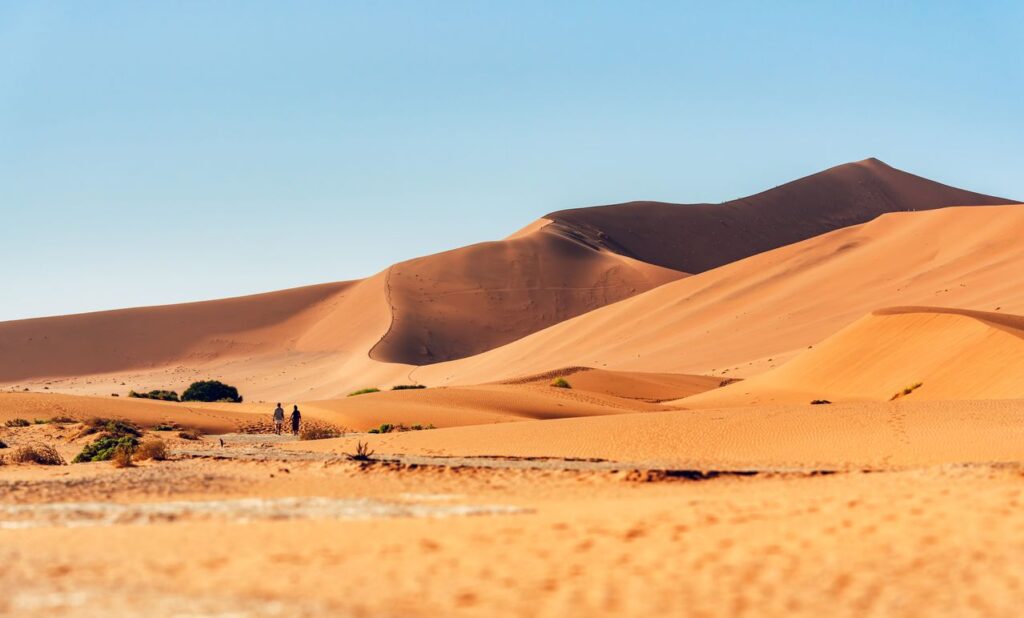
The red dunes of Namib-Naukluft National Park reach heights of 325 metres and are among the tallest dunes on the planet.
The colour comes from iron oxide within the sand grains, oxidised over millions of years, with the most intensely red dunes found furthest from the coast, where the oxidation process has had the longest to work.
Sossusvlei, particularly Big Daddy Dune, and Deadvlei are the most popular tourist attractions within the park.
Sossusvlei is a salt and clay pan that occasionally fills with water after exceptional rainfall, and it is surrounded by some of the park’s highest dunes.
Deadvlei holds the skeletal remains of camel thorn trees, estimated at 600 to 700 years old, preserved by the extreme dryness of the pan rather than fossilised.
You’ll want to visit the places just as the sun starts to come up because by midday you’ll be blinded and overly hot.
Desert Wildlife of Namib-Naukluft National Park
Namib-Naukluft National Park is often marketed as a safari destination, but as I said at the start, it’s anything but conventional.
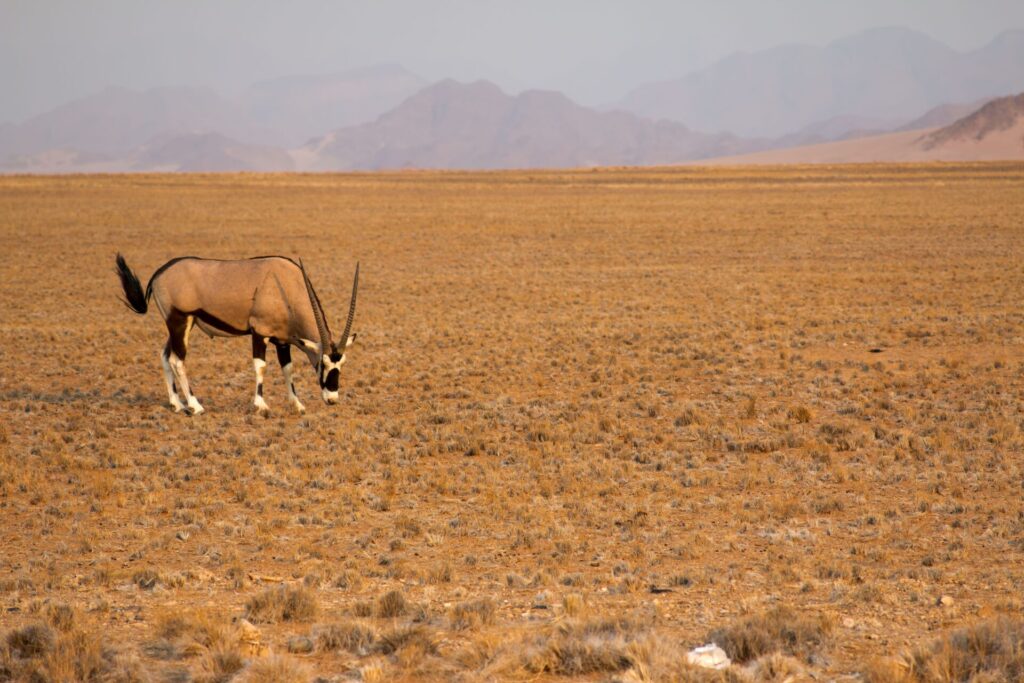
The park supports 200 documented bird species, 50 mammal species, and numerous reptile species, all of which have become adapted specifically to extreme aridity.
Mammal sightings commonly include oryx, springbok, ostrich, and Hartmann’s mountain zebra, a subspecies found only in Namibia and southwestern Angola.
While spotting wildlife is always exciting, the really interesting creatures are a lot closer to the ground, and in places you might very well never think to look.
The insects and few reptiles of the desert are some of the hardiest creatures on the planet.
The Namib dune gecko, which buries itself in sand to escape daytime heat, the dancing white lady spider, which rolls itself into a wheel shape to escape predators across dune slopes, and the dune lark, the only bird species endemic to the Namib Desert, can be seen here.
Tenebrionid beetles, sometimes called fog-basking beetles, are also an interesting sight and can sometimes be spotted on dune crests at dawn when they collect moisture droplets directly from coastal fog on their wing cases.
This single adaptation allows an entire community of these dune-dwelling insects to survive without any other water source.
It helps to travel through the park with a guide. Not only can they spot things you might miss, but they can often point out the distinctive looping trails these beetles leave across the sand overnight.
The Best Time to Visit Namib-Naukluft National Park
May to September will treat you to the most comfortable daytime temperatures, which usually range between 20 and 25 degrees Celsius, making this the preferred season for dune climbing and extended walking.
Nighttime temperatures during these winter months can fall below freezing, so you’ll want to pack appropriately, especially if you intend to head into the desert at dawn.
The daytime temperatures from October to April will often go well above 35 degrees Celsius on most days, with the heat confining your activities to the early morning and late afternoon.
This period also coincides with the small chance of rainfall, which can occasionally fill Sossusvlei itself, an event so significant that local guides will remember and talk about the specific years it happened.
Should you prioritise photography and if you want to do a lot of walking around, you should plan for the May to September window.
And if you want lower visitor numbers and dramatic cloud formations over the dunes, you should consider the shoulder months of March, April, October, and November.
Getting There
Namib-Naukluft National Park is reached via the C19 road from Walvis Bay or Swakopmund, or via the B1 and C24 from Windhoek, with the drive from Windhoek to Sesriem taking approximately five hours by standard vehicle.
Sesriem Canyon, near the park’s main entrance gate, marks the starting point for most dune and vlei excursions.
The drive is fairly easy, and there are some worthwhile things to see along the way, like the changing landscapes.
Although a self-drive itinerary covers the practical logistics, unless you’ve travelled here before, you might miss out on the knowledge and guidance that comes with booking a guided tour instead.
Knowing which dune to climb on a given morning, which guide holds the right permits for early gate access before sunrise, and which lodge is best to stay at can make a huge difference in your experience of the park.
The best way to explore Namib-Naukluft National Park is with a guided tour. This way, you can be sure that you won’t miss a thing.
Namib-Naukluft National Park covers 49 768 square kilometres, making it the largest game park in Africa and the fourth largest national park in the world. The park is larger than Switzerland and spans three distinct ecosystems, including dune sea, gravel plains, and mountainous terrain.
The Namib Desert is approximately 55 million years old, making it the oldest desert on Earth. Its age is the result of consistently arid conditions sustained by the cold Benguela Current along Namibia’s Atlantic coastline, which has suppressed rainfall in the region for tens of millions of years.
May to September has daytime temperatures between 20 and 25 degrees Celsius, ideal for dune climbing and walking. October to April brings higher temperatures exceeding 35 degrees Celsius on many days, with reduced comfortable activity hours but a small chance of dramatic rainfall events at Sossusvlei.
The tallest dunes within Namib-Naukluft National Park reach 325 metres, including Big Daddy Dune near Sossusvlei. These rank among the tallest dunes in the world and owe their red colour to iron oxide that has built up in the sand over millions of years.
Namib-Naukluft National Park is reached via the C19 road from Walvis Bay or Swakopmund, or via the B1 and C24 routes from Windhoek. The drive from Windhoek to the main Sesriem entrance gate takes approximately five hours by standard vehicle, and a 4×4 is recommended for accessing some of the more remote dune areas within the park.
