
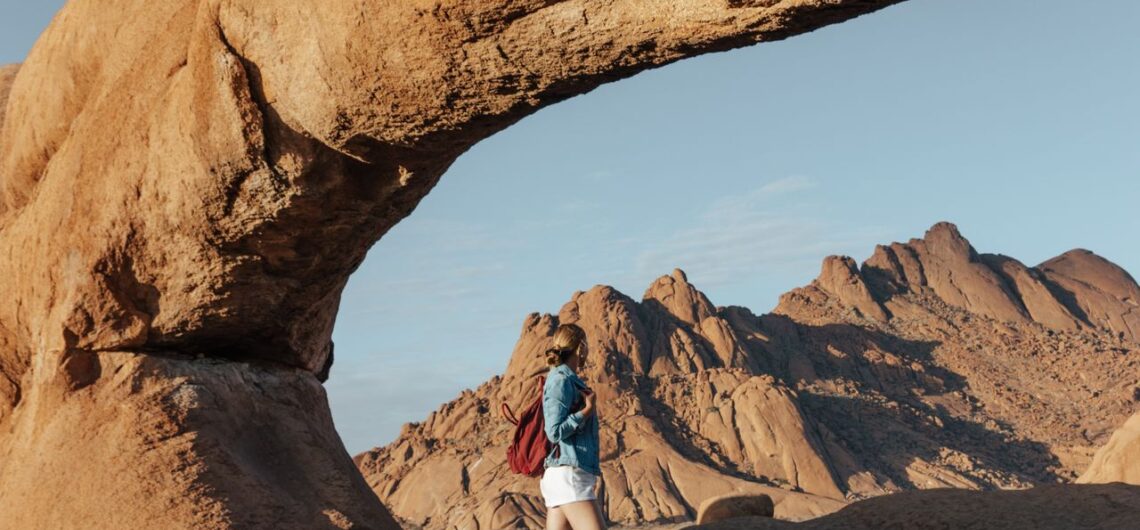
There’s a lot said about guided tours and scenic drives, but personally, I am most content when I am exploring a new place on foot.
Being able to walk about with my camera in hand, really paying attention to everything around me, even the tiniest flowers or some interesting insect, is about the best way to really bring me into the moment and enjoy it to the fullest.
I am far from the only traveller who loves a good walk. Walking safaris in Africa are gaining immense popularity in 2026, but as usual, Namibia does things differently.
Namibia is known for its endless space, and so it should come as no surprise at all that this is a country of walking trails, many of which you can do safely, without needing a guide.
Being on a self-drive tour will give you even more freedom to follow your whimsy and stop where you like, or where there is a walking trail you’d like to explore.
Why Namibia is a Great Place for a Walk
Namibia is the sort of country that forces you to be patient.
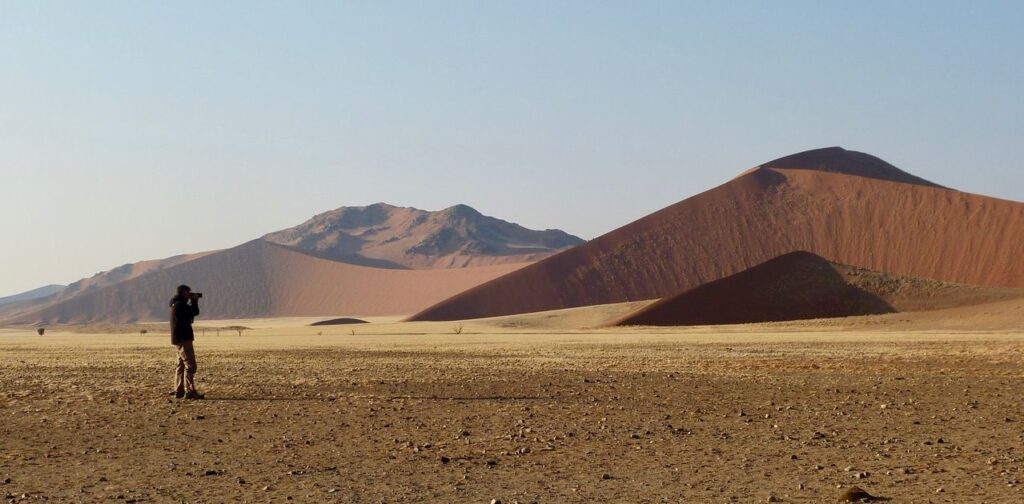
Its deserts (the Namib and the Kalahari) are hot and lazy and always changing. It is almost as though the sands wait for the traveller to slow down enough to notice the subtle changes in colour across a dune face, or the way morning light catches a rare bout of frost on a gravel plain in winter.
A car window makes a fine frame for that kind of experience but the feet make a better one.
This is one of the least crowded countries on earth, and a great deal of it is better seen while walking.
National parks, private reserves and community conservancies have spent years laying short trails that let visitors step out of the vehicle without the need for hiking boots, a permit application, or a week to spare. Some cost nothing to walk on while others cost the price of a good coffee back home.
The pace of walking trails in Namibia suits a certain kind of traveller rather well.
Those who have already done the big-name safaris elsewhere in Africa often find Namibia’s smaller things, like seeing a gecko doing press-ups on warm sand, looking at the haze that settles over the Fish River Canyon at midday during the dry season, or hearing the crunch of quartz underfoot on granite that has stood since long before there were animals to walk on it, so much more appealing.

The Best Easy Access Walking Trails in Namibia
A handful of walking trails in Namibia will give you easy access, require no serious fitness, have no lengthy booking process, and no need to camp overnight with a ranger.
Sesriem Canyon, Namib-Naukluft Park
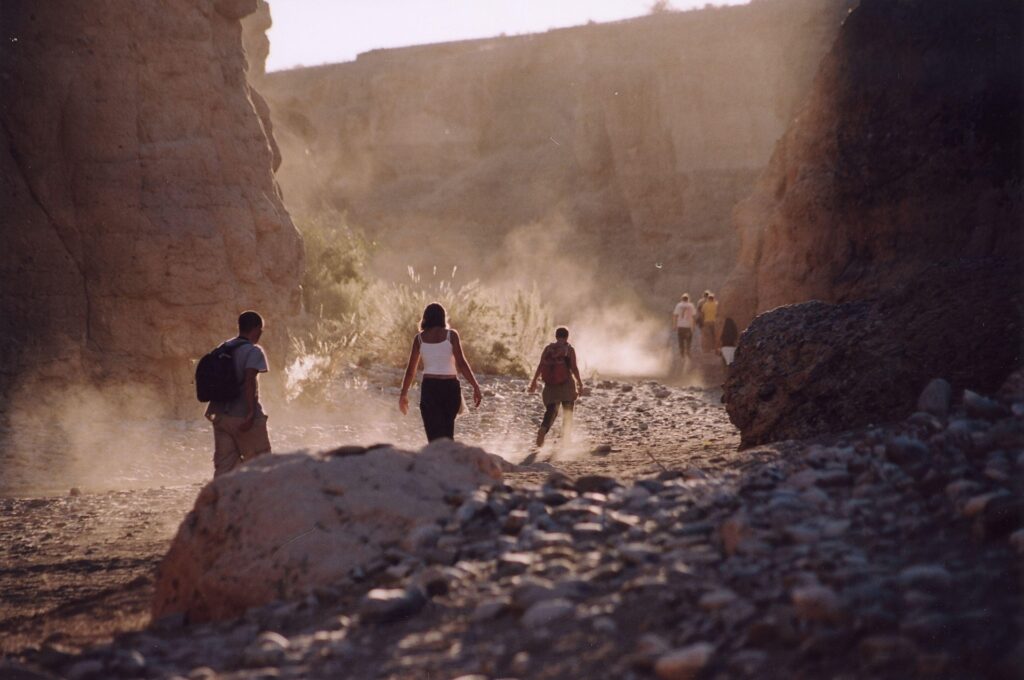
The canyon cuts thirty metres into the earth in places, and it has been carved slowly by the Tsauchab River over thousands of years.
A short, self-guided path leads into the riverbed, where the walls narrow and the desert heat gives way to shade and a startling sense of serenity.
To access the trail, you’ll need to pay the park entrance fee and make sure that you have enough water and a good pair of hiking boots.
Waterberg Plateau Park
Self-drive is not permitted inside Waterberg, but it is a destination included on many itineraries.
The park has nine short, well-marked trails close to the rest camp, and most can be finished within an hour.
The Aloe Circle and Fig Tree Walk drift through stunning fever tree groves and past old San engravings, while sharp eyes might catch a giraffe crossing the aptly named Giraffe Crossing Loop.
Twyfelfontein, Damaraland
Namibia’s only UNESCO World Heritage Site has more than two and a half thousand rock engravings, some thought to be several thousand years old.
You’ll need a guide who’ll take you on a loop of a couple of kilometres past images recording the animals and journeys of the San hunter-gatherers who once passed through here.
The walk takes under an hour.

Spitzkoppe
Locals nickname it the Matterhorn of Namibia, though this spectacular granite inselberg that rises from the flat desert plains hardly needs the comparison.
Community guides at the campsite lead slow walks of an hour or so to Bushman’s Paradise, where you’ll visit painted rock shelters that have ancient images left by San artists centuries ago.
No booking is required, but a tip for the guide is customary.
Kolmanskop, near Lüderitz
Diamonds built this town in the early twentieth century, and the desert sands are now slowly reclaiming it.
Visitors are allowed to wander freely through the roofless, dune-filled rooms at their own pace and the town has
A short guided tour usually runs each morning, and it is included in the entrance ticket, though many prefer simply to get pleasantly lost among the buildings on their own.
Walvis Bay Lagoon
A beautiful paved promenade traces the eastern edge of the lagoon for around three kilometres, past thousands of pink-legged flamingos feeding in the shallows on a good day.
The walk takes under an hour and costs nothing, save perhaps lunch or dinner afterwards at the waterfront.
NamibRand Nature Reserve
Guided walks in NamibRand Nature Reserve, one of the best places to go stargazing, will take you through some of the darkest, quietest landscapes in southern Africa.
You can also visit the Fairy Circles, the mysterious bare patches that dot the desert floor.

Tips For Walking Trails in Namibia
There’s nothing complicated about booking and setting out on the various walking trails in Namibia, but keeping a few tips in mind can help:
- Book ahead where booking is possible. Waterberg’s longer trails and Twyfelfontein’s guided slots fill quickly during the cooler, drier winter months.
- Carry more water than you think you’ll need. Two litres per person is a sensible minimum for anything over half an hour, since Namibia’s dry air draws moisture from the body faster than most visitors expect.
- Keep cash in Namibian dollars on hand. Several memorable sites, including Twyfelfontein and Kolmanskop, still rely on cash for entrance fees, and card machines cannot always be trusted this far from town.
- Choose closed shoes with real grip. Granite domes and canyon paths reward proper soles over sandals, however tempting sandals seem in the heat.
- Leave rock art exactly as found. Oils from human skin can damage pigments that have survived for millennia, so admire from a distance and keep hands in pockets.
- Walk early. The light is stunning, temperatures drop, and wildlife tends to be more active in the hour after sunrise than at any other time of day.

Including Walking in a Self-Drive Itinerary
Most of these trails sit conveniently along the routes that self-drive Namibia tours already follow. Waterberg breaks the journey between Windhoek and Etosha, Sesriem anchors the Sossusvlei leg nearly every itinerary includes, and Kolmanskop rewards travellers looping south towards Lüderitz with something unlike anything else on the route.
None of it requires reshuffling a carefully planned trip. A short walk simply asks for an extra hour tucked between fuel stops and lodge check-ins, often the hour travellers remember longest.
If you’d like to explore a few walking trails in Namibia, we can help you decide on the best itinerary.
Some sites require one. Twyfelfontein’s rock engravings and Spitzkoppe’s painted shelters can only be visited with a guide, usually arranged on arrival. Others, including Sesriem Canyon and Waterberg’s short trails, can be walked independently.
Most of the trails covered here are gentle and short, generally under an hour, with even surfaces in several cases. Sesriem Canyon involves some scrambling in its lower section, so travellers with mobility concerns may prefer the upper rim.
Yes, provided visitors stay on marked trails and follow park guidance. Areas with dangerous game, such as Etosha, generally restrict walking to guided routes for good reason, while parks like Waterberg have laid out safe, well used paths near camp facilities.
The dry season, from May to October, brings the most comfortable walking conditions, with cooler mornings and clearer skies. The green season, from November to April, brings dramatic skies and fewer visitors, though afternoon heat can be more intense.
Easily. Most of the trails mentioned sit directly along established self-drive routes, making them a natural way to break up long driving days without adding much time.
